Choosing between wet, dry, or mixed pet food depends on your pet’s age, health, and preferences. Wet food offers hydration and is more appealing, but it’s costlier and short-lived after opening. Dry kibble is convenient and supports dental health but may be less enticing for some pets. A mixed approach combines both benefits, offering variety and balance. To guarantee the best choice, consider your pet’s needs and consult a vet for tailored advice.
Key Takeaways
- Wet food provides hydration and is more appealing but has a shorter shelf life and higher cost.
- Dry food supports dental health, is convenient, and cost-effective but may be less appealing for some pets.
- Mixed feeding combines benefits of both, offering variety, hydration, and dental benefits, but requires portion control.
- Pet’s age, health, and preferences should guide whether wet, dry, or mixed feeding is best.
- Consulting a veterinarian ensures a tailored, nutritionally balanced plan suited to your pet’s specific needs.
Are you unsure which type of pet food is best for your furry friend? With so many options available—wet, dry, and mixed—deciding can feel overwhelming. Each type offers unique benefits and potential drawbacks, so understanding their differences can help you make the right choice for your pet’s health and lifestyle.
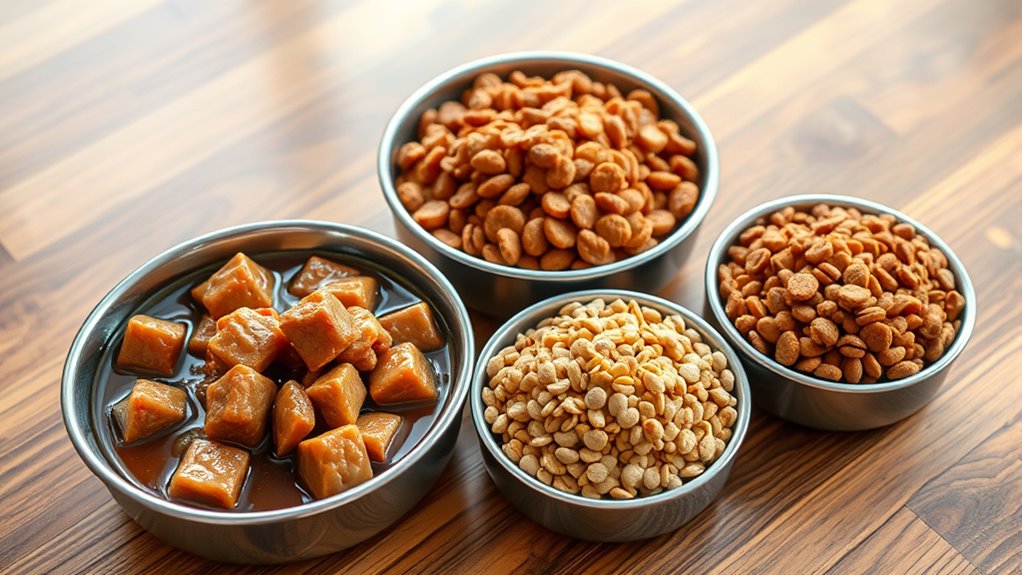
Wet food is typically sold in cans or pouches. It’s known for its high moisture content, which can help keep your pet well-hydrated, especially if they don’t drink enough water on their own. Many pets find wet food more appealing because of its aroma and texture, making it a good option for picky eaters or those with dental issues that make chewing hard kibble uncomfortable. However, wet food tends to be more expensive per serving and has a shorter shelf life once opened. You’ll need to refrigerate leftovers and serve them promptly to prevent spoilage.
Wet food offers high moisture and appealing texture but requires refrigeration and is more costly.
Dry food, on the other hand, comes in kibble form. It’s convenient, easy to store, and usually more affordable than wet options. Because it’s crunchy, dry food can help reduce plaque buildup and support dental health, though it shouldn’t replace regular vet dental checkups. Dry food also tends to have a longer shelf life, making it a practical choice for busy pet owners. That said, some pets may prefer the softer texture of wet food, and dry kibble can sometimes be less enticing if your pet has dental problems or a sensitive stomach. Additionally, because it contains less moisture, you should guarantee your pet drinks enough water to stay properly hydrated.
A mixed feeding approach combines both wet and dry foods, offering a balance of benefits. This method allows you to provide your pet with the hydration and palatability of wet food while enjoying the convenience and dental benefits of dry kibble. Many pet owners find that mixing helps prevent boredom and encourages better eating habits. Just be mindful of portions to avoid overfeeding, and consider your pet’s specific needs, preferences, and health conditions. Some pets might thrive on a mixed diet, while others may do better with one type over the other.
Ultimately, the right choice depends on your pet’s age, health, dietary needs, and your lifestyle. Consulting your veterinarian can guide you toward the best feeding plan. Whether you opt for wet, dry, or a mix, providing high-quality, nutritionally balanced food will support your pet’s overall well-being and happiness.
Frequently Asked Questions
Can I Feed My Pet Both Wet and Dry Food Simultaneously?
Yes, you can feed your pet both wet and dry food at the same time. Combining them offers variety, helps with hydration, and can make meals more appealing. Just make sure to balance the portions and monitor your pet’s overall intake. Introduce new foods gradually to avoid stomach upset. Always check with your vet if you’re unsure about portion sizes or specific dietary needs for your pet.
How Do I Transition My Pet Between Different Food Types Safely?
You can shift your pet between food types safely by doing it gradually. Start by mixing a small amount of the new food with the current one, then slowly increase the new and decrease the old over a week. This slow change helps prevent digestive upset and gives your pet time to adjust. Patience guarantees a smooth switch, making the transition comfortable and stress-free for your furry friend.
Are Mixed Diets Suitable for All Pet Breeds and Ages?
Mixed diets can suit many breeds and ages, but you should tailor them to your pet’s specific needs. For puppies, kittens, or senior pets, consult your vet before mixing foods to guarantee nutritional balance. Some breeds with sensitive stomachs might struggle with variety. Always monitor your pet’s health and adjust accordingly, making sure their diet provides all essential nutrients for their age and breed.
What Are the Signs My Pet Prefers One Type Over Another?
You’ll notice your pet prefers one type over another when they consistently choose it during meal times or seem more enthusiastic to eat that option. If they finish wet food faster, lick the bowl clean, or seem more satisfied, they probably favor it. Conversely, if they turn their nose up at dry kibble or leave it untouched, they might prefer wet or mixed diets. Pay attention to their reactions to find what they enjoy most.
Does the Choice of Pet Food Affect Dental Health Significantly?
Think of pet food as the brush for your pet’s teeth. Choosing the right type can make a big difference in dental health. Dry kibble, like a gentle scrub, helps scrape away plaque, reducing tartar buildup. Wet food, resembling a soothing rinse, doesn’t clean teeth as well but keeps your pet hydrated. A balanced mix can support overall health, but consistent dental care and vet checkups are key to maintaining a bright smile.
Conclusion
Choosing the right pet food might seem overwhelming, but remember, it’s all about what works best for you and your furry friend. Whether you opt for wet, dry, or a mix, the key is to provide balanced nutrition and plenty of love. Sometimes, you have to roll with the punches and adapt as your pet’s needs change. After all, a healthy pet is a happy pet, and that’s what truly matters in the end.