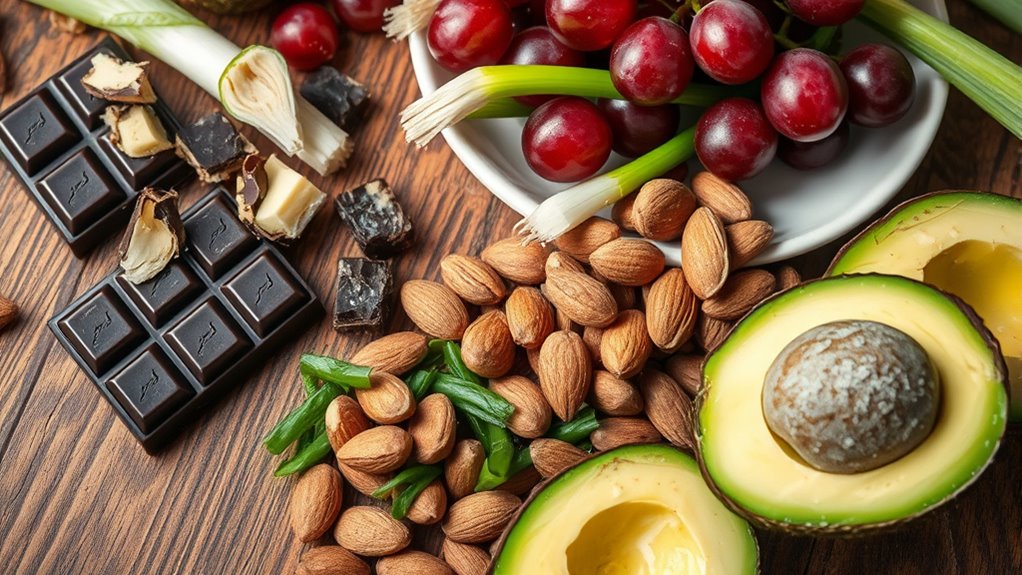

To keep your pets safe, avoid giving them chocolate, caffeine, grapes, raisins, onions, garlic, chives, and leeks, as these foods are highly toxic and can cause severe health problems or death. Xylitol, found in gum and mints, is also dangerous, leading to liver failure and hypoglycemia. Always store these foods out of pet reach and monitor treats carefully. Staying informed about common hazards will help you better protect your furry friends from harm.
Key Takeaways
- Chocolate, caffeine, grapes, raisins, onions, garlic, chives, leeks, and xylitol are toxic to pets.
- Toxic foods can cause vomiting, diarrhea, seizures, kidney failure, anemia, or liver damage.
- Keep these foods and food wrappers securely stored away from pets at all times.
- Watch for symptoms like lethargy, rapid breathing, or disorientation if ingestion is suspected.
- Seek immediate veterinary care if your pet ingests any potentially toxic food.

Have you ever wondered if the foods you eat daily could be harming your health? The same question applies to your pets. Just like humans, animals can be sensitive to certain foods that seem harmless but are actually toxic to them. Many pet owners aren’t aware of the dangers lurking in common foods, which can lead to serious health issues or even be fatal. It’s vital to understand what foods you should never give your pets, whether intentionally or accidentally, so you can keep them safe and healthy.
One of the most well-known toxic foods for pets is chocolate. It contains theobromine, a substance that dogs and cats cannot metabolize effectively. Even small amounts can cause vomiting, diarrhea, rapid breathing, increased heart rate, seizures, and in severe cases, death. The darker the chocolate, the more hazardous it is. Coffee, tea, and other caffeine-containing products also pose similar risks, causing restlessness, rapid breathing, heart palpitations, and muscle tremors. Keep these treats out of your pet’s reach at all times, especially during holidays or special occasions when chocolates and sweets are more accessible.
Chocolate and caffeine are highly toxic to pets; keep these treats away from your furry friends.
Grapes and raisins are surprisingly common in households but are extremely harmful to dogs. Eating even a small amount can lead to sudden kidney failure, which can be life-threatening. Symptoms might include vomiting, diarrhea, lethargy, and loss of appetite. If you suspect your pet has ingested grapes or raisins, act quickly and consult your veterinarian immediately. Onions, garlic, chives, and leeks are part of the allium family and are also dangerous. They can damage a pet’s red blood cells, leading to anemia. Symptoms such as weakness, pale gums, and rapid breathing should prompt urgent veterinary attention.
Xylitol, a sugar substitute found in sugarless gum, mints, and some baked goods, is highly toxic to dogs. It causes a sudden release of insulin, leading to hypoglycemia (low blood sugar), which can cause weakness, disorientation, seizures, and in severe cases, liver failure. Even small amounts can be dangerous, so always store products containing xylitol out of your pet’s reach. Additionally, alcohol and any foods containing alcohol are toxic. They can cause vomiting, diarrhea, difficulty breathing, tremors, and even coma.
Being aware of these toxic foods is essential. Never leave food scraps, wrappers, or containers where your pet can access them. Proper nutritional knowledge can help prevent accidental poisoning and ensure your pet’s well-being. When in doubt about a specific food, consult your veterinarian before offering it to your pet. Prevention is always better than treatment, and knowing which foods are dangerous helps you protect your furry friends from harm.
Frequently Asked Questions
Can Pets Recover After Ingesting Toxic Foods?
Yes, pets can recover after ingesting toxic foods, but prompt action is essential. You should immediately contact your veterinarian and follow their instructions. Sometimes, inducing vomiting or providing activated charcoal can help reduce toxin absorption. The outcome depends on the type and amount of toxin ingested, as well as how quickly you seek help. Timely intervention can markedly improve your pet’s chances of full recovery.
Are Cooked Foods Safer Than Raw for Pets?
Think of cooked foods as a gentle river, calmer and safer for your pet’s delicate paws. Cooking neutralizes many harmful bacteria and toxins, making meals easier to digest and less risky. Raw foods can be like wild rapids — tempting but dangerous. So, yes, cooked foods are generally safer, offering a warm, inviting path for your furry friend to enjoy a nutritious, worry-free meal without risking their health.
How Quickly Do Symptoms Appear After Ingestion?
Symptoms can appear within a few minutes to several hours after your pet ingests a toxic food. You might notice vomiting, diarrhea, drooling, or lethargy quickly, often within an hour. In some cases, symptoms develop more slowly over 12 to 24 hours, especially if the toxin affects internal organs. If you suspect your pet has ingested something harmful, seek veterinary care immediately to prevent serious health issues.
What Are the Long-Term Effects of Toxic Food Exposure?
When your pet ingests toxic foods, it’s like planting seeds of trouble that can grow over time. Long-term effects might include irreversible organ damage, chronic illnesses, or behavioral changes that linger like shadows. You could see recurring health issues, weakened immune systems, or even life-threatening conditions. Protect your furry friend by avoiding these foods altogether, and watch as their health blossoms instead of withers under the weight of toxicity.
Are Toxic Foods the Same for All Pet Species?
No, toxic foods aren’t the same for all pet species. You need to comprehend that what’s harmful to dogs might be safe for cats, and vice versa. For example, chocolate is toxic to dogs but not to cats. Always research your specific pet’s dietary needs and avoid giving them foods that could harm their health. When in doubt, consult your veterinarian to ensure your pet’s safety.
Conclusion
Stay away from these toxic foods, or your pet’s life could turn into a disaster movie! One bite of chocolate or grapes could cause chaos inside their tiny bodies, leading to emergencies you never saw coming. Don’t gamble with their health—these foods are no joke. Keep them safe, keep them happy, and avoid turning your pet’s day into a nightmare. Remember, a little caution now saves a world of heartbreak later!