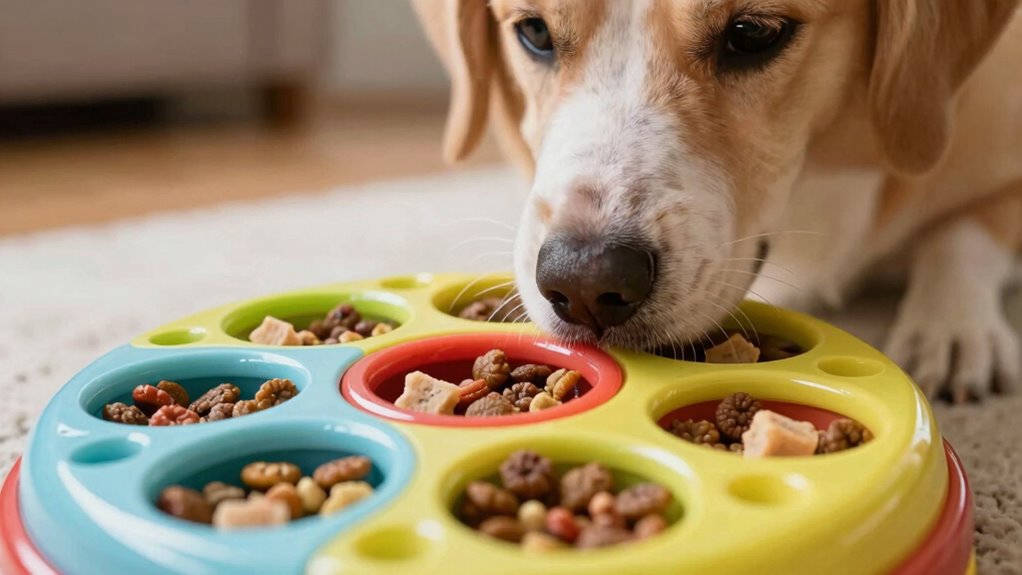
Using food puzzles and slow feeders helps turn mealtime into a calming, engaging activity that reduces your pet’s anxiety. By encouraging them to work for their food, you give your pet a sense of control and mental stimulation, which promotes gentle eating and natural behaviors. This approach also addresses boredom and stress, leading to a happier, calmer pet. If you want to learn how to choose and introduce these tools effectively, there’s more to discover here.
Key Takeaways
- Working for food transforms mealtime into a calming activity, reducing anxiety and promoting a relaxed, confident pet.
- Food puzzles mimic natural foraging, satisfying instincts and providing mental stimulation that decreases boredom-related stress.
- Slow feeders encourage deliberate eating, preventing gulping and choking, fostering a sense of control and calmness during meals.
- Engaging in problem-solving during feeding builds patience and confidence, helping pets feel secure and less anxious.
- Incorporating work-based feeding routines creates positive associations with mealtime, leading to more relaxed and well-adjusted behavior.
Why Do Pets Get Anxious During Feeding, and How Food Puzzles Can Help
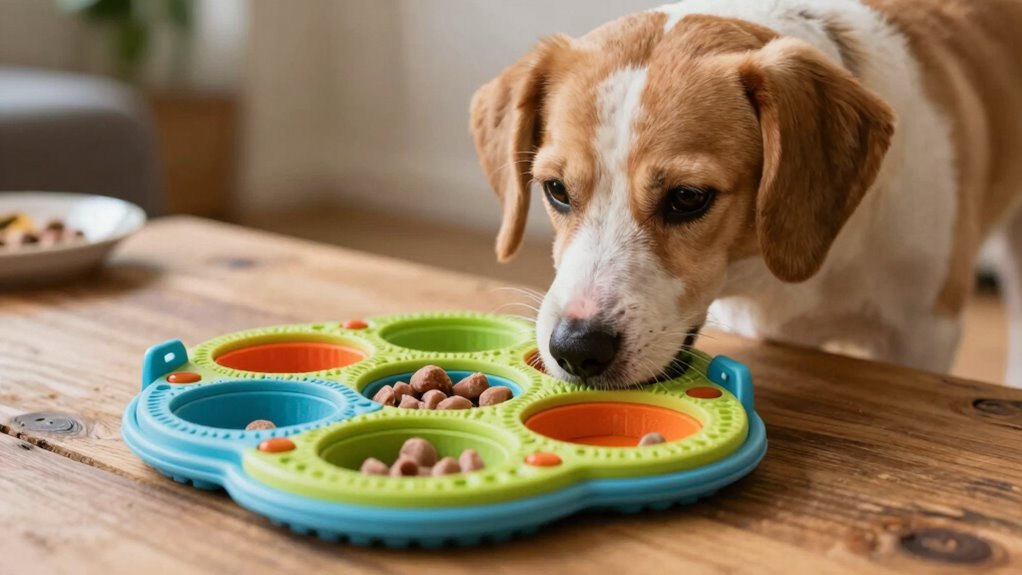
Pets often become anxious during feeding because they associate mealtime with uncertainty or past stress, such as rapid eating or gulping. This mealtime behavior can trigger pet anxiety, making your pet feel uneasy or overwhelmed. When pets rush through their food, it’s often a sign they’re unsure if more food will come or they’ve had negative experiences. Food puzzles help address this by transforming mealtime into a calming activity, giving your pet a sense of control and purpose. Instead of feeling hurried or stressed, your pet engages in a slow, deliberate process. This not only reduces pet anxiety but also encourages healthier eating habits. By understanding these triggers, you can create a more positive mealtime experience, promoting calmness and reducing stress. Additionally, incorporating slow feeding techniques can help prevent overeating and improve digestion, contributing further to your pet’s overall well-being.
How Food Puzzles and Slow Feeders Calm and Enrich Your Pet
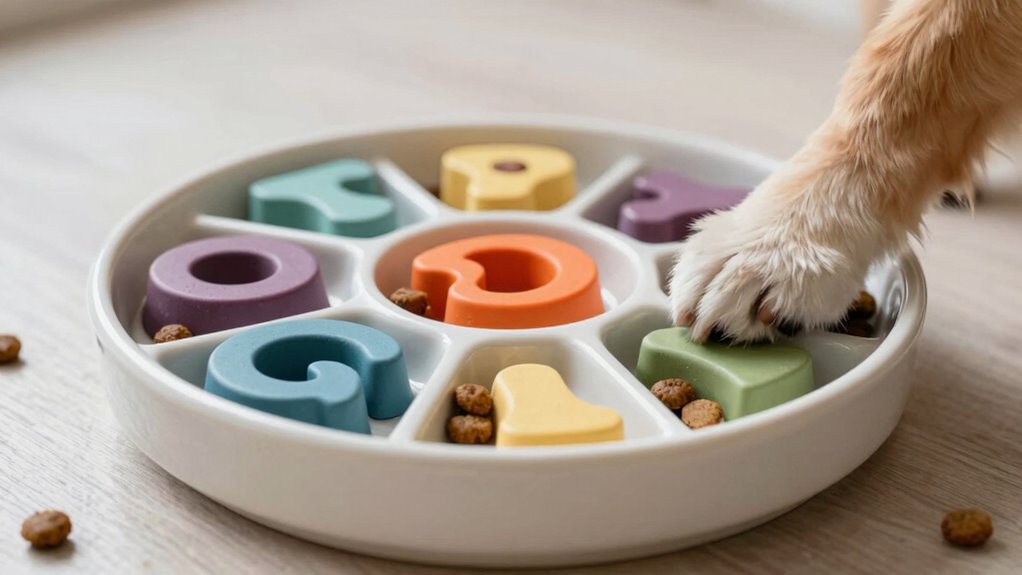
Using food puzzles and slow feeders can help reduce your pet’s boredom and anxiety by keeping them engaged. They also tap into your pet’s natural foraging instincts, making mealtime more stimulating. Plus, these tools encourage gentle eating habits, promoting better digestion and less mess. Incorporating Free Floating techniques can further enhance your pet’s calming experience by allowing them to eat in a relaxed, unrestrained manner. Additionally, selecting energy-efficient puzzle feeders aligns with sustainable practices and can reduce overall resource consumption. Employing behavioral enrichment strategies with these tools supports mental stimulation and emotional well-being. Integrating positive reinforcement during mealtime can also promote calmness and good manners in your pet.
Reduces Boredom and Anxiety
When pets have engaging activities like food puzzles and slow feeders, they’re less likely to become bored or anxious. These tools provide essential mental stimulation, giving your pet a focused task that keeps their mind occupied. Interactive play with food puzzles encourages problem-solving, which helps redirect excess energy and reduces frustration. As your pet works to access their food, they experience a sense of accomplishment, easing feelings of anxiety. This mental engagement also discourages destructive behaviors driven by boredom or stress. By making mealtime more enriching and challenging, you help your pet stay calmer and more relaxed throughout the day. Incorporating mental stimulation into your pet’s routine is proven to enhance overall well-being. Overall, food puzzles and slow feeders serve as effective tools to promote emotional well-being and keep your pet mentally active.
Promotes Natural Foraging Instincts
Food puzzles and slow feeders tap into your pet’s natural foraging instincts, providing a satisfying and meaningful way to hunt for their food. By engaging their foraging behavior, you help fulfill their innate drive to seek and uncover food, just as they would in the wild. These tools stimulate natural instincts that might otherwise be suppressed by simple, quick meals. When your pet works to access their food, they’re tapping into an instinct that keeps them mentally active and physically engaged. This natural behavior not only enriches their daily routine but also promotes calmness through the fulfillment of their instinctual needs. Ultimately, food puzzles and slow feeders support a healthy, instinct-driven lifestyle, reducing stress and encouraging natural, instinctive activities.
Encourages Gentle Eating Habits
Because pets often eat too quickly, incorporating food puzzles and slow feeders can help them develop more gentle, controlled eating habits. These tools promote mindful eating by forcing your pet to focus on each bite, reducing gulping and choking risks. With gentle feeding, your pet learns to savor their food, which can improve digestion and reduce overeating. Expertise in creating innovative spaces supports the development of effective feeding solutions that cater to your pet’s needs. They encourage patience and focus during mealtime. Help prevent bloating and discomfort from rapid eating. Promote a calmer, more relaxed eating experience. Reinforce positive, controlled behavior around food. Using food puzzles and slow feeders transforms mealtime into a calming activity, fostering mindful eating habits that last a lifetime. Your pet benefits from a more relaxed, balanced approach to food, reducing stress and promoting overall well-being. Incorporating holistic methods like herbal remedies can further support your pet’s digestive health and calmness.
Choosing the Right Food Puzzle or Slow Feeder for Your Pet
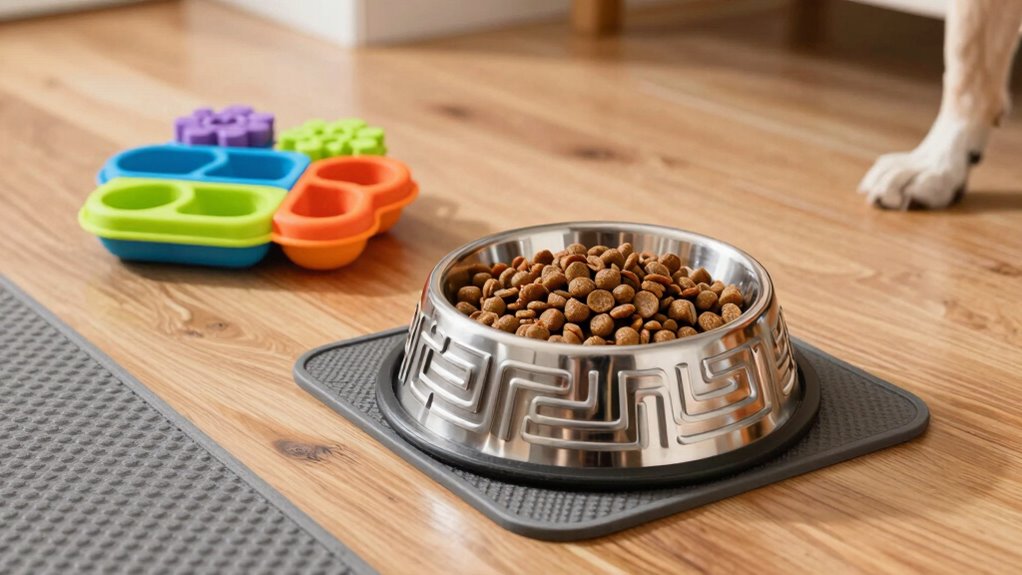
Choosing the right food puzzle or slow feeder depends on your pet’s size, chewing habits, and activity level. You want a puzzle that promotes nutritional balance without causing frustration. For strong chewers, select durable materials like silicone or heavy-duty plastic to prevent damage. If your pet eats quickly, opt for puzzles that require more work, slowing their pace and encouraging mindful eating. Always prioritize material safety—ensure the puzzle is free from harmful chemicals and non-toxic finishes. Consider how much space your pet has to play with the puzzle to avoid frustration or accidents. Matching the puzzle’s complexity with your pet’s skills helps maintain their interest and supports healthy digestion. Properly chosen, the right feeder makes mealtime both stimulating and safe. material safety is especially important to prevent potential health issues from ingested toxins. Additionally, durability ensures the puzzle withstands your pet’s chewing strength over time, providing lasting entertainment and safety. Selecting a puzzle with appropriate complexity can help keep your pet engaged without causing boredom or stress. Moreover, understanding your pet’s individual preferences can significantly enhance their mealtime experience.
How to Introduce Food Puzzles So Your Pet Loves Them
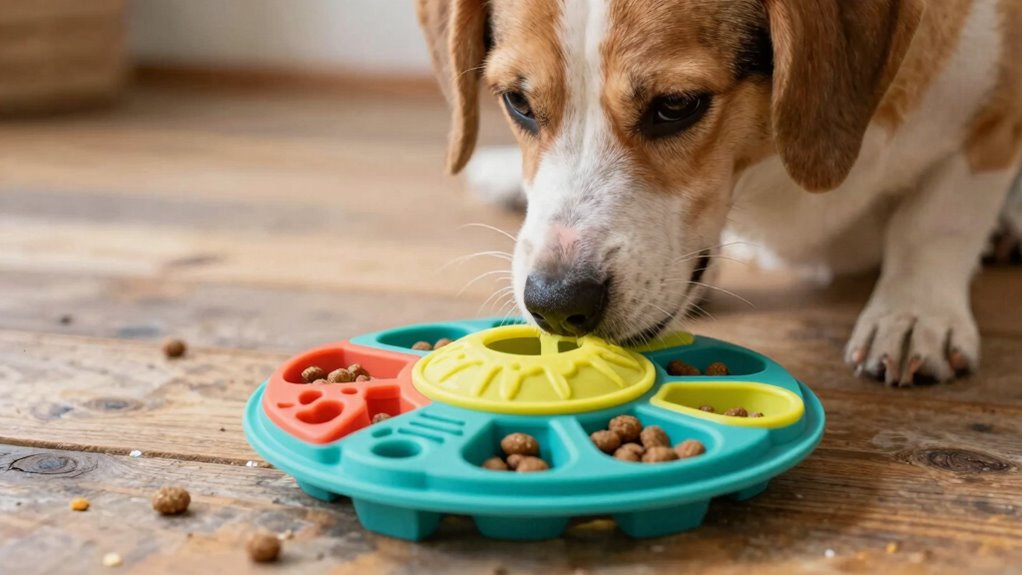
Introducing a food puzzle to your pet’s routine can be an exciting way to make mealtime more engaging. To guarantee your pet loves it, start slowly by placing small treats inside and offering it in a calm environment. Be patient and let your pet explore without pressure, fostering positive associations. Remember, the food puzzle benefits include mental stimulation and pet enrichment, which help reduce boredom and anxiety. Utilizing positive reinforcement techniques can further encourage your pet to enjoy the puzzle. Additionally, understanding the horsepower of electric dirt bikes can inspire you to choose durable, high-performance puzzle toys that withstand enthusiastic chewers.
Introduce food puzzles gradually in calm settings to boost mental stimulation and reduce pet boredom.
- Introduce the puzzle during calm moments, not when your pet is overly excited
- Use high-value treats to encourage initial interest
- Gradually increase difficulty as your pet gets comfortable
- Pair the puzzle with praise to build enthusiasm
With consistent, positive experiences, your pet will see food puzzles as a fun, rewarding part of their routine.
Troubleshooting Common Problems With Food Puzzles and Slow Feeders
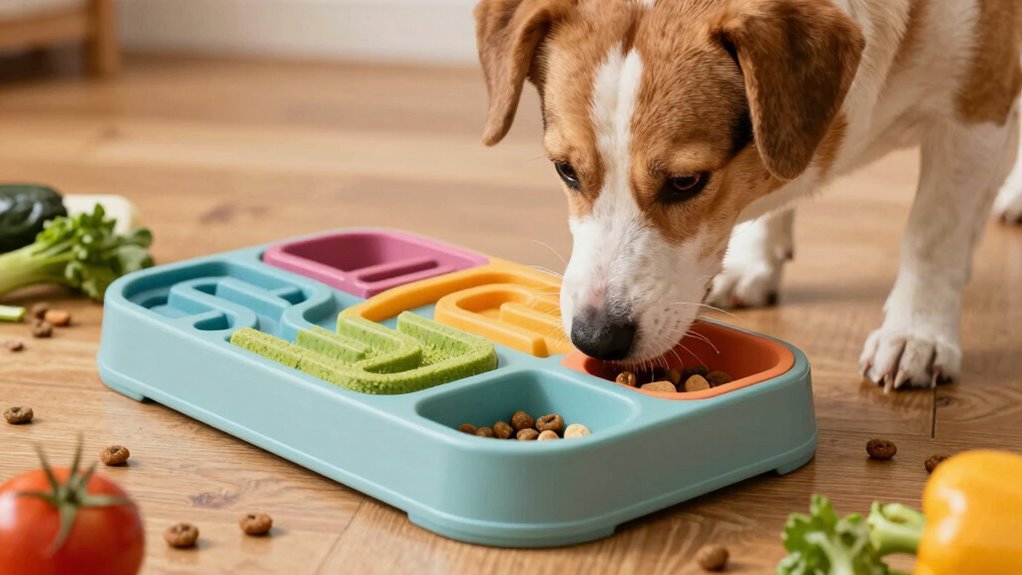
Even with the best intentions, you might encounter some common issues when using food puzzles and slow feeders. If your pet seems uninterested or frustrated, review their feeding schedule—offering puzzles at *ideal* times can boost engagement. Sometimes, pets become hesitant if the puzzle is too challenging initially; in that case, simplify it or add treats to encourage curiosity. If your pet eats too quickly between puzzle sessions, adjust the training to include more frequent, smaller meals to prevent overeating. Establishing a consistent feeding routine** can significantly improve your pet’s responsiveness to slow feeding strategies. Incorporating connected equipment that tracks your pet’s eating patterns can provide valuable insights into their behavior. Consistency is key in pet training, so establish a routine that helps your pet associate puzzle time with positive experiences. Additionally, understanding how astrology influences personality traits can help tailor your approach to your pet’s unique temperament, making training more effective. Troubleshooting these problems ensures your pet remains calm and engaged, making slow feeding and food puzzles effective tools for enriching their daily routine. Incorporating appropriate tools and techniques** can also enhance your success with slow feeding methods.
Turning Feeding Time Into a Calming, Fun Experience for Your Pet
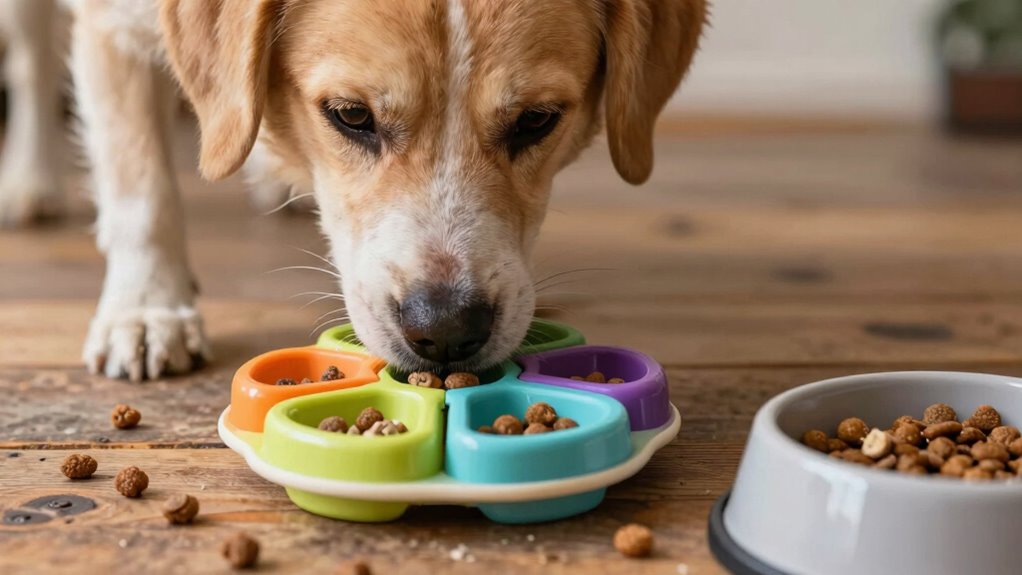
Transforming feeding time into a calming, fun experience can help reduce your pet’s stress and promote a stronger bond. By incorporating food puzzles and slow feeders, you encourage natural behaviors while supporting a nutritional balance. To make mealtime enjoyable, consider these tips:
- Use puzzle toys that challenge your pet’s problem-solving skills and keep them engaged.
- Maintain consistent feeding schedules to create predictability and reduce anxiety.
- Offer a variety of puzzle types to keep their interest high and prevent boredom.
- Incorporate positive reinforcement to reward calm behavior during feeding.
- Understanding behavioral enrichment techniques can further enhance your pet’s mental stimulation and overall well-being. Incorporating appropriate feeding devices can also help regulate eating pace and promote calmness.
- Recognizing the importance of calm environment during feeding can significantly reduce stress and encourage relaxed eating habits. Creating a stress-free setting helps your pet feel safe and more receptive during mealtime.
This approach not only makes mealtime more interactive but also helps your pet develop healthy habits, leading to a more relaxed and balanced pet overall.
Frequently Asked Questions
Can Food Puzzles Prevent Obesity in Pets?
Yes, food puzzles can help prevent obesity in pets by promoting slow eating and mindful consumption. They offer nutrition benefits by encouraging better digestion and portion control, while also providing environmental enrichment that keeps your pet mentally stimulated. When your pet works for their food, they’re less likely to overeat, helping maintain a healthy weight and reducing obesity risks. Plus, it makes mealtime more engaging and enjoyable for your furry friend.
How Long Does It Take for Pets to Adapt to Puzzles?
You might notice your pet adapting to puzzles within a few days to a couple of weeks, but it varies. Consistent use of enrichment strategies and behavior modification can speed up this process. Patience is key; as your pet learns, they become more engaged and calmer. Keep sessions positive and gradual, and you’ll see progress as they develop new skills and confidence in working for their food.
Are Food Puzzles Suitable for All Dog and Cat Breeds?
Food puzzles aren’t appropriate for all dog and cat breeds, as breed-specific traits and temperament considerations matter. Some breeds, like retrievers or terriers, thrive on mental stimulation, while others may become frustrated or stressed. You should assess your pet’s personality and energy level before choosing a puzzle. If your pet is easily overwhelmed or anxious, start with simpler options and gradually increase difficulty to ensure a positive experience.
What Are Signs My Pet Isn’T Enjoying the Puzzle?
Like a dog in a Gone with the Wind marathon, your pet might seem unenthusiastic with a food puzzle. Signs include ignoring the puzzle, showing stress, or trying to escape. If they’re not engaged, it could mean boredom relief isn’t happening, or they’re stressed rather than relaxed. Watch for pawing, whining, or frustration, which indicate your pet isn’t enjoying the activity and may need a different approach.
How Often Should I Change or Rotate Puzzles?
You should rotate your pet’s puzzles every few days to keep their interest high and prevent boredom. Incorporate puzzle rotation into your feeding variety routine, mixing different types to challenge them and stimulate their minds. Observe how your pet responds to each puzzle, and if they seem uninterested or frustrated, switch it out sooner. Regular puzzle rotation keeps mealtime engaging and promotes calm, focused behavior.
Conclusion
By incorporating food puzzles and slow feeders, you transform mealtime into a calming, enriching experience. Your pet learns patience and reduces anxiety, much like a wise old sage meditating in a quiet temple. With a little patience and creativity, you’ll turn feeding time from chaos into a peaceful ritual—proving that sometimes, a bit of work for food can truly build a happier, calmer companion. After all, even in ancient times, patience was the key to harmony.