
Choosing between a slow feeder and a puzzle bowl depends on your dog’s needs. If your dog gulps food quickly or tends to choke, a slow feeder helps slow down eating and prevent health issues. If your dog needs mental stimulation or is bored, a puzzle bowl offers engaging challenges. To discover which option best suits your pup and how to introduce them successfully, explore further to make mealtime safer and more enjoyable.
Key Takeaways
- Choose a slow feeder for dogs that eat too quickly to prevent choking and digestive issues.
- Opt for a puzzle bowl if your dog benefits from mental stimulation and enjoys problem-solving during meals.
- Consider your dog’s eating habits: rapid eaters need slow feeders, while bored or anxious dogs may prefer puzzle bowls.
- Match the bowl material and design to your dog’s size, chewing strength, and your cleaning preferences.
- Gradually introduce the chosen bowl to ensure your dog adapts comfortably and benefits from mealtime engagement.
What Are Slow Feeders and Puzzle Bowls?
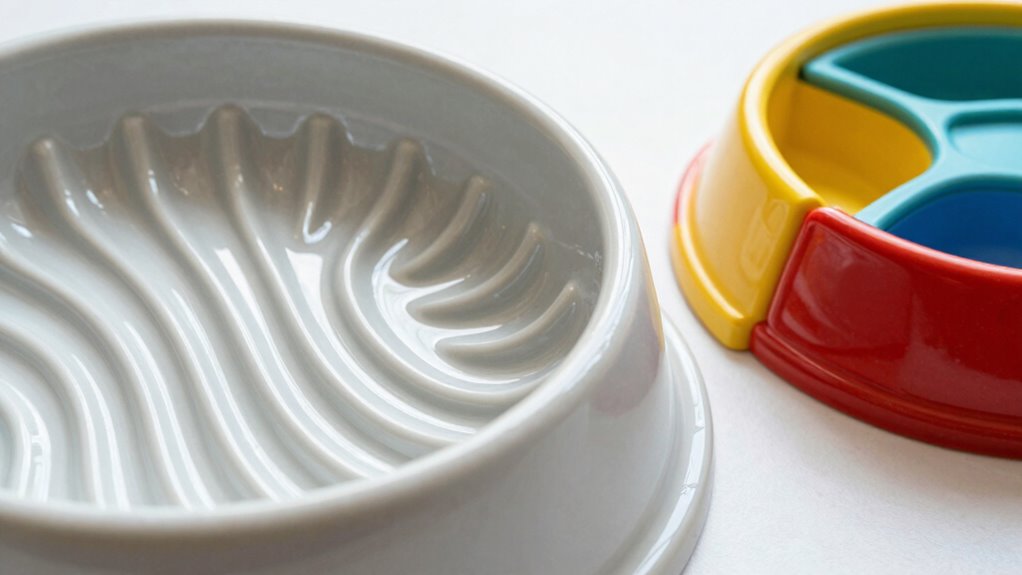
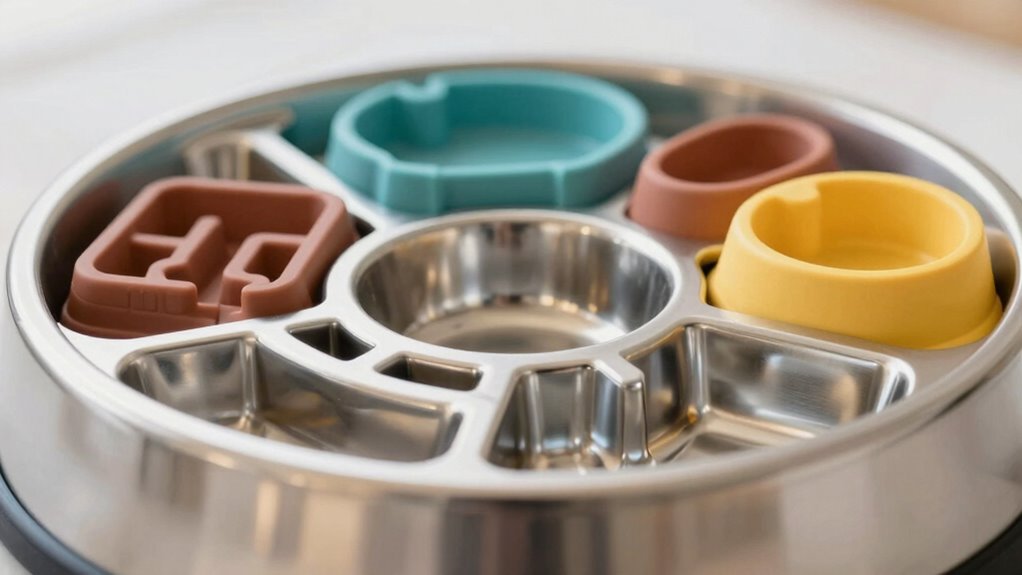
Have you ever noticed your pet gulping down food too quickly or showing signs of frustration during mealtime? Slow feeders and puzzle bowls are designed to improve feeding safety by encouraging slower eating and mental engagement. These specialized bowls feature unique designs—like ridges, mazes, or compartments—that make your dog work a little harder to access their food. When choosing a slow feeder, consider bowl materials; durable, non-toxic options like rubber, silicone, or stainless steel ensure safety and easy cleaning. These bowls help prevent issues like choking, vomiting, and bloating caused by rapid eating. By making mealtime more challenging and interactive, slow feeders and puzzle bowls promote healthier digestion and reduce overeating, creating a safer and more enjoyable feeding experience for your dog.
Which Dogs Benefit Most From These Food Toys?
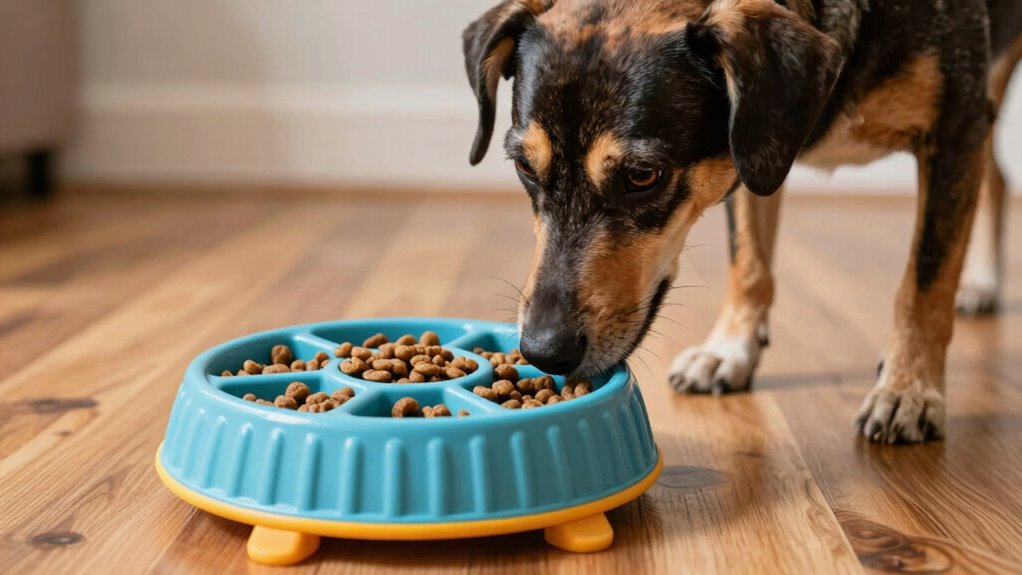
Certain dogs gain the most from using slow feeders and puzzle bowls, especially those prone to rapid eating or displaying signs of frustration during mealtime. These food toys help modify feeding behavior, encouraging slower, more deliberate bites. Dogs with a history of gulping down food can develop choking, vomiting, or bloat, so these tools promote safer eating habits. Additionally, puzzle bowls stimulate mental engagement, reducing boredom and anxiety that may lead to destructive behaviors. For dogs with sensitive stomachs or weight management needs, slowing down feeding supports better digestion and healthier weight control. Using appropriate feeding tools can also aid in preventing food aggression, by promoting calmness and reducing competition during meals. Incorporating natural materials in food toys can further enhance their safety and durability. Properly designed food toys can also help in training and behavioral management, making mealtime a positive experience for both dogs and owners. Moreover, selecting the right type of food toy based on your dog’s behavioral needs can significantly increase their effectiveness and engagement. For instance, choosing a yarn for scarves style puzzle bowl may help particularly energetic or easily bored dogs stay focused during meals. Overall, these food toys can markedly improve canine health by encouraging mindful eating and preventing issues caused by fast feeding or stress during meals.
How Do Slow Feeders Differ From Puzzle Bowls?
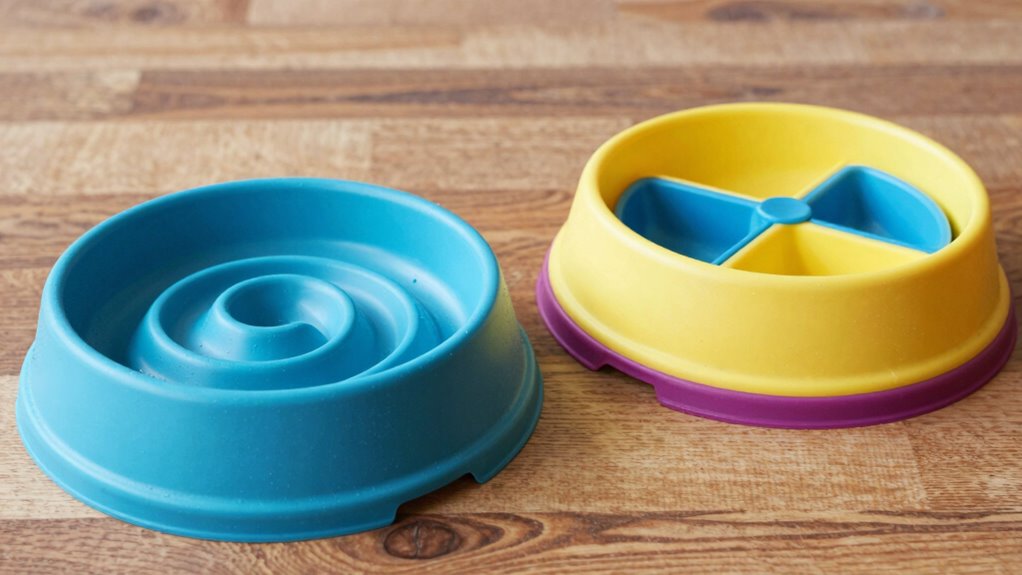
While both slow feeders and puzzle bowls aim to promote healthier eating habits, they serve different purposes and feature distinct designs. Slow feeders are typically simple devices that reduce feeding speed by making your dog work around obstacles or mazes within the bowl. Their primary goal is to prevent gulping and choking. Puzzle bowls, on the other hand, are more complex and challenge your dog mentally, engaging them during mealtime. The main difference lies in how they influence feeding speed and mental stimulation. Bowl material also varies: slow feeders are often made from silicone or plastic, while puzzle bowls may incorporate rubber, wood, or sturdy plastic for durability. Understanding these differences helps you choose the right option based on your dog’s needs. Additionally, cognitive development in puzzle bowls can provide ongoing mental engagement, making them suitable for more intelligent or bored dogs. Incorporating mental stimulation through puzzle bowls can also help reduce destructive behaviors caused by boredom, and considering nutrition can ensure your dog’s diet remains balanced while using these feeding tools. Moreover, selecting the appropriate feeding device can contribute to a more healthy eating pattern for your dog, supporting overall well-being.
What Should You Consider When Choosing a Mealtime Bowl?
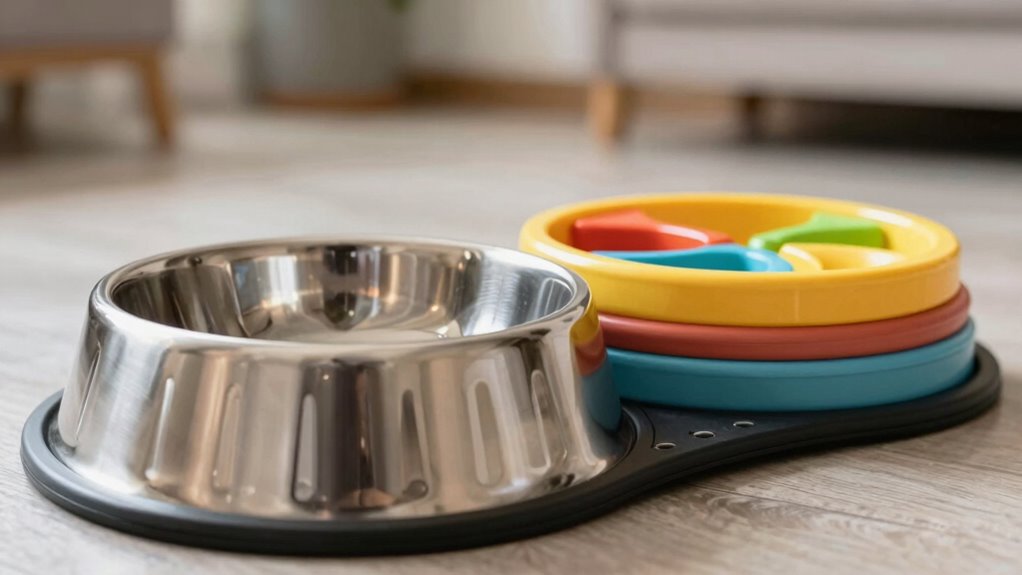
Choosing the right mealtime bowl involves considering your dog’s specific needs and habits. Start by evaluating their feeding habits—do they eat quickly or take their time? If your dog tends to gulp food, a slow feeder or puzzle bowl can help prevent choking and aid digestion. Next, think about bowl materials; stainless steel is durable and easy to clean, while ceramic offers style but may chip, and plastic is lightweight but prone to scratches. Consider your dog’s size and eating style to select an appropriately sized bowl that encourages slow, steady eating. The right material and design can improve mealtime safety and enjoyment, making it easier to match your dog’s unique feeding habits with a suitable bowl. Additionally, understanding environmental considerations like choosing durable, eco-friendly materials can contribute to more sustainable pet care. Selecting bowls made from eco-friendly materials not only benefits the environment but also promotes healthier eating habits for your dog. Furthermore, opting for high-quality materials can ensure the longevity and safety of the bowl over time, and incorporating design elements that promote balanced eating can support your dog’s overall health.
How Can You Successfully Introduce and Use Them?
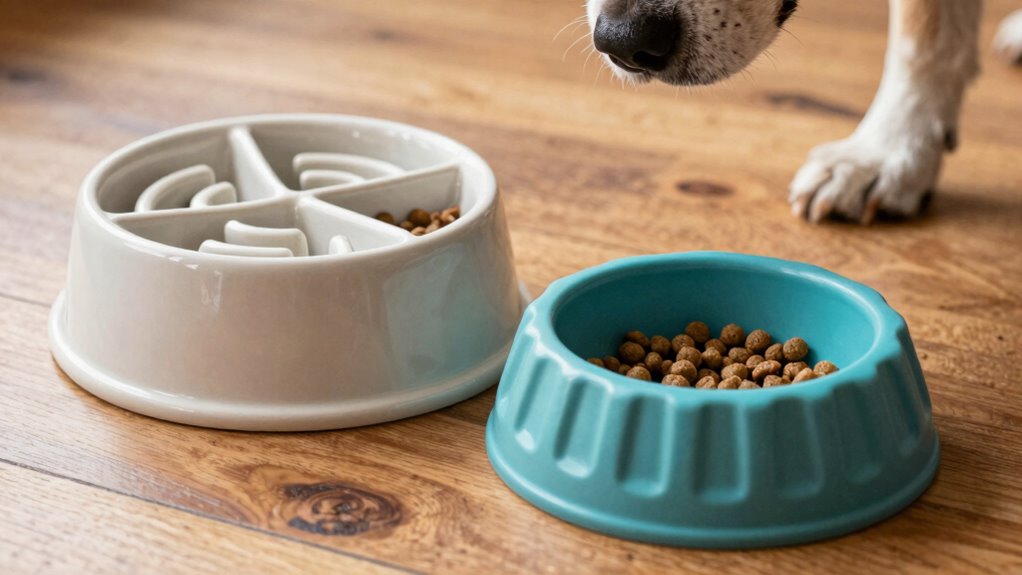
To successfully introduce a slow feeder or puzzle bowl, start by gradually shifting your dog from their usual bowl. Begin with short, supervised sessions, encouraging your dog to explore the new design. This helps prevent frustration and builds confidence. Focus on controlling their feeding speed by offering smaller portions at first, allowing your dog to adapt comfortably. Incorporate mental stimulation by guiding them to solve the puzzle or navigate the slow feeder, making mealtime engaging. Observe their responses and praise progress to reinforce positive experiences. Over time, increase usage duration and portion sizes as your dog becomes more adept. Remember that feeding habits significantly impact your dog’s overall well-being, so consistent, patient introduction guarantees they enjoy the benefits of slower feeding while promoting mental engagement and reducing gulping behaviors. Additionally, choosing the right type of feeding device suited to your dog’s personality and skill level can enhance the effectiveness of these tools. Incorporating appropriate training techniques can also help your dog develop familiarity and confidence with new feeding methods. Being mindful of your dog’s unique behavioral traits ensures a smoother transition and a more successful experience. Moreover, understanding nutritional balance can help tailor the feeding tools to meet their dietary needs.
Frequently Asked Questions
Are Slow Feeders Suitable for All Dog Breeds?
Slow feeders aren’t suitable for all breeds because of their breed-specific needs and feeding behavior. If your dog eats quickly or tends to choke, a slow feeder can help prevent digestion issues. However, for smaller or less aggressive eaters, a standard bowl might suffice. Consider your dog’s size, age, and eating habits before choosing a slow feeder, ensuring it promotes healthy eating without causing frustration.
How Often Should I Clean These Food Toys?
Imagine your dog enthusiastically pawing at their food toy after a long day—friendly reminder, cleaning frequency matters. To maintain hygiene, wash puzzle bowls and slow feeders at least once a week, or more if your pup is particularly messy or prone to allergies. Regular hygiene maintenance prevents bacteria buildup and keeps your dog safe and healthy. Keep their mealtime fun and spotless with consistent cleaning routines.
Can Slow Feeders Help With Dogs That Eat Too Quickly?
Yes, slow feeders can help with dogs that eat too quickly. They encourage better feeding habits by making your dog work a bit for their food, which can improve digestive health and prevent choking or bloat. Using a slow feeder promotes mindful eating, reduces gulping, and supports healthier digestion. Incorporate one into your dog’s routine to help manage their eating speed and boost overall digestive wellness.
Are Puzzle Bowls More Beneficial Than Slow Feeders?
While puzzle bowls can offer a stimulating experience, slow feeders are generally more beneficial for managing feeding motivation and dietary impact. They effectively slow down eating, preventing gulping and digestive issues. Puzzle bowls, though engaging, might not address these needs as directly. If your goal is to promote healthier eating habits and improve digestion, slow feeders are typically the better choice, providing both practical and mental benefits for your dog.
What Signs Indicate My Dog Needs a Food Puzzle?
If your dog shows signs of boredom during feeding or eats too quickly, they likely need a food puzzle. Watch for behaviors like gulping food, scavenging for snacks, or losing interest in regular meals. Changes in feeding habits, such as refusing to eat or showing frustration, also indicate a puzzle could help. Using a food puzzle challenges their mind, slows eating, and turns mealtime into a stimulating activity.
Conclusion
Choosing between slow feeders and puzzle bowls isn’t about finding the perfect toy, but about gently guiding your dog toward better habits. When you pick the right option, it’s like offering a quiet, enriching moment during mealtime—an unspoken gift of patience and engagement. With a little patience and understanding, you’ll help your dog savor every bite, turning feeding time into a calming, rewarding part of your shared journey.