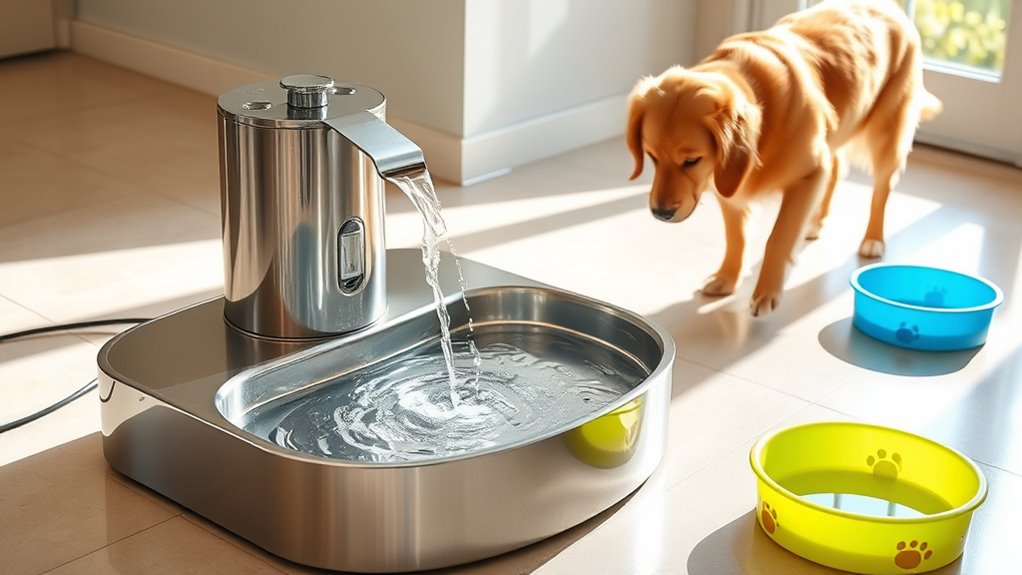

To get your pets to drink more water, make it more appealing by adding low-sodium broth or ice cubes, and place multiple, easily accessible bowls in different spots. Offer water-rich foods like wet canned food, watermelon, or cucumbers to boost hydration naturally. Monitor their intake and watch for signs of dehydration. Incorporate hydration into daily routines and activities, and you’ll discover more simple tricks to keep your pets healthy and well-hydrated.
Key Takeaways
- Add flavor, such as low-sodium broth, and ice cubes to water bowls to make drinking more appealing.
- Place multiple water sources around the home in different locations to encourage regular drinking.
- Offer water-rich foods like wet canned food, watermelon, or cucumbers to boost hydration naturally.
- Monitor daily water intake and watch for dehydration signs like dry gums or lethargy.
- Incorporate fun activities and routine water breaks during playtime to promote consistent hydration.

Have you ever wondered if you’re drinking enough water throughout the day? Keeping yourself well-hydrated is vital, but it’s just as important to guarantee your pets are drinking enough, too. Pets can often overlook their water intake, especially if they’re not motivated by the usual bowls or if their environment isn’t stimulating enough. Luckily, there are simple, effective ways to encourage your furry friends to drink more water, promoting their health and well-being.
Start by making water more appealing. Sometimes, pets turn up their noses at plain water, especially if they’re used to flavored or fresh options. You can add a splash of low-sodium broth or a few ice cubes to their water bowl to make it more enticing. Many pets enjoy the coolness of ice cubes, and chewing on them can also be a fun activity. You might also try placing multiple water bowls around your home, especially in areas your pet frequents, to make access easier and less intimidating. When water is readily available in various spots, pets are more likely to drink regularly.
Make water more appealing with broth, ice cubes, and multiple accessible bowls to encourage regular drinking.
Another effective tactic is to incorporate water-rich foods into your pet’s diet. Wet canned food contains a high moisture content, which helps boost hydration without requiring extra effort on your part. You can also try offering fresh fruits or vegetables that are safe for your pet, like watermelon or cucumber, which have high water content. These natural treats can be a tasty way to supplement their hydration, especially during warmer months when they tend to lose more moisture through panting and sweating.
Monitoring your pet’s water intake is vital to prevent dehydration. Keep an eye on how much they’re drinking each day and look for signs of dehydration, such as dry gums, lethargy, or sunken eyes. If you notice a significant decrease in water consumption or any unusual behavior, consult your veterinarian promptly. Sometimes, health issues or medications can affect a pet’s thirst, so professional advice is always a good idea. Additionally, understanding the importance of vetting and safe hydration practices can help you better care for your pet’s health.
Lastly, engaging your pet in playful activities can indirectly encourage drinking. If your dog runs around in the yard or plays fetch, they’ll naturally become more thirsty. After playtime, make sure they have easy access to fresh water so they can rehydrate comfortably. Consistency is key—by creating a routine that includes regular water breaks and making hydration a fun part of their day, you’ll help guarantee your pet stays properly hydrated, just like you’re encouraged to do for yourself.
Frequently Asked Questions
How Can I Tell if My Pet Is Dehydrated?
You can tell if your pet is dehydrated by checking their gums—if they’re dry or sticky, that’s a red flag. Look for sunken eyes, lethargy, or a loss of skin elasticity when you gently pinch the scruff of their neck. Also, monitor their water intake; if they’re drinking less than usual or urinating less, dehydration might be the cause. Act quickly if you notice these signs.
Are There Specific Water Bowls for Different Pets?
Ever wondered if your pet needs a special water bowl? Yes, there are bowls designed for different pets. For cats, choose shallow, wide bowls to prevent whisker fatigue. Dogs benefit from sturdy, non-slip bowls, especially if they’re big or messy drinkers. Small animals like rabbits or guinea pigs prefer water bottles or small dishes. Picking the right bowl helps encourage hydration and keeps your pet comfortable. Isn’t their health worth it?
Can Certain Foods Help Increase My Pet’s Water Intake?
Yes, certain foods can help boost your pet’s water intake. Offer watery fruits like watermelon or cucumber, which are high in moisture and tasty. Wet pet food is another excellent choice, as it contains more water than dry kibble. You can also add a splash of broth to their food or water bowl to make it more appealing. These options encourage your pet to stay hydrated naturally.
What Are Signs of Water Intoxication in Pets?
Water intoxication in pets is serious, like a tidal wave overwhelming a shore. Signs include vomiting, confusion, lethargy, and unsteady movements. You might notice excessive drooling or difficulty breathing. If your pet shows these symptoms, act fast—contact your vet immediately. Overhydration can be dangerous, so monitor their water intake carefully and make certain they don’t gulp down large amounts too quickly.
How Often Should I Change My Pet’s Water?
You should change your pet’s water at least once daily to keep it invigorating and clean. If your pet drinks a lot or it’s hot outside, consider invigorating the water more frequently, like twice a day. Regularly check the water bowl for debris or algae, and clean it thoroughly to prevent bacteria buildup. Fresh water encourages your pet to stay hydrated and promotes good health.
Conclusion
Now that you know these hydration hacks, your pets will drink more water than they ever thought possible. Imagine turning your home into a lush oasis where every sip refreshes their tiny bodies like a mountain stream rushing through a valley. Keep experimenting with different tricks, and soon, your furry friends will stay happier, healthier, and thirst-free. Remember, a well-hydrated pet is a happy pet, and you’re their ultimate hydration hero!