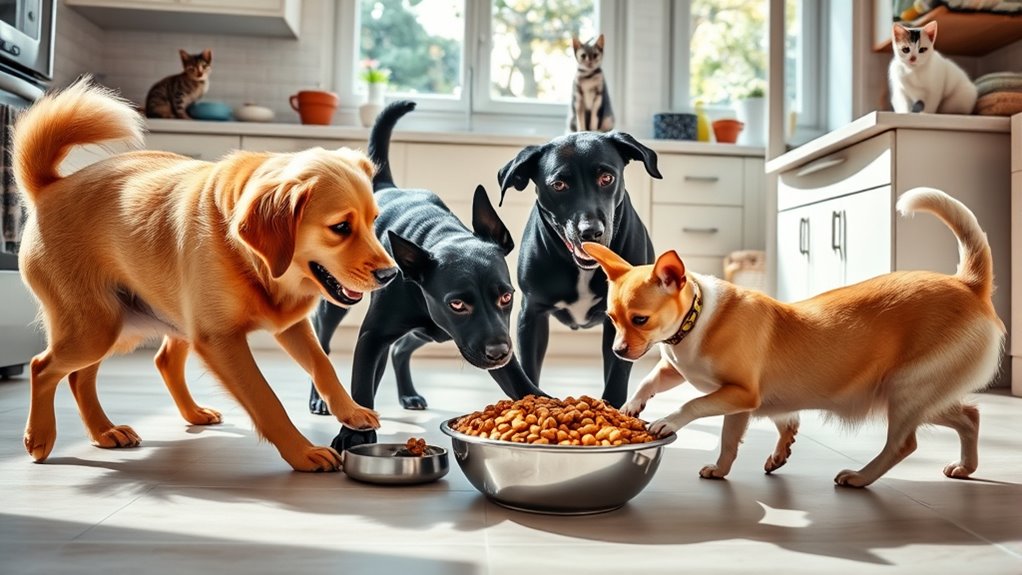
To end mealtime fights with multiple pets, establish a consistent routine, feeding them at the same times daily. Set up separate feeding spaces or barriers to prevent conflicts and use different bowls for each pet. Practice patience and reward calm, respectful behavior during meals. Creating a peaceful, predictable environment helps reduce anxiety and territorial disputes. If you want to discover more effective strategies, there’s plenty to learn about managing mealtime harmony among your pets.
Key Takeaways
- Establish separate feeding areas or rooms to prevent food guarding and conflicts.
- Maintain consistent feeding schedules and routines to reduce anxiety and competition.
- Use distinct bowls or stations for each pet to avoid confusion and stealing.
- Reinforce calm, respectful behavior with praise or treats during meals.
- Tailor feeding strategies to each pet’s personality and needs for smoother mealtimes.

Feeding multiple pets can be rewarding but also challenging, especially when managing different dietary needs and schedules. You want to guarantee each animal gets the proper nutrition and feels secure during mealtime, but it’s easy for chaos to erupt if boundaries aren’t set. To start, establish a consistent routine. Animals thrive on predictability, so feed them at the same times each day. This reduces anxiety and prevents one pet from feeling entitled to another’s meal. Use designated feeding spots for each pet, whether that’s specific bowls or separate areas in your home. This visual cue helps your pets understand their space and discourages them from snatching or guarding food. If you notice one pet hogging the dish or becoming aggressive, consider feeding them in separate rooms or using barriers to physically separate them during mealtime. This creates a calm environment and prevents disputes from escalating.
Another important step is to tailor each pet’s diet to their individual needs. Some pets require special diets due to health issues, age, or breed, so avoid giving them the same type of food. Using different bowls or even separate feeding stations helps you easily identify each pet’s portion. When serving, measure out accurate portions for each animal to prevent overeating or underfeeding. If you have a pet that’s particularly food-motivated or prone to stealing others’ food, you might need to supervise their meals more closely or use puzzle feeders that slow down their eating and keep them occupied. This not only prevents fights but also promotes healthier digestion. Additionally, providing appropriate feeding tools can help manage specific behaviors and reinforce boundaries during mealtime.
Consistency and patience are key. If your pets start to squabble over food, don’t punish them harshly but calmly reinforce the boundaries you’ve set. Reward calm behavior with praise or treats, encouraging them to associate peaceful mealtimes with positive reinforcement. Over time, your pets will learn what’s expected during feeding and develop a more respectful attitude toward each other’s meals. Remember, each animal’s personality influences how they behave around food. Some may be naturally more competitive or anxious, so adjusting your approach to suit their individual needs will make mealtime smoother. By establishing clear routines, providing separate spaces, customizing diets, and practicing patience, you can reduce mealtime conflicts and foster a more peaceful feeding environment for all your pets.
Frequently Asked Questions
How Can I Prevent Pets From Stealing Each Other’s Food?
To prevent your pets from stealing each other’s food, establish separate feeding stations for each pet, ideally in different rooms or using barriers. Supervise mealtime closely and feed them at the same time to reduce competition. Consistently enforce rules and avoid leaving food unattended. Use timed feeders or designated areas to help your pets learn their boundaries. With patience and consistency, you’ll minimize theft and promote peaceful mealtimes.
What Are the Best Feeding Schedules for Multiple Pets?
Think of your pets’ feeding schedule as a well-choreographed dance. You should feed them at the same times daily, creating a predictable rhythm they can anticipate. Divide portions based on size and energy needs, and stick to consistent meal times. This approach minimizes hunger-driven chaos and keeps your furry friends calm and content. Regular, scheduled meals act as the steady drumbeat guiding their day, reducing the chances of food disputes.
How Do I Introduce a New Pet to Existing Mealtime Routines?
You should introduce your new pet gradually to existing routines. Start by feeding them separately at first, in a quiet space, to prevent competition. Gradually bring their mealtimes closer together, monitoring their behavior. Consistency is key; keep regular feeding times and routines. Use positive reinforcement to encourage good behavior and guarantee your established pets don’t feel replaced. Over time, they’ll adjust and share mealtime peacefully.
Are There Specific Bowls or Feeders That Help Reduce Mealtime Fights?
Think of specialized bowls as peacekeepers at the dinner table. Yes, there are feeders designed to reduce fights—such as divided bowls, slow feeders, and raised platforms. These tools give each pet their own space, minimizing resource guarding. You should choose bowls that fit your pets’ sizes and eating styles, ensuring everyone feels secure. Consistent routines and positive reinforcement will help turn mealtime into a calm, shared experience rather than a battleground.
How Can I Identify if a Pet Is Stressed During Mealtime?
You can tell your pet’s stressed during mealtime if they show signs like panting, lip licking, yawning, or avoiding their food. Watch for tense body language, such as stiff posture or tail flicking, and note if they vocalize or try to hide. If they seem anxious or restless, it’s a sign they’re uncomfortable. Paying attention to these cues helps you identify stress and adjust feeding routines accordingly.
Conclusion
By mastering these feeding strategies, you can transform mealtime chaos into harmony, much like a conductor guiding an orchestra to perfect unity. Remember, patience and consistency are your most valuable tools—think of them as the keys to revealing peace among your pets. With a little effort, you’ll create a symphony of calm and cooperation, proving that even in the chaos of mealtime, harmony is within your reach—just like the timeless dance of order and chaos in nature.