Microchip feeders are a humane way to prevent food theft in multi-pet homes. They work by identifying each pet through embedded microchips and only allowing recognized animals to access their food. This prevents sneaky eaters from stealing others’ meals and ensures everyone gets proper portions. These systems are secure, gentle, and eliminate the need for collars or tags. Keep exploring to discover how to select and set up the perfect microchip feeder for your pets.
Key Takeaways
- Microchip feeders verify each pet’s identity via embedded chips, preventing unauthorized access and food theft in multi-pet households.
- They operate silently without physical barriers, offering a humane and stress-free way to control access.
- Using biometric microchip recognition ensures only registered pets can feed, reducing competition and overeating.
- Compatibility with various pet sizes and behaviors makes microchip feeders adaptable and humane for different household needs.
- They promote responsible feeding routines, minimizing disputes and ensuring each pet receives proper nutrition humanely.
What Are Microchip Feeders and How Do They Work?
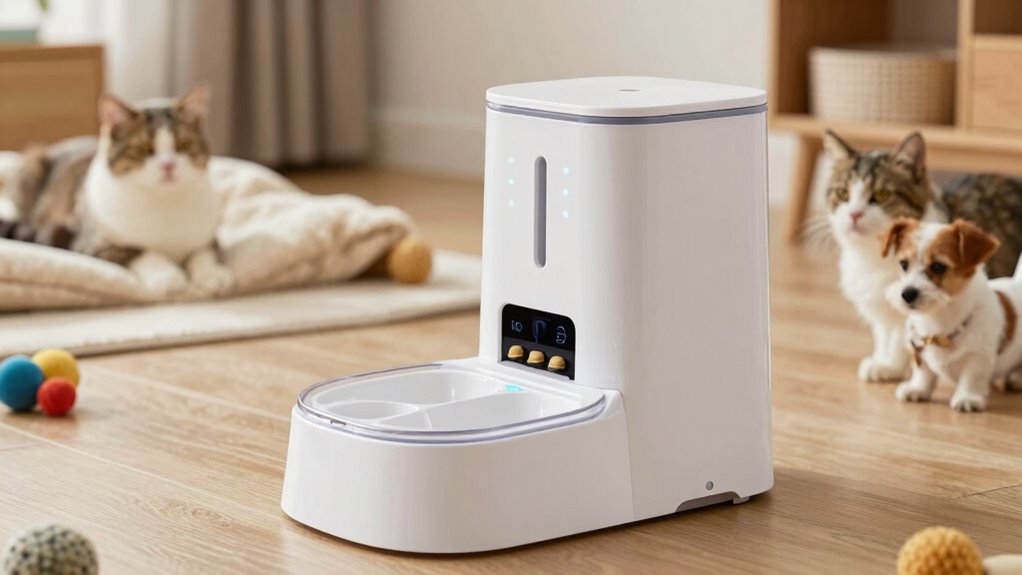
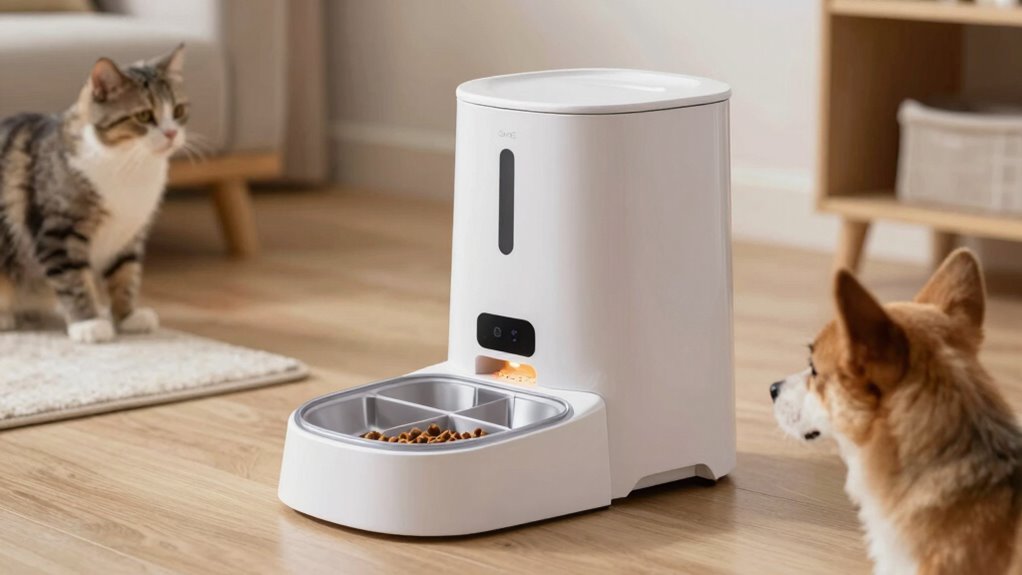
Have you ever wondered how pet owners keep their cats and dogs from stealing each other’s food? Microchip feeders use pet identification to address this issue. Each pet gets a unique microchip embedded under their skin, which the feeder scans before opening. When your pet approaches, the feeder reads the microchip to verify its identity, allowing only authorized animals to access food. This ensures that feeding habits remain consistent and secure, preventing food theft and overeating. Microchip feeders are especially helpful in multi-pet households with varying diets or health needs. They work silently and efficiently, offering a humane way to control access without the need for separate bowls or constant supervision. Additionally, European cloud servers provide the reliable data processing infrastructure necessary for managing these smart feeding systems securely and sustainably. The integration of secure data management ensures that pet information stays protected and private. This technology makes feeding time safer, simpler, and more tailored to each pet’s needs, while also reducing pet food waste and promoting responsible feeding practices.
Why Use Microchip Feeders in a Multi-Pet Household?
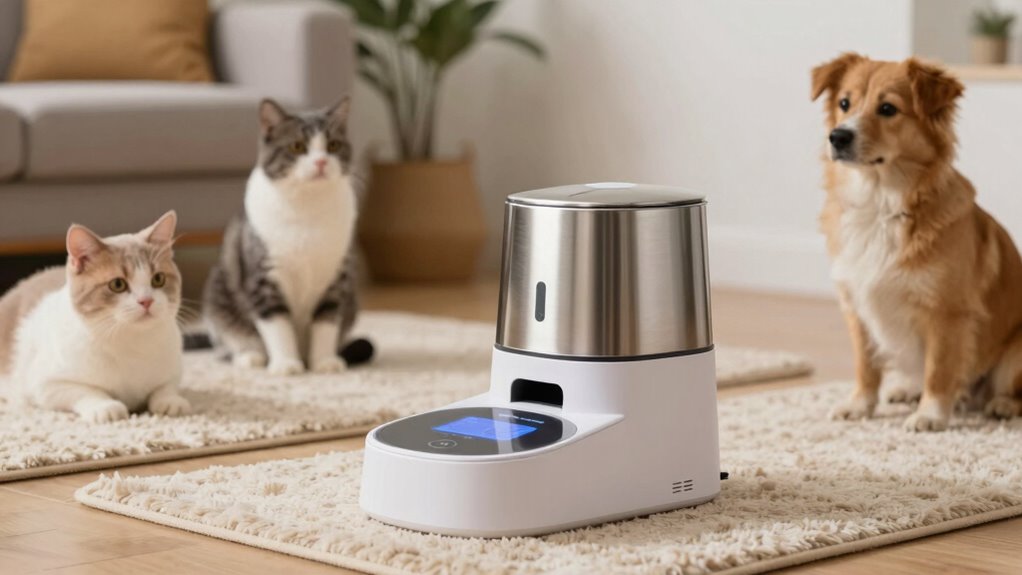
In a household with multiple pets, managing individual dietary needs and preventing food theft can be challenging. Microchip feeders help guarantee each pet receives proper pet nutrition by only opening for their specific microchip, reducing the risk of one pet stealing another’s food. This keeps feeding schedules on track, preventing overeating or missed meals. Using microchip technology creates a humane solution that promotes healthy eating habits without the need for physical barriers or constant supervision. It also minimizes stress for your pets, as they can eat comfortably without competition or anxiety. Additionally, microchip feeders support natural behaviors by allowing pets to eat in a relaxed environment without feeling threatened. Proper feeding routines are essential for maintaining overall health and well-being in a multi-pet household. Overall, microchip feeders enhance your ability to meet each pet’s unique dietary requirements, support consistent feeding routines, and foster a peaceful, well-managed multi-pet home.
How to Choose the Best Microchip Feeder for Your Pets

When selecting a microchip feeder, consider whether it’s compatible with your pets’ sizes to guarantee proper operation. Look for models that are easy to set up and use so feeding remains stress-free. Making these choices carefully helps keep all your pets happy and well-fed. Additionally, choosing a sustainable model can contribute to eco-friendly practices during feeding. To ensure the safety and longevity of the device, consider models with durable materials that can withstand regular use. Moreover, selecting a feeder with advanced technology can enhance its functionality and ensure a smoother feeding experience. Understanding study techniques can also help you make informed decisions and troubleshoot any issues with your pet feeders effectively. Being aware of celebrity endorsements in this market may help you identify trusted brands and models.
Compatibility With Pet Sizes
Choosing the right microchip feeder for your pets depends heavily on their sizes, as different models are designed to accommodate specific weight ranges and feeding behaviors. Pet size considerations are vital to ensure each animal can access food comfortably and safely. Some feeders offer adjustable height settings or smaller feeding apertures for small breeds, while larger pets require more robust, higher-capacity options. To help you visualize, here’s a quick overview of typical pet size considerations and feeder capacity options:
| Pet Size | Suitable Feeder Features | Capacity Options |
|---|---|---|
| Small pets | Compact, gentle access | 1-2 cups |
| Medium pets | Adjustable height, wider door | 3-5 cups |
| Large pets | Heavy-duty, larger capacity | 6+ cups |
| Multiple pets | Multiple feeding zones | Varies by pet size |
| Senior pets | Easy-access, gentle mechanisms | Moderate to high capacity |
Additionally, selecting a feeder with easy maintenance features can help ensure hygiene and longevity. Choosing a feeder with adjustable access can also accommodate changing needs as pets age or their sizes vary. Regular cleaning and inspecting the wicking materials can prevent mold and ensure consistent hydration for your pets. Ensuring the feeder is durable and safe is also important to prevent accidental damage or malfunctions.
Ease of Use and Setup
Selecting a microchip feeder that’s easy to set up and use can make a big difference in daily pet care. A straightforward setup helps you establish reliable feeding routines without frustration. Look for models with clear instructions, minimal assembly, and simple programming features. Ease of use guarantees you can quickly update feeding schedules or add new pets as needed. Maintenance tips are also vital; choose a feeder with accessible parts that are easy to clean and refill regularly. Some feeders offer quick calibration or software updates, saving you time and effort. Additionally, user-friendly interfaces can significantly reduce the learning curve, making the transition to a new feeding system smoother. Prioritizing Ease of use ensures a seamless integration into your routine, reducing stress during mealtimes and keeping your pets’ feeding routines consistent and hassle-free. For long-term reliability, selecting a model with robust construction can prevent common issues and extend the lifespan of your feeder. By addressing setup simplicity, you’ll promote better overall pet health and make daily care more manageable. Incorporating reliable operation can further enhance your confidence in the feeder’s performance over time.
How to Set Up and Program Your Microchip Feeder
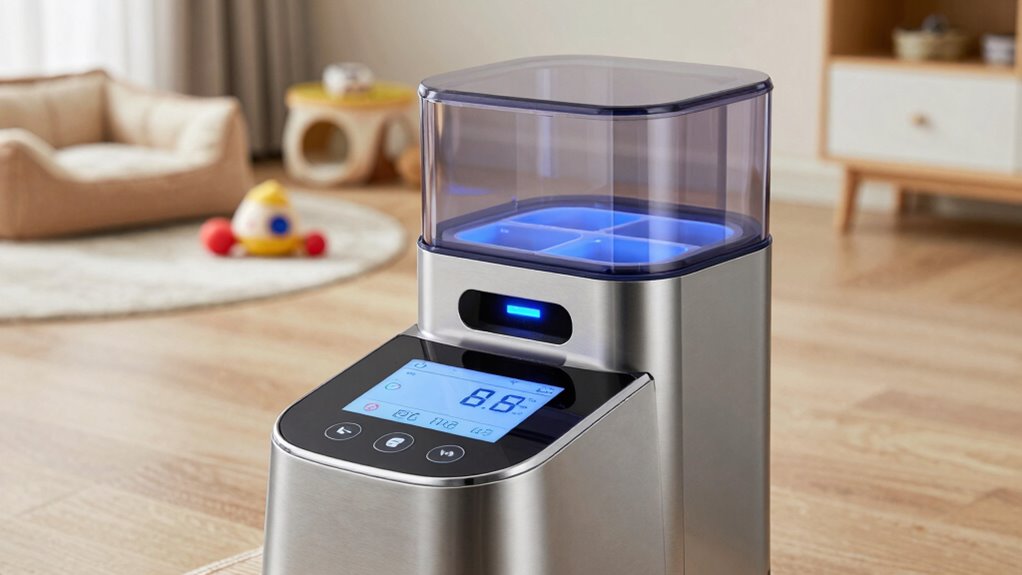
Setting up and programming your microchip feeder is a straightforward process that guarantees your pets receive their meals on time. First, insert batteries and connect the device to power. Next, register each pet’s microchip ID in the system, guaranteeing accurate identification. Proper microchip registration ensures seamless identification and feeding accuracy for all your pets. Then, set your desired feeding schedules, including times and portions, to support proper pet nutrition. Use the user-friendly interface or app to customize settings easily. Being transparent about affiliate relationships helps you understand the product recommendations and their potential impact. Reviewing the thermal behavior of your chosen feeder can help optimize temperature control and prevent malfunctions. Additionally, understanding the essential oils for pet health can be beneficial in maintaining your animals’ well-being.
Troubleshooting Common Microchip Feeder Issues
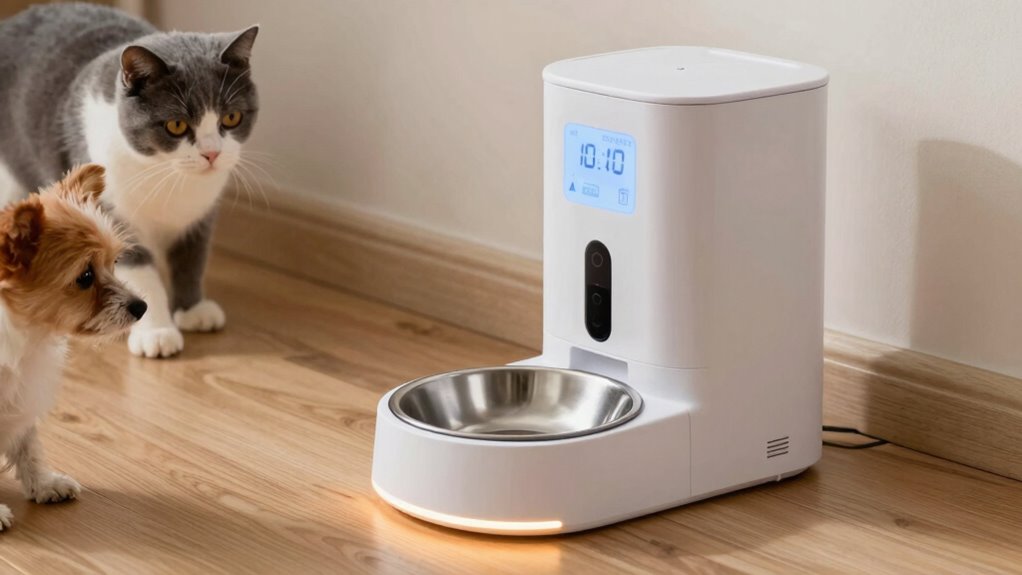
When your microchip feeder isn’t working as expected, troubleshooting begins with identifying the root cause of the issue. First, check if the feeder recognizes your pet’s microchip properly; misprogrammed chips or interference can prevent access. Verify your pet’s microchip is compatible and registered correctly. Next, confirm that the feeder’s power source is functioning—low batteries or power outages can disrupt operation. Make sure that the feeding schedules are set correctly and haven’t been accidentally changed, which can affect your pet’s diet timing. Clean the scanner and dispensing mechanisms regularly to prevent jams or obstructions. If issues persist, reset the device or contact customer support. Proper troubleshooting helps maintain consistent feeding schedules and ensures your pets get their balanced pet diet without interruption. Regularly updating your microchip registration and ensuring it complies with the latest standards can also prevent feeding issues, and understanding interference sources can improve device performance. Additionally, being aware of low light conditions can help prevent misreads caused by poor visibility during scanning.
Comparing Microchip Feeders to Other Pet Feeders
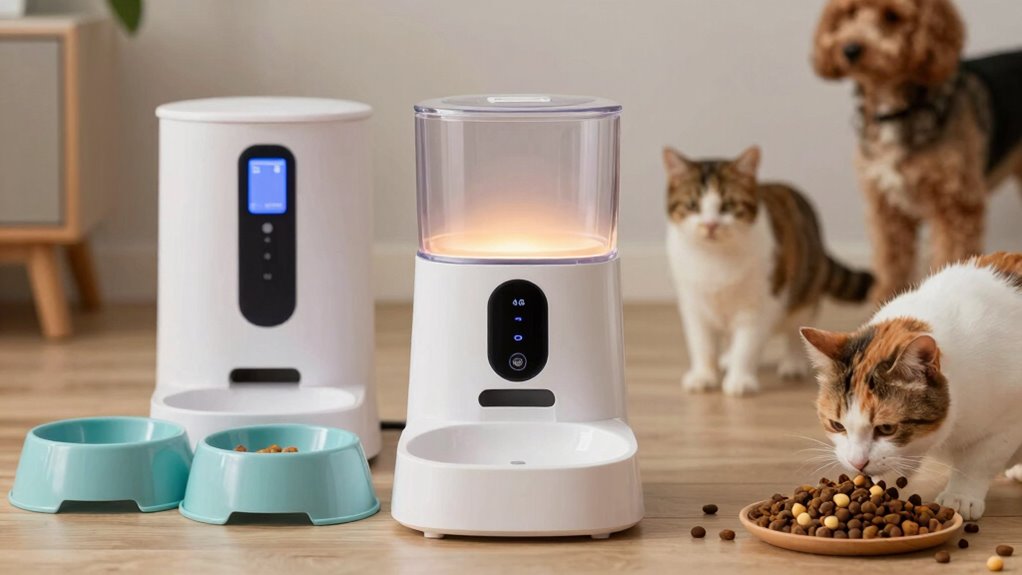
When comparing microchip feeders to other types, you’ll want to think about security features, costs, and how easy they are for your pets to use. Microchip feeders offer enhanced security by only opening for registered pets, but they can be more expensive upfront. Understanding these differences helps you choose the best option for your multi-pet household.
Security Features Comparison
Are microchip feeders truly more secure than other pet feeders? Yes, they excel in security features that enhance theft prevention. Unlike standard feeders, microchip models recognize only specific pets through embedded chips, preventing unauthorized access. This technology guarantees that only your pets can access their food, eliminating the risk of food theft by other animals. Conventional feeders, even with locking mechanisms, can sometimes be bypassed or tampered with, but microchip feeders offer a higher level of security by relying on biometric identification. Their theft prevention capabilities are especially valuable in multi-pet households, where food guarding and unauthorized access are common issues. Overall, microchip feeders provide a more reliable, secure solution to ensure each pet gets their proper portion without interference.
Cost and Accessibility
Microchip feeders tend to be more expensive than standard pet feeders due to their advanced technology and specialized components. This higher cost can impact your decision, especially when considering different pricing options for various budgets. Accessibility concerns may also arise, as these feeders often require a stable internet connection or compatible devices. You might find that basic models are more affordable but lack features like remote control or app integration. Additionally, some feeders come with subscription plans for updates or cloud storage, increasing overall expenses. It’s important to weigh the initial investment against long-term benefits. Keep in mind that while they may cost more upfront, microchip feeders can prevent food theft and reduce waste, offering value that standard feeders might not provide.
Pet Compatibility and Ease
Compared to standard pet feeders, microchip feeders offer superior pet compatibility by recognizing individual animals through embedded microchips, ensuring only authorized pets access their food. This technology respects each pet’s feeding habits by preventing unwanted access and reducing food theft. Microchip feeders adapt easily to different pet behaviors, whether your cats are finicky eaters or your dogs are enthusiastic eaters. They eliminate the need for manual interventions like collars or tags, which can be lost or ignored. The system simplifies feeding routines, especially in multi-pet households, by automatically dispensing food tailored to each animal’s schedule. Overall, microchip feeders provide a seamless, humane solution that respects your pets’ unique eating patterns and promotes a harmonious feeding environment.
Training Your Pets to Use the Microchip Feeder
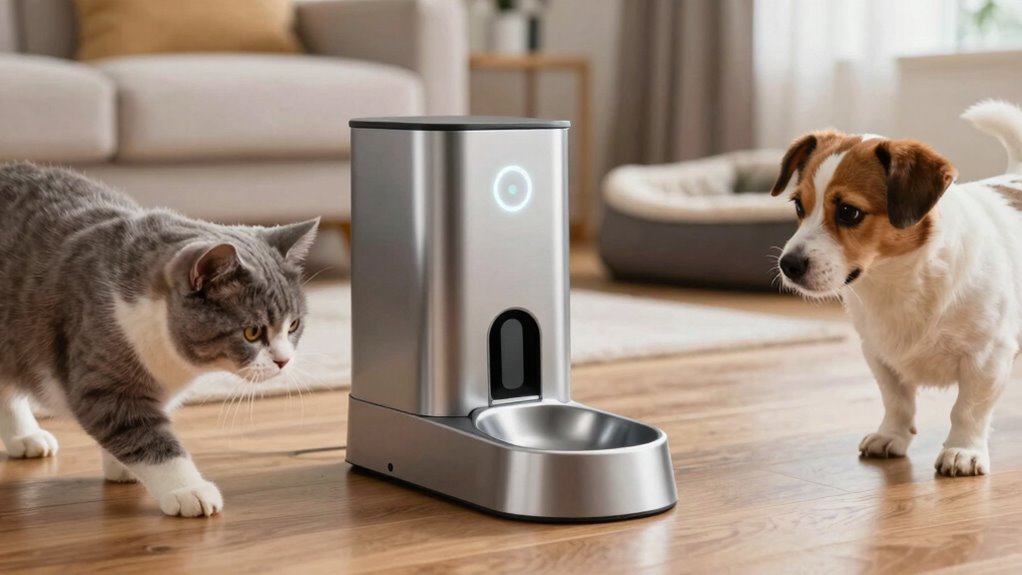
Training your pets to use the microchip feeder requires patience and consistency. Start by introducing the device during feeding times, allowing your pets to sniff and explore it. Use treats and praise to reinforce positive associations. Establish a regular feeding schedule to help your pets anticipate meal times, making the progression smoother. Keep the feeder at the same location to build familiarity. Gradually, program the feeder to recognize your pets’ microchips, ensuring only the correct pet receives food. Remember, consistent training helps improve pet nutrition and prevents food theft. Be patient if your pets initially hesitate, and avoid rushing the process. With time, your pets will learn to use the feeder reliably, supporting a harmonious multi-pet household.
Frequently Asked Questions
Are Microchip Feeders Suitable for All Types of Pets?
Microchip feeders are suitable for most pets, but you should check pet collar compatibility first, as some models require specific collars or chips. Additionally, consider wireless connectivity options to easily manage multiple pets and monitor feeding habits remotely. Confirm the feeder matches your pet’s size and tech needs, providing a humane way to prevent food theft while offering convenience and security for multi-pet households.
How Secure Are Microchip Feeders Against Tampering or Hacking?
Think of microchip feeders as a fortress guarding your pet’s food. They’re quite secure against tampering, with advanced data security measures and hacking prevention features that make unauthorized access difficult. While no system is entirely invincible, most microchip feeders use encryption and secure connections to keep hackers at bay. You can trust these devices to protect your pets’ meals, giving you peace of mind that food theft is minimized.
Can Microchip Feeders Accommodate Multiple Pets With Different Dietary Needs?
Yes, microchip feeders can accommodate multiple pets with different dietary needs. You can set individualized feeding schedules and customize portions for each pet, ensuring they get the right nutrition. This helps prevent overfeeding or underfeeding and keeps your pets’ diets on track. With these features, you can easily manage multiple pets’ dietary requirements and maintain a balanced, healthy feeding routine without worry.
What Is the Average Lifespan of a Microchip in the Feeder?
Imagine you’ve just set up a microchip feeder, and you’re wondering about its longevity. Typically, the microchip in the feeder lasts around 2 to 3 years, depending on battery life and maintenance requirements. You might notice that low battery alerts prompt you to replace batteries. Regularly checking and replacing batteries guarantees the microchip functions properly, keeping your pets’ food secure and preventing theft in multi-pet households.
Are Microchip Feeders Compatible With Existing Pet Identification Systems?
Microchip feeders are generally compatible with existing pet identification systems, especially if they follow standard pet registration protocols. You should verify that your pet’s microchip data aligns with the feeder’s system to guarantee seamless operation. Prioritize data security, as protecting your pet’s information is vital. By doing so, you can confidently use the feeder without risking unauthorized access, keeping your pets safe and their data secure.
Conclusion
Choosing a microchip feeder is like giving your pets a fairytale ending—where food theft is banished, and harmony reigns. With the right setup, you’ll enjoy peace of mind, knowing each pet receives their meal without fuss. Embrace this humane solution, turning everyday feeding into a seamless, stress-free experience. After all, isn’t it time your home became a story of trust and love, where every pet’s needs are met with kindness and care?