
To encourage your pet to drink more without forcing, create a clean, inviting water station with fresh, flowing water or add flavor enhancers like low-sodium broth or pet-safe herbs. Incorporate hydrating foods, fun toys, and puzzle feeders to make drinking enjoyable. Keep routines consistent and refill water regularly. Small environmental adjustments, like ice cubes or rotating bowls, also help. If you’re interested in more clever hydration strategies, there’s plenty you can try.
Key Takeaways
- Create appealing water stations with fresh, clean water, and consider using pet fountains to encourage drinking.
- Add safe flavor enhancers like low-sodium broth or pet-safe flavor drops to make water more enticing.
- Incorporate hydrating foods such as watermelon, cucumbers, or moist treats to boost overall fluid intake.
- Use interactive toys and puzzle feeders that incorporate water or encourage movement to promote natural hydration.
- Support routine hydration by offering small, frequent waterings, rotating bowls, and adding ice cubes to maintain interest.
Amazon Product B0FW3QTNL1
As an affiliate, we earn on qualifying purchases.
Why Proper Hydration Is Essential for Your Pet’s Health
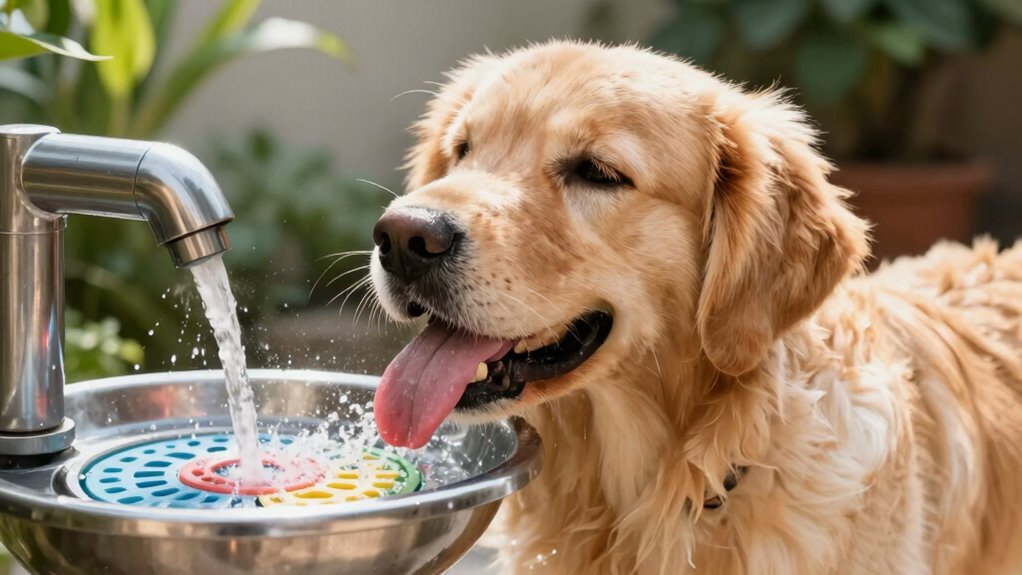
Proper hydration is essential for your pet’s overall health because water supports every bodily function, from digestion to temperature regulation. Your pet’s pet water intake directly impacts their energy levels, immune system, and organ function. When hydration importance is overlooked, your pet may become dehydrated, leading to issues like lethargy, poor digestion, or urinary problems. Adequate water consumption helps maintain healthy kidneys, lubricates joints, and ensures vital nutrients are transported throughout the body. Recognizing the significance of proper hydration encourages you to monitor their water intake closely. Ensuring your pet drinks enough water isn’t just about quenching thirst; it’s a crucial component of their overall well-being and longevity. Staying attentive to hydration needs keeps your pet healthy and active.
Amazon Product B0DRD33VXZ
As an affiliate, we earn on qualifying purchases.
How Do You Know If Your Pet Isn’t Drinking Enough?
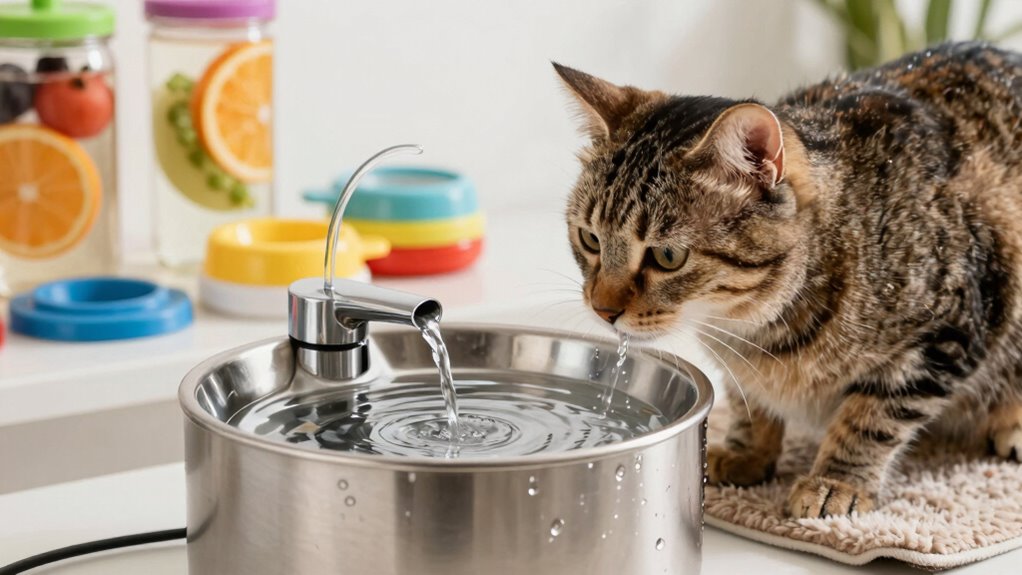
If your pet isn’t drinking enough water, you’ll notice certain signs that indicate dehydration or inadequate hydration. Reduced water intake often leads to dry gums, sunken eyes, and lethargy. You might also see a decrease in urine output or dark-colored urine, which signals that your pet isn’t staying properly hydrated. Keep an eye out for a dry nose or skin that doesn’t quickly bounce back when pinched, as these are common dehydration signs. Weight loss over time or constipation can also point to insufficient water consumption. Recognizing these symptoms early helps you take action before dehydration worsens. Monitoring your pet’s water intake regularly is key to ensuring they stay hydrated and healthy. Incorporating calming aromatherapy with essential oils like lavender can promote relaxation and reduce stress, encouraging your pet to drink more water. Additionally, understanding the importance of contrast ratio in visual displays can help create a more engaging environment that encourages natural curiosity and hydration. Using precious metals in your pet’s environment, such as decorative accents or feeders, can also subtly promote a sense of well-being that supports hydration efforts. Being aware of potential reconditioning techniques for your pet’s environment can further motivate them to maintain proper hydration habits. For example, adjusting the lighting to be more inviting can make drinking areas more appealing.
Amazon Product B0FS1JHMXT
As an affiliate, we earn on qualifying purchases.
Create an Inviting Water Station That Pets Love
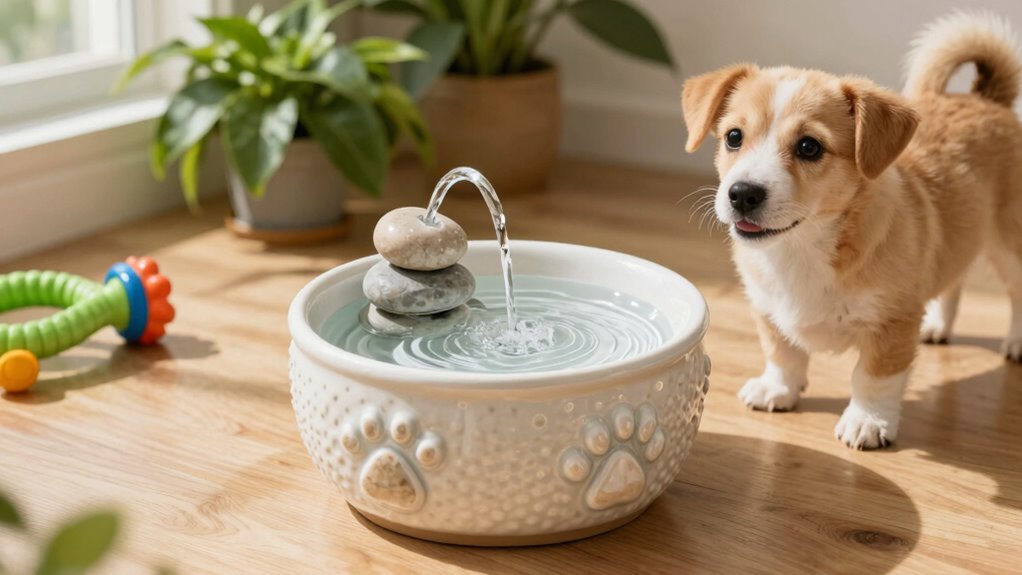
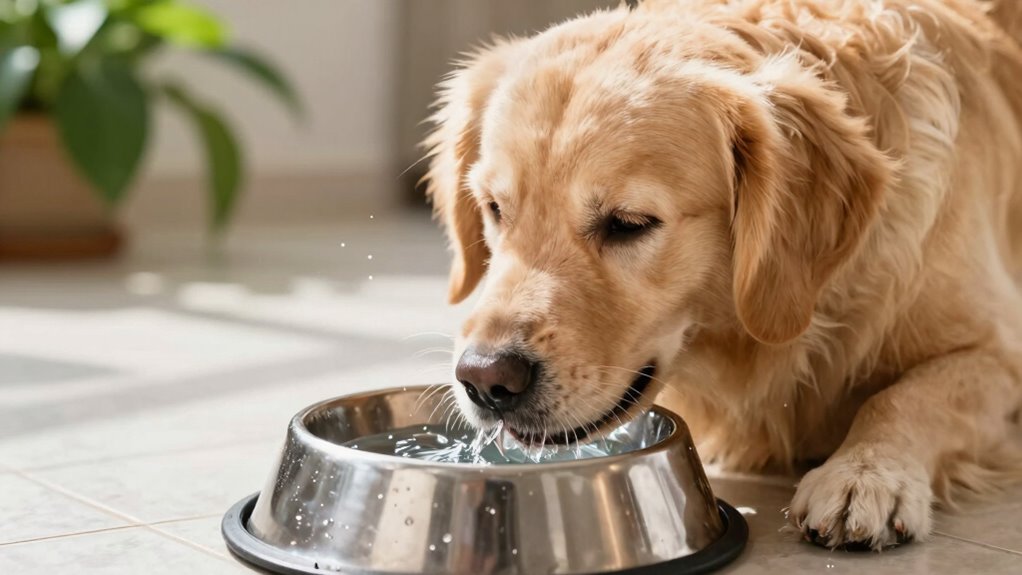
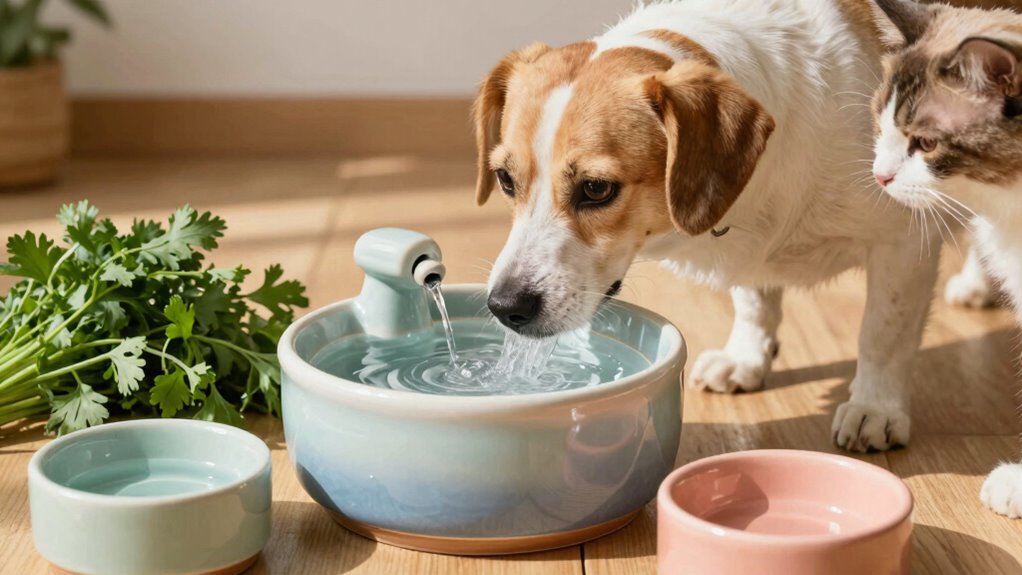
Creating an inviting water station for your pet encourages them to drink more naturally. Start by choosing a quiet, accessible spot away from their food and high-traffic areas. Pet water fountains are excellent because they provide fresh, circulating water that entices pets to drink more often. If you prefer a DIY approach, set up a simple water station with a large, easy-to-clean bowl in a designated area. Keep the station clean and refill it regularly to ensure fresh water is always available. Consider adding a few toys or placing the station at different levels to make it more appealing. Making your pet’s water station inviting and convenient helps promote hydration without forcing it, encouraging your pet to drink more freely and comfortably. Proper hydration techniques can also be integrated into your pet care routine to support their health. Free Floating water sources can also be used to naturally encourage pets to hydrate by mimicking their natural environment. Incorporating modern kitchen technology such as automatic water dispensers can further enhance hydration efforts. Utilizing traditional methods, like providing multiple water sources around your home, can also help ensure your pet stays well-hydrated throughout the day. A smart home system with local automation features can remind you to refill or clean the water stations regularly, ensuring consistent access to fresh water.
Amazon Product B0DMKBB689
As an affiliate, we earn on qualifying purchases.
What Flavors Can Make Water More Appealing and Safe?
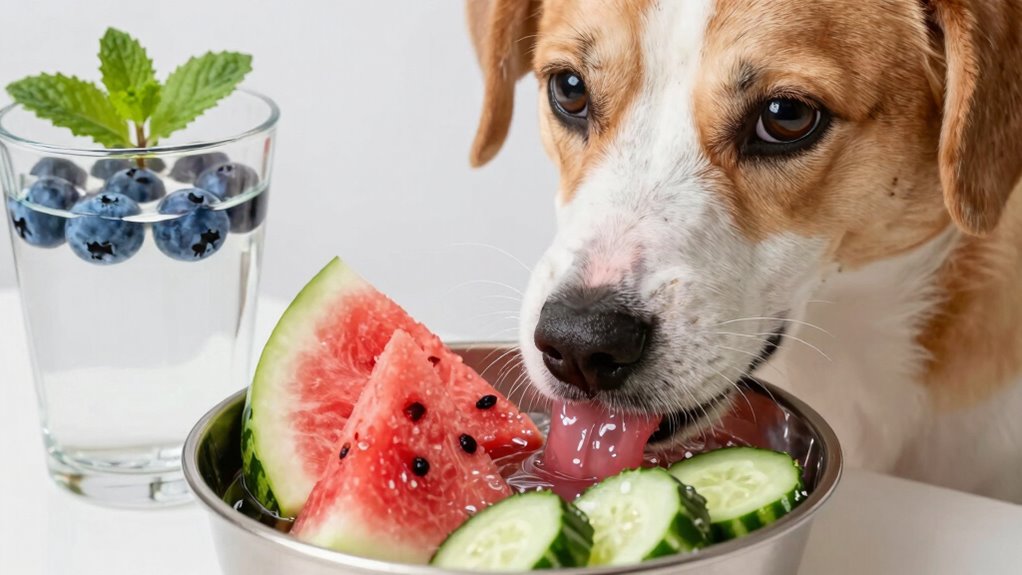
Wondering how to make your pet’s water more tempting? Flavor enhancements with safe additives can turn plain water into a tasty treat. You can try adding small amounts of natural ingredients like chicken broth or tuna juice—just make certain they’re free of onions, garlic, or salt. Here are some safe options to think about:
- A splash of low-sodium chicken or beef broth
- A few drops of pet-safe flavor enhancers
- Fresh herbs like parsley or basil (in moderation)
- A hint of fruit-infused water (like apple slices)
- Incorporating natural flavor options can further entice your pet to drink more water. Understanding the history of pet hydration can help you appreciate the importance of proper hydration for your pet’s health. Additionally, researching dog hydration needs reveals how different breeds and sizes may require tailored approaches to stay adequately hydrated. Staying informed about hydration strategies for pets ensures you’re providing the best care possible. Always check labels for safe additives and avoid anything harmful. These flavor enhancements can make water more appealing, encouraging your pet to hydrate without any forcing.
Add Hydrating Foods to Keep Your Pet Well-Fluided
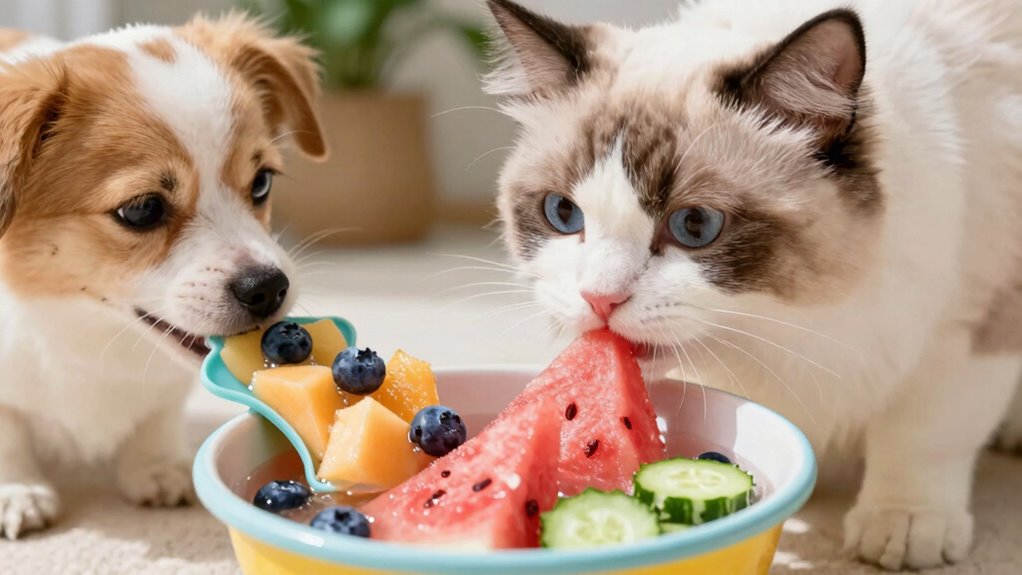
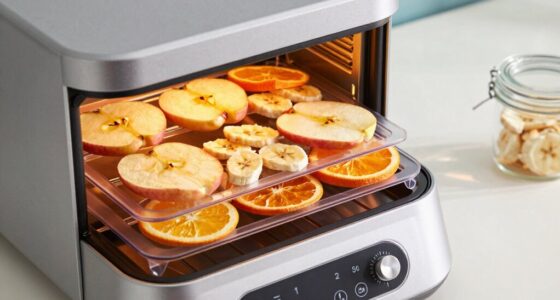
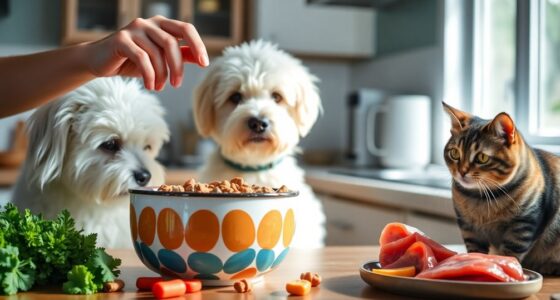
You can boost your pet’s hydration by adding moisture-rich foods to their diet, like wet dog or cat food. Offering fresh fruits and veggies, such as watermelon or cucumbers, helps keep them well-fluided. Additionally, try incorporating hydrating broths to make mealtime more appealing and hydrating. Implementing wave and wind considerations can also improve your pet’s overall comfort and hydration levels. Ensuring proper environmental conditions can further support their hydration needs and prevent dehydration. Maintaining a comfortable living environment is essential for consistent hydration. Using vetted hydration tools, such as specialized bowls or dispensers, can also encourage pets to drink more naturally. For optimal results, understanding climatic factors that influence hydration can help you tailor your pet’s care effectively.
Incorporate Moisture-Rich Foods
Incorporating moisture-rich foods into your pet’s diet is a simple yet effective way to boost their hydration levels. These foods naturally contain high water content, reducing reliance on pet water bowls. To maximize hydration:
- Offer canned or cooked meats with high moisture content.
- Mix wet food into their regular meals for added hydration.
- Include broth—without onions or garlic—as a flavorful supplement.
- Use water-rich treats like plain yogurt or boiled eggs to encourage drinking.
- Ensuring a balanced diet supports overall health and optimal hydration.
Offer Fresh Fruits and Veggies
Did you know that offering fresh fruits and veggies can substantially boost your pet’s hydration? Fresh produce is packed with water and nutrients that support hydration naturally. Including fruits like watermelon, blueberries, or apple slices, and vegetables such as cucumber or carrots, can help keep your pet well-fluided throughout the day. Not only do these options add moisture, but they also provide essential vitamins and fiber, enhancing overall health. The fruit benefits go beyond hydration, offering antioxidants and natural sugars that promote energy and immune support. Just verify you choose pet-safe produce, cut it into manageable pieces, and serve in moderation. Incorporating these hydrating foods is an easy, tasty way to supplement your pet’s water intake without forcing drinks. Proper hydration practices are essential for maintaining your pet’s health and preventing dehydration. Additionally, understanding food safety is crucial to avoid any harmful effects from unsuitable produce.
Use Hydrating Broths
Adding hydrating broths to your pet’s meals is an effective way to boost fluid intake, especially during hot weather or if they’re not drinking enough water. Broths can be served in different ways to accommodate your pet’s drinking habits and pet bowl design. To maximize effectiveness:
- Use low-sodium, natural broths without added preservatives.
- Serve broth in shallow bowls to prevent spills and encourage licking.
- Mix broth with dry food to soften it and increase moisture content.
- Rotate flavors to keep your pet interested and prevent boredom.
Use Fun Toys and Dispensers to Encourage Drinking
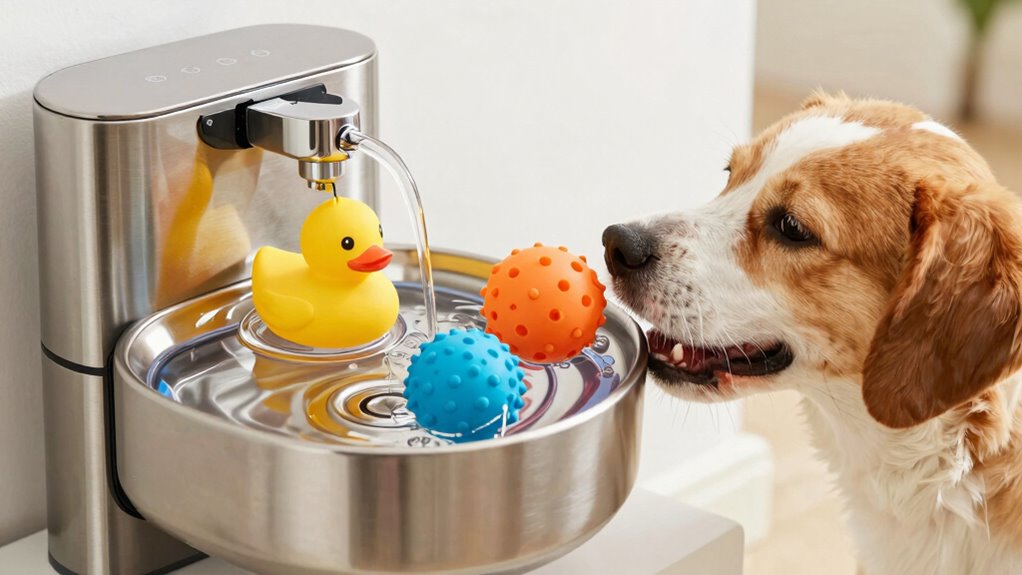
Using fun toys and dispensers can turn drinking water into an enjoyable activity for your pet. Interactive toys and dispenser games stimulate your pet’s curiosity and make hydration feel like playtime. For example, fill a treat-dispensing toy with water or use puzzle feeders that require your pet to work for their drink. These devices encourage movement and engagement, naturally prompting your pet to drink more without feeling pressured. These playful elements help foster a positive behavioral association with drinking water. By introducing these playful elements, you create a positive association with drinking water. Keep the toys clean and refill them regularly to maintain interest. Incorporating cleaning routines into your pet care helps keep toys hygienic and safe. Additionally, choosing architectural solutions designed for pet safety and ease of cleaning can enhance your pet’s comfort and hydration habits. Proper hygienic maintenance of toys also prevents the buildup of bacteria, ensuring your pet stays healthy. Over time, your pet will look forward to these moments, helping them stay properly hydrated while having fun. It’s a simple, effective way to boost water intake effortlessly.
Simple Routine Changes to Keep Your Pet Hydrated Daily
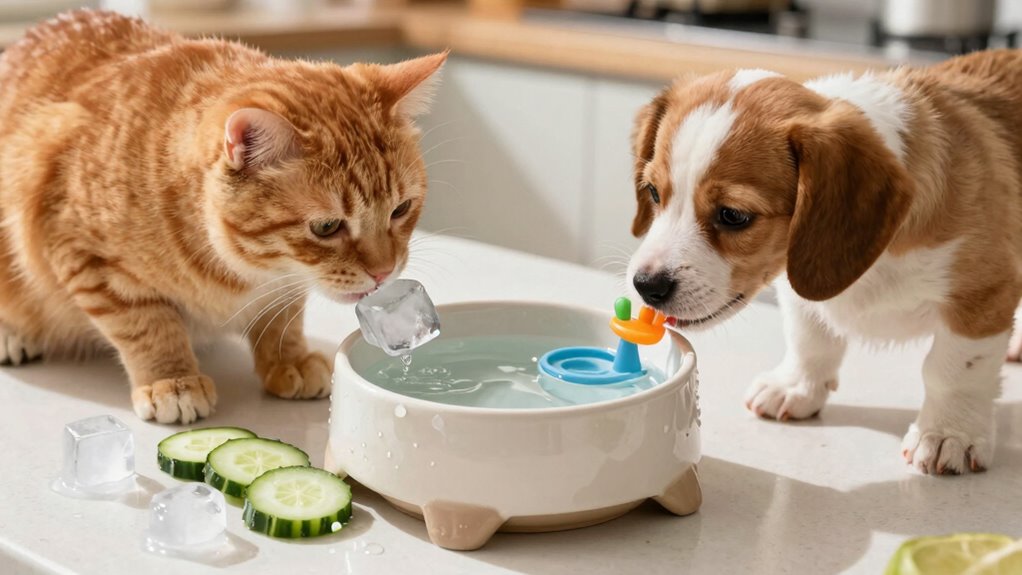
Incorporating simple routine changes into your daily schedule can make a noticeable difference in your pet’s hydration levels. Adjusting your pet’s exercise routines ensures they stay active without overheating, encouraging steady water intake afterward. Incorporate grooming techniques like wiping their paws or face with a damp cloth, which subtly reminds them to stay moist and hydrated. Here are four practical steps:
Small routine changes—like frequent walks, grooming, and ice cubes—boost your pet’s hydration effortlessly.
- Schedule short, frequent exercise sessions to prevent dehydration.
- Offer water immediately after walks or playtime.
- Use grooming techniques to keep their coat clean and promote hydration through skin health.
- Rotate water bowls and add ice cubes to make drinking more appealing.
These small adjustments help maintain consistent hydration without forcing your pet, supporting overall health and well-being.
Common Mistakes to Avoid When Trying to Hydrate Your Pet
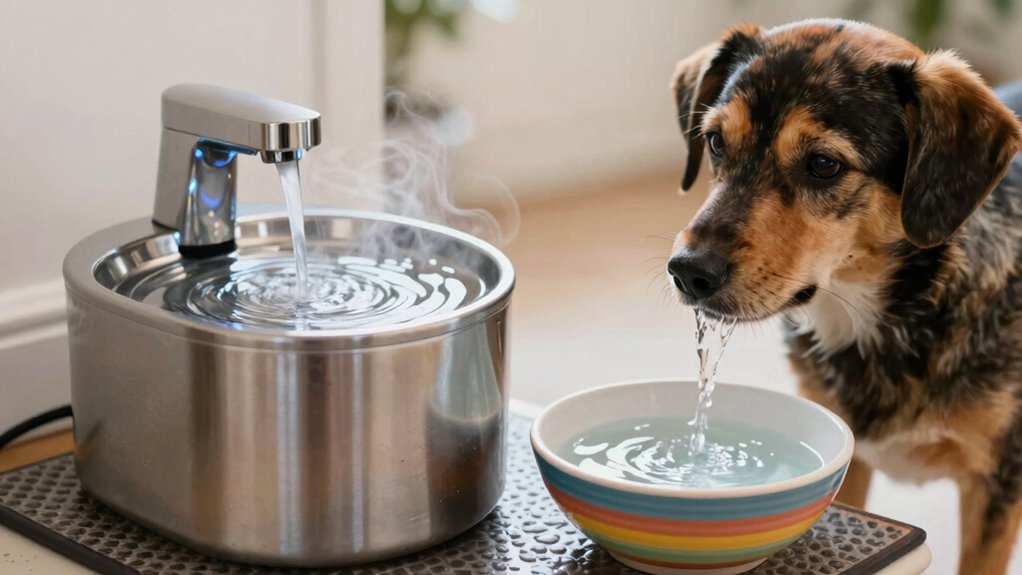
One common mistake pet owners make is assuming their pet will automatically drink enough water without encouragement or monitoring. Handling stubborn pets can be tricky, but forcing water often leads to avoiding water aversion. Instead of pressuring your pet, you might unintentionally create anxiety around drinking. Avoid using harsh methods or overwhelming your pet with multiple water sources at once, which can backfire. Another mistake is neglecting to offer fresh water regularly—pets dislike stale water. Don’t ignore signs of water avoidance, like reluctance or refusal to drink, as it can signal underlying issues. Remember, patience is key. Failing to recognize these pitfalls can hinder hydration efforts and make handling stubborn pets even more challenging. Focus on gentle encouragement and consistent, clean water to foster better habits.
When Should You Talk to a Vet About Your Pet’s Hydration?
If you notice signs of dehydration like dry gums, lethargy, or sunken eyes, it’s time to contact your vet. Don’t wait if your pet shows persistent vomiting, diarrhea, or refuses to drink, as these can quickly become dangerous. Recognizing these warning signs helps make certain your pet gets the care they need promptly.
Signs of Dehydration in Pets
Dehydration can develop quickly in pets, and recognizing the signs early is essential for their health. Many pet hydration myths can cause owners to overlook dehydration symptoms. Watch for:
- Dry, sticky gums or a tacky mouth
- Lethargy or weakness
- Sunken eyes or decreased eye moisture
- Loss of skin elasticity (skin doesn’t bounce back when gently pinched)
If you notice these signs, it’s time to seek veterinary advice. Proper dehydration prevention tips include offering fresh water frequently and monitoring your pet’s water intake. Prompt attention ensures dehydration doesn’t escalate into a more serious issue. Being aware of these signs can save your pet from discomfort and health complications. Always err on the side of caution and consult your vet if you’re unsure.
When to Seek Veterinary Help
Knowing when to seek veterinary help for your pet’s hydration issues is essential to prevent serious health complications. If your pet continues to refuse water despite trying different pet water bowls or hydration supplements, it’s time to consult a vet. Watch for signs like lethargy, vomiting, diarrhea, or dry gums, which may indicate severe dehydration. If your pet shows these symptoms or if their water intake remains consistently low over a day or two, don’t delay seeking professional advice. A veterinarian can assess for underlying health problems and recommend appropriate treatments, including specialized hydration therapy if needed. Prompt action ensures your pet stays properly hydrated and avoids dangerous consequences. Trust your instincts and seek professional help when hydration concerns persist.
Frequently Asked Questions
Can Certain Breeds Be More Prone to Dehydration?
Some breeds are more prone to dehydration due to breed tendencies and hydration predispositions. For example, flat-faced breeds like Bulldogs and Pugs often struggle with moisture intake because their breathing can interfere with drinking. Small or active breeds, like Chihuahuas or Labradors, may also need extra attention to hydration, especially in hot weather. Keep a close eye on these breeds to guarantee they stay properly hydrated without forcing them to drink.
How Does Age Affect a Pet’s Hydration Needs?
Did you know that nearly 50% of aging pets become dehydrated? As your pet ages, their hydration requirements change—they lose more water and may eat less, making dehydration a real risk. You need to monitor their water intake closely, offer fresh water often, and encourage drinking without forcing. Aging pets require extra care to stay properly hydrated, so watch for signs and adjust their environment accordingly.
Are There Specific Signs of Dehydration in Small Versus Large Pets?
You’ll notice signs of dehydration like dry gums, sunken eyes, and lethargy in both small and large pets. However, breed susceptibility matters—small breeds or brachycephalic dogs are more prone to dehydration due to faster water loss. In large pets, watch for excessive panting or weakness. Stay alert to these signs, and make certain your pet drinks enough water, especially if they’re vulnerable to dehydration.
What Environmental Factors Influence a Pet’s Water Intake?
Ever wonder what environmental factors influence your pet’s water intake? Climate control, like keeping the room cool, encourages drinking, especially in hot weather. Proper water placement is also key—place bowls in quiet, accessible spots to boost hydration. Do you notice your pet drinking more when the environment is comfortable and water is easy to reach? Maintaining a cool climate and strategic water placement helps your pet stay well-hydrated naturally.
How Often Should I Change the Water in My Pet’s Station?
You should change your pet’s water at least once a day to maintain a consistent watering schedule. Regularly revitalizing the water ensures good water quality, encouraging your pet to drink more. If it’s hot or your pet has been active, consider changing it more frequently. Clean the station thoroughly during each change to prevent bacteria buildup. Keeping water new and clean helps keep your pet well-hydrated and healthy.
Conclusion
By making hydration a fun and effortless part of your pet’s day, you’re nurturing their health and happiness. Remember, water isn’t just a drink—it’s the life force that keeps them thriving. When you create inviting spaces, add appealing flavors, and observe their habits, you’re planting seeds of wellness. Just as a garden flourishes with care, so does your pet’s vigor blossom with your mindful hydration efforts. Your commitment truly makes all the difference.