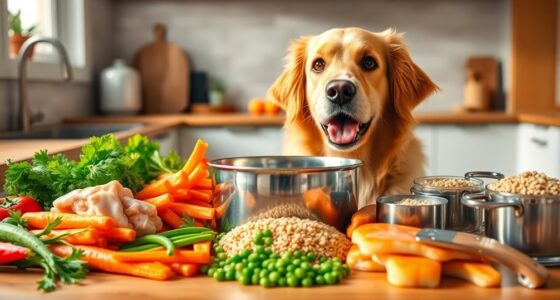
To find out how much your dog should eat, focus on their body condition and adjust based on their age, activity level, and health. Feel for their ribs—if you can easily feel them without excess fat, and they have a visible waist when viewed from above, their diet is probably right. If your dog’s weight is off, tweak portions accordingly. Keep monitoring your dog to ensure they’re in good condition—more tips await if you keep exploring.
Key Takeaways
- Use feeding guidelines on dog food packaging as initial reference, then adjust based on your dog’s body condition.
- Check if ribs are easily felt without excess fat and if there’s a visible waist from above.
- Tailor portions for age, activity level, and health, increasing for active or growing dogs and decreasing for seniors.
- Measure food accurately and avoid free-feeding to maintain consistent intake and prevent overfeeding.
- Regularly monitor your dog’s weight and body condition, consulting a vet for personalized dietary adjustments.

Determining how much your dog should eat can seem complicated, but understanding their specific needs makes it easier. Every dog is unique, and factors like age, weight, activity level, and overall health influence their dietary requirements. The goal is to keep your dog at a healthy weight and ensure they get enough nutrients without overfeeding. To start, check the feeding guidelines on your dog food packaging. These usually provide a recommended daily amount based on your dog’s weight and age. However, these are general suggestions, and you’ll need to adjust them based on your dog’s individual needs.
Your dog’s body condition is the best indicator of whether they’re eating the right amount. You should be able to feel their ribs easily without excessive fat covering, and they should have a visible waist when viewed from above. If your dog feels too fat, cut back on their food slightly. Conversely, if they’re too skinny, increase their portions or consider a nutrient-dense diet. Remember, a consistent routine helps maintain a healthy body condition. Measure your dog’s food with a standard measuring cup to ensure accuracy, and avoid free-feeding, which can lead to overeating.
Age plays a significant role in determining how much your dog needs to eat. Puppies, for example, require more calories and nutrients to support rapid growth, often needing several small meals throughout the day. Adult dogs generally thrive on two meals daily, while senior dogs may need fewer calories or special diets tailored to their health conditions. Activity level is another critical factor. Highly active dogs, such as working or sporting breeds, burn more calories and need larger portions than sedentary or less active dogs. Adjust their food intake accordingly, especially if their activity levels increase or decrease.
Consult your veterinarian to fine-tune your dog’s diet. They can help you determine appropriate portion sizes based on your dog’s current health and lifestyle. Regular weight checks and body condition assessments are essential to ensure you’re feeding the right amount. Remember, sudden weight gain or loss indicates you need to modify your dog’s diet or check for underlying health issues. Keep in mind that treats and table scraps should be factored into their daily intake, as overdoing treats can quickly lead to weight problems. Using a consistent, body-condition-focused approach helps you provide the right amount of food, supporting your dog’s health and happiness for years to come. Additionally, staying informed about industry transformations can help you adapt to new nutritional research and best practices.
Frequently Asked Questions
How Do I Adjust My Dog’s Food Intake During Pregnancy?
During your dog’s pregnancy, you should gradually increase her food intake, especially in the second and third trimesters. Switch to a high-quality, nutrient-rich puppy food to support her and the developing puppies. Feed her smaller, more frequent meals and monitor her weight and body condition regularly. Consult your veterinarian for personalized guidance, ensuring she gets enough calories and nutrients without overfeeding.
Are Homemade Diets Suitable for Maintaining My Dog’s Ideal Weight?
In the age of dial-up internet, homemade diets can work if you’re diligent. You should guarantee your dog’s meals are balanced with the right mix of proteins, carbs, and fats, tailored to their age and activity level. Consult your vet to develop a nutritious recipe, and monitor your dog’s weight regularly. Homemade diets require dedication but can maintain your dog’s ideal weight if done thoughtfully and responsibly.
How Do Age and Activity Level Affect My Dog’s Nutritional Needs?
Your dog’s age and activity level directly influence how much food they need. Younger, active dogs burn more calories and require more nutrients, so you should feed them more to support energy and growth. Older or less active dogs need fewer calories to maintain a healthy weight, so you should reduce portions accordingly. Always observe your dog’s body condition and adjust their diet to keep them happy and healthy.
What Are Signs My Dog Is Overfeeding or Underfeeding?
You’ll notice if your dog is overfeeding when they seem bloated, have excessive weight gain, or lack energy. Underfeeding shows as visible ribs, a narrow waist, and lethargy. Keep an eye on their body condition, and modify portion sizes accordingly. Regular weigh-ins and vet check-ups help guarantee your dog maintains a healthy weight, preventing health issues related to over- or underfeeding.
Can Treats Contribute Significantly to My Dog’s Daily Calorie Intake?
Absolutely, treats can become your dog’s calorie bomb if you’re not careful. Those tiny morsels quickly add up, turning a healthy diet into a hidden buffet. Think of treats as the dessert of your dog’s daily meal—delicious, but easily overdone. To keep your pup at a perfect weight, count those treats, choose healthier options, and remember: moderation is the secret ingredient for a happy, healthy dog.
Conclusion
Remember, your dog’s ideal weight is like a mirror reflecting your care and attention. Just as a steady flame keeps a lamp glowing, consistent feeding guarantees your dog stays healthy and happy. By tuning into their body condition, you hold the key to their well-being, guiding them through life’s journey with love and responsibility. Keep their needs in focus, and you’ll nurture a bond that’s as enduring as the light they bring into your life.