
When traveling with your dog in a car, train, or plane, gather essentials like a secure crate or harness, familiar comfort items, water, and a collapsible bowl. Plan regular stops for bathroom breaks and stretches, and always keep your pet’s safety and comfort in mind. Make sure your vehicle or carrier is well-ventilated and check airline policies if flying. Stay prepared and keep your pet calm — if you continue, you’ll discover smart tips for smooth journeys.
Key Takeaways
- Use secure, well-ventilated crates or harnesses appropriate for each mode of travel.
- Pack familiar comfort items, water, and treats to reduce stress during journeys.
- Confirm pet policies, reservations, and size restrictions ahead of time for trains and planes.
- Plan regular breaks for potty, water, stretching, and comfort during car travel and train stops.
- Have necessary identification, health documents, and post-travel essentials for smooth transitions.
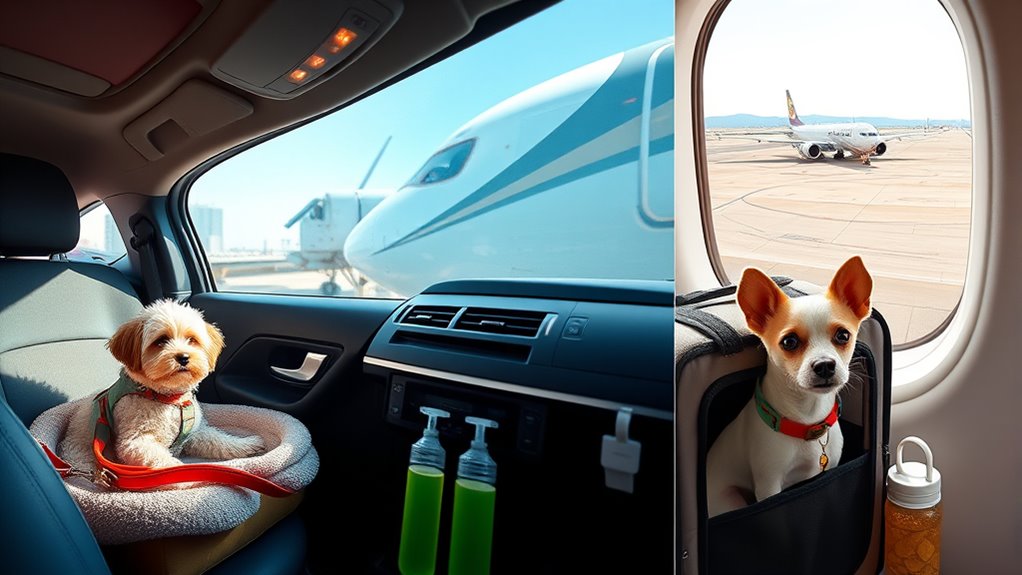
Thinking about traveling with your dog? Whether you’re hitting the road, catching a train, or flying across the country, being prepared makes all the difference. Each mode of transportation has its own set of essentials you need to keep your furry friend safe, comfortable, and happy. Starting with car travel, you’ll want to invest in a sturdy crate or harness that keeps your dog secure during the ride. This prevents sudden movements that could cause injury and keeps everyone safe if you need to brake unexpectedly. Bring along familiar items like your dog’s favorite blanket or toy to help ease anxiety and make the space feel more like home. Don’t forget to pack plenty of water and a collapsible bowl so your dog stays hydrated. Regular breaks are *vital*, especially on longer trips, so plan for pit stops where your dog can stretch, potty, and get some fresh air. Keep a leash handy for quick bathroom breaks and *guarantee* your car is well-ventilated. If your dog tends to get carsick, consider consulting your vet for motion sickness remedies or natural calming aids.
When traveling by train, your options may be more limited, but preparation is just as *paramount*. Check the train company’s pet policy beforehand, as some require reservations or have size restrictions. For small dogs, a secure carrier that fits comfortably under your seat is ideal. Make sure the carrier is well-ventilated and familiar, so your dog feels secure. Bring along some of their favorite treats and a familiar blanket to help comfort them during the journey. Keep an eye on your dog through the carrier window or door, and periodically offer water to prevent dehydration. During stops, if permitted, take your dog outside for a quick potty break and some gentle exercise to burn off nervous energy. Be mindful of loud noises or unfamiliar surroundings that might unsettle your pet, and try to keep their routine as normal as possible to reduce stress.
Flying with your dog involves even more planning. First, check the airline’s policies on pet travel, including crate requirements and fees. Your dog will need an airline-approved crate that is spacious, well-ventilated, and comfortable. Label the crate with your contact information and include a familiar blanket or toy inside to comfort your pet. Before the flight, visit your vet for a health check and to discuss sedatives if necessary. Pack essentials like water, a collapsible bowl, and a small amount of food for after the flight, but avoid feeding your dog right before departure to prevent nausea. During the journey, try to keep your dog calm with gentle words or familiar scents. Once you reach your destination, give your dog immediate access to water, a chance to potty, and a cozy spot to rest. Traveling with your dog requires attention and preparation, but with the right essentials, you can make every trip safe, smooth, and enjoyable for both of you.
Frequently Asked Questions
How Do I Prepare My Dog for Long Travel Durations?
To prepare your dog for long travel durations, start by gradually increasing travel time to build their comfort. Make sure they’re well-hydrated and fed, but avoid heavy meals beforehand. Bring familiar items like their blanket or toy to reduce anxiety. Take regular breaks for bathroom and stretching. Keep them secure in a crate or harness, and stay calm to reassure your dog throughout the journey.
What Are the Best Calming Techniques for Anxious Dogs During Travel?
Think of your dog as a tense tightrope walker; you want to steady their nerves. To do this, use calming techniques like gentle petting, soothing voice, and familiar blankets. Play calming music or use pheromone sprays to create a peaceful atmosphere. Regular breaks, treats, and positive reinforcement help them feel safe. With patience and consistency, you’ll help your dog find their balance during travel’s rollercoaster ride.
Are There Specific Health Certifications Required for Traveling With Dogs?
Yes, there are specific health certifications needed when traveling with dogs. You should have your dog’s recent vaccination records, especially rabies, and a health certificate from your vet issued within 10 days of travel. Some destinations or transportation providers may require additional documentation, like proof of deworming or flea treatment. Always check the specific requirements of your destination and carrier to guarantee a smooth journey.
How Can I Ensure My Dog Stays Comfortable and Hydrated Throughout the Trip?
To keep your dog comfortable and hydrated during your trip, bring a portable water bowl and offer water regularly, especially on warm days. Make sure your dog has a cozy, familiar blanket or bed to relax on. Keep the environment calm and quiet, and take frequent breaks for walks and bathroom stops. Observe your dog for signs of distress, and modify your plans to ensure they stay happy and hydrated throughout the journey.
What Should I Do if My Dog Gets Sick While Traveling?
If your dog gets sick while traveling, stay calm and find a quiet, comfortable spot to evaluate them. Check for symptoms like vomiting or diarrhea, and contact your vet for advice immediately. Keep your dog hydrated with small sips of water, and avoid giving any medication unless directed. If symptoms worsen or you’re far from help, seek emergency veterinary care promptly to ensure your dog gets the treatment they need.
Conclusion
Traveling with your furry friend can be a delightful adventure, full of shared memories and new sights. With a little preparation, you’ll turn what might seem like a whirlwind into a well-choreographed dance, making every journey smooth and enjoyable. Remember, your pup’s comfort and happiness are the true treasures on these trips. So, pack those essentials, keep a cheerful attitude, and get ready to create joyful moments that’ll warm your heart long after you return home.