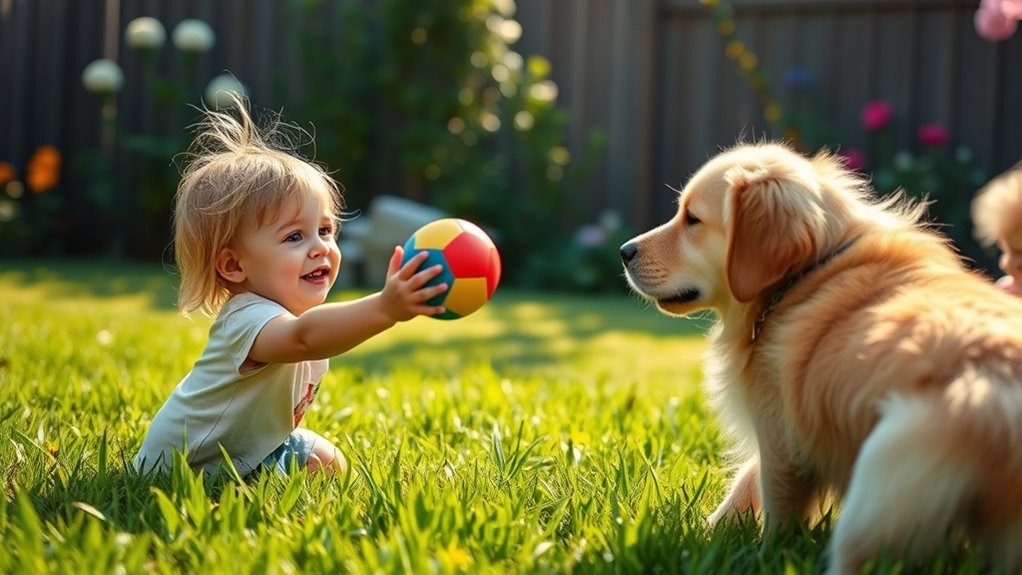

To promote kid-and-dog harmony, set clear, consistent safety rules and teach kids gentle, respectful ways to handle your dog. Supervise interactions closely and watch for signs of stress or discomfort. Encourage calm approaches with soft voices and treats, and guarantee your dog has a quiet space to retreat. Reinforce good behavior with praise and maintain boundaries to prevent accidents. If you keep these tips in mind, you’ll create a safe, happy environment for everyone—discover how to make it work seamlessly.
Key Takeaways
- Establish clear boundaries and teach children gentle, respectful handling of dogs to prevent bites and scratches.
- Always supervise interactions, watching for signs of discomfort or stress from the dog.
- Encourage calm approaches with soft voices and gentle movements to foster trust.
- Create designated safe spaces for the dog to retreat, respecting their need for quiet time.
- Consistently reinforce safety rules and praise positive behavior to promote lasting harmony.
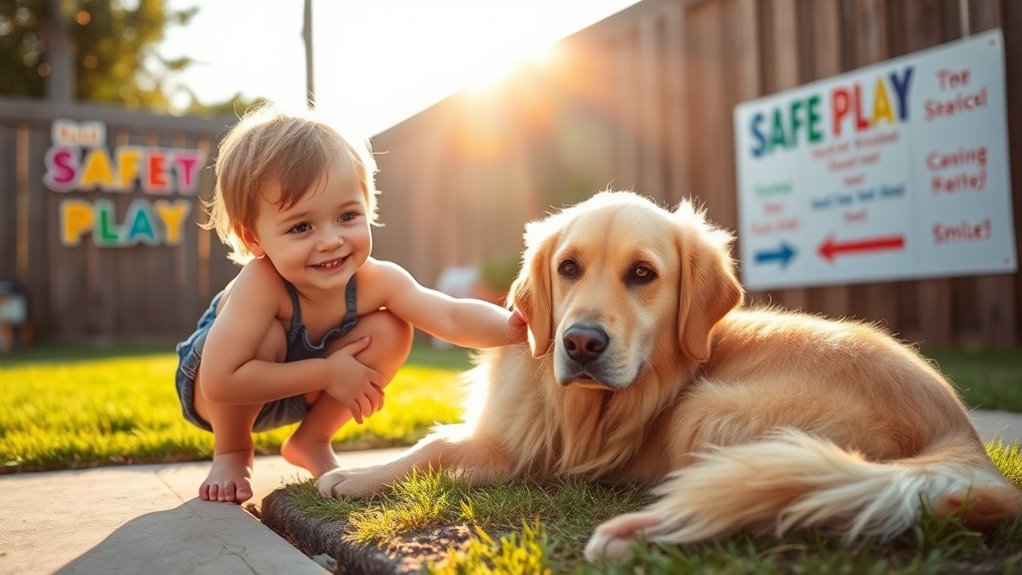
Creating a harmonious relationship between kids and dogs is essential for a safe and joyful household. When you establish clear safety rules and teach your children how to interact appropriately with your dog, you lay the foundation for a lifelong bond built on trust and respect. Kids are curious and energetic, which can sometimes lead to unintended roughness or misunderstandings. As a parent, your role is to guide both your child and your dog on how to interact calmly and safely. Start by setting consistent boundaries. Explain to your child that dogs need gentle handling and respect. Show them how to pet softly, avoiding their face, ears, and tail unless the dog is comfortable. Reinforce that pushing, hitting, or grabbing can hurt the dog and cause fear or aggression. When your child understands these rules, they’ll be more likely to behave appropriately and avoid accidental bites or scratches.
Next, establish a routine for supervised interactions. Never leave your child alone with your dog until you’re confident they understand how to behave. When they do play together, stay actively involved. Observe their body language and intervene if the dog shows signs of discomfort, such as growling, backing away, or stiffening. Similarly, teach your child to recognize signs of stress or agitation in the dog, like lip licking, yawning, or avoiding eye contact. This awareness helps prevent situations that might escalate into bites or fights. Encourage your child to approach the dog calmly, avoid sudden movements, and use a gentle voice. Show them how to offer treats or toys as positive reinforcement for good behavior.
It’s equally important to create a safe environment where the dog feels secure. Designate specific areas where the dog can retreat if they need a break, and teach your child to respect these boundaries. Reinforce that dogs, like people, sometimes need quiet time to relax. Make sure your child understands not to disturb the dog when they’re resting or eating. Establishing these boundaries helps prevent accidental conflicts or stress-induced reactions. Consistency is key. Regularly reinforce the rules and praise good behavior from both your child and your dog. When your child follows the guidelines, acknowledge their efforts with positive feedback. This encourages ongoing respectful interactions and helps build a safe, joyful environment where both your child and your dog can thrive. Additionally, understanding the importance of family dynamics and how they influence behavior can further enhance your approach to fostering harmony at home.
Frequently Asked Questions
How Can I Tell if My Dog Is Stressed During Playtime?
You can tell your dog is stressed during playtime if they show signs like growling, stiff body language, pinned-back ears, or avoiding eye contact. Watch for excessive yawning, lip licking, or yawning, which indicate discomfort. If your dog suddenly becomes less enthusiastic, tries to escape, or shows aggressive behavior, it’s a clear sign they’re overwhelmed. Pay close attention to these cues to keep play safe and enjoyable for everyone.
What Are Signs of Overstimulation in Kids Around Dogs?
You’ll notice signs of overstimulation in kids, like yelling, jumping, or grabbing the dog, which can make the dog anxious. Watch for sudden movements, crying, or tantrums, as these indicate your child might be overwhelmed. If your kid becomes overly excited or starts to ignore the dog’s cues, it’s time to take a break. Keeping play calm and structured helps everyone stay comfortable and safe.
Are Certain Dog Breeds Better Suited for Homes With Young Children?
Some dog breeds are better suited for homes with young children because they tend to be gentle, patient, and tolerant. Breeds like Golden Retrievers, Labradors, and Beagles often have these qualities, making them good companions. However, every dog is unique, so you should always assess individual temperament and provide proper training. Remember, regardless of breed, supervision and teaching children how to interact respectfully are essential for safe, happy relationships.
How Do I Introduce a New Dog to a Household With Kids?
You introduce a new dog to your household gradually. Start by letting the dog explore the space while your kids observe from a safe distance. Keep initial interactions calm and supervised. Use positive reinforcement like treats and praise when your kids and dog behave well together. Gradually increase their time together, always monitoring their interactions. Consistency and patience help build trust and guarantee a smooth, safe introduction.
What Should I Do if My Dog Bites During Play?
Did you know that 80% of dog bites occur during play? If your dog bites during play, immediately stop the activity and give a firm “no.” Remove your dog from the situation calmly and offer a toy or chew instead. Consistently reinforce gentle play and set clear boundaries. If biting persists, consult a professional trainer or behaviorist to address underlying issues and guarantee safe, enjoyable play for everyone.
Conclusion
By following these gentle guidelines, you help create a cozy world where your child and dog can enjoy each other’s company happily. Just like a peaceful garden, their bond grows stronger with patience and understanding. When you set thoughtful boundaries, you’re nurturing trust and friendship that last. Remember, with a little kindness and care, you turn everyday moments into beautiful memories, making your home a joyful place where everyone feels safe and loved.