To help calm your anxious dog, engage their mind with simple enrichment activities like puzzles, scent games, or gentle massages, which can reduce stress and promote relaxation. Recognize stress cues such as panting, yawning, or tucked tail to create a safe space where they feel secure. Establish a routine and introduce calming scents or music to reinforce relaxation. Keep observing and adjusting activities to find what works best—more tips await to help your dog feel calmer.
Key Takeaways
- Provide mentally stimulating activities like puzzle toys and scent games to channel energy and reduce anxiety.
- Create a predictable routine with calming scents and music to foster a sense of security.
- Use gentle massages and aromatherapy to promote relaxation and sensory engagement.
- Monitor stress cues and adjust enrichment activities based on the dog’s responses for personalized calming strategies.
- Incorporate a designated safe space for the dog to retreat and decompress, reinforcing feelings of safety and calmness.
What Causes Anxiety in Dogs and How Enrichment Helps
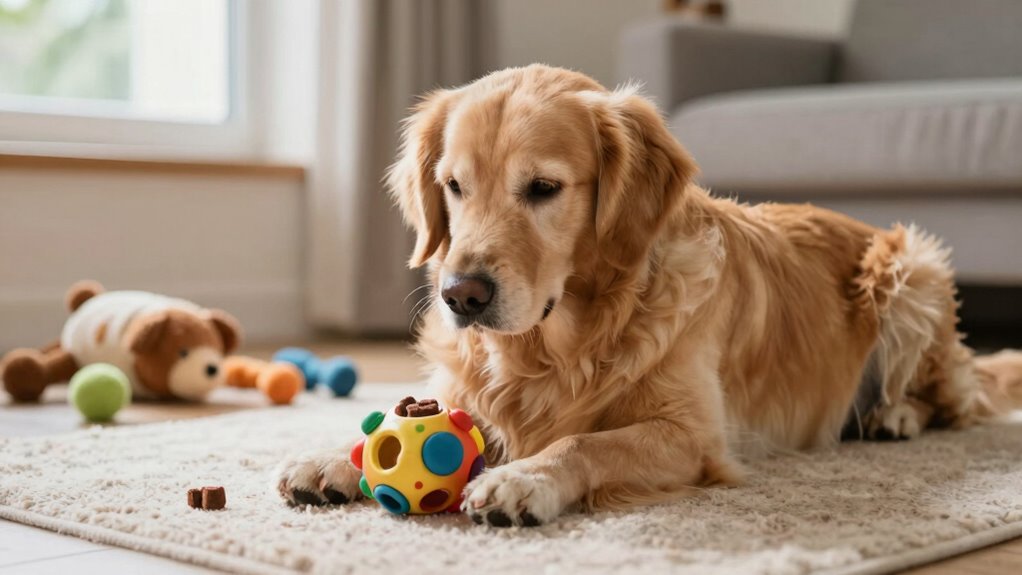
Many dogs experience anxiety due to a combination of genetics, past experiences, and environmental factors. Breed differences play a significant role, as some breeds are predisposed to higher stress levels or nervous behaviors. For example, herding or terrier breeds often have a more reactive nature, making them more prone to anxiety. Genetic factors also influence how a dog responds to stress; some dogs inherit heightened sensitivity from their parents. Understanding these causes helps you recognize why your dog might be anxious and how enrichment can make a difference. Free Floating enrichment activities stimulate their minds and provide a sense of security, helping to reduce anxiety rooted in breed tendencies or genetic predispositions. This approach addresses the root causes, promoting a calmer, more confident dog.
How to Recognize Your Dog’s Stress Cues

Recognizing your dog’s stress cues is essential for addressing their anxiety effectively. Watch for signals in their body language and vocal cues that indicate discomfort or fear. Signs like lip licking, yawning, trembling, or a tucked tail can show stress. Your dog may also freeze, avoid eye contact, or flatten their ears. Vocal cues include whining, barking, or high-pitched yelping. Understanding these cues helps you respond promptly and calmly, preventing escalation. Here’s a quick reference:
| Body Language | Vocal Cues |
|---|---|
| Tucked tail | Whining or whimpering |
| Flattened ears | Barking excessively |
| Yawning (when not tired) | High-pitched yelping |
| Lip licking | Growling (if tense) |
| Avoiding eye contact | Excessive panting |
Learning these signals ensures you address your dog’s stress early. Being aware of stress cues can help you intervene before anxiety worsens. Recognizing dog body language and behavioral signals plays a vital role in understanding your pet’s emotional state.
Create a Calm, Safe Space for Your Anxious Dog
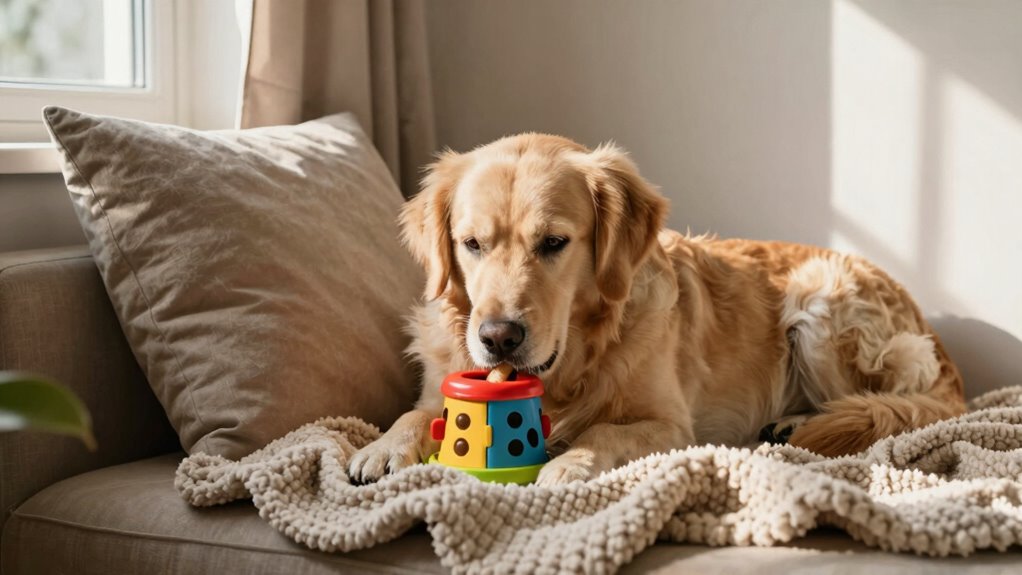
Creating a dedicated calm, safe space for your dog gives them a retreat where they can relax and feel secure. A calm environment helps reduce their anxiety and provides a sense of stability. Choose a quiet corner or a cozy crate where your dog can retreat when overwhelmed. Make sure this space is free from loud noises and distractions. Add soft bedding, a few favorite toys, and perhaps an item with your scent to make it inviting. This safe haven becomes their personal sanctuary, offering comfort during stressful moments. Consistently encourage your dog to use this space, especially during times of uncertainty or distress. Over time, it helps your dog associate this area with calmness, giving them a reliable place to unwind. A calming environment can also promote better behavior and emotional resilience, especially when combined with understanding dog anxiety and appropriate calming techniques. Incorporating calming devices like white noise machines or calming scents may further enhance their sense of security. Additionally, understanding the importance of routine can help your dog feel more secure in their safe space.
Simple Enrichment Activities to Calm Your Dog at Home

Engaging your dog in simple enrichment activities can markedly help calm their nerves at home. One effective activity is giving your dog a gentle dog massage, which promotes relaxation and reduces anxiety. Use slow, firm strokes along their neck, shoulders, and back to help release tension. Incorporating calming aromatherapy blends, such as lavender or chamomile, can enhance this effect. Diffuse these scents in the room or add a few drops to their bedding to create a soothing environment. These simple activities provide sensory stimulation and comfort, helping your dog feel safe and secure. Additionally, exploring sensory stimulation techniques can serve as a fun mental distraction for owners, which may indirectly benefit their pets by reducing owner stress. Using targeted enrichment strategies tailored to your dog’s preferences can also increase their engagement and reduce anxiety. Regularly incorporating dog massages and aromatherapy blends into your routine can make a significant difference in managing their anxiety and creating a peaceful, calming atmosphere at home. Incorporating stress reduction methods based on your dog’s specific needs can further enhance their sense of calm and security.
Using Toys and Puzzles to Keep Your Dog Relaxed
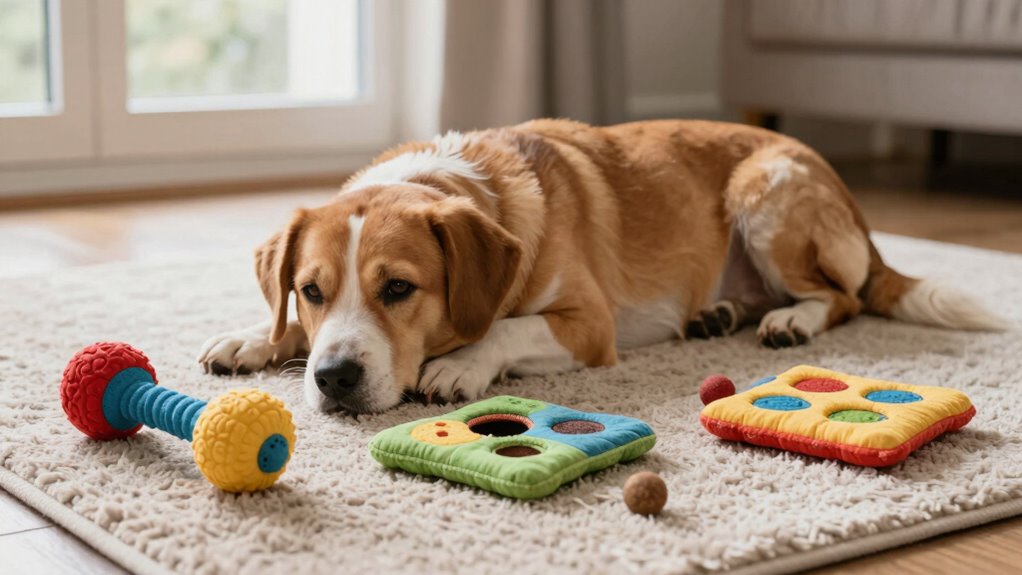
Toys and puzzles can be powerful tools to keep your anxious dog relaxed and engaged. Using treat-based puzzles stimulates their mind and offers a rewarding challenge, helping divert attention from stress. Incorporating diverse puzzles prevents boredom and encourages mental stimulation. Sensory toys, which engage your dog’s senses through textures, sounds, or smells, can further calm nerves and promote relaxation. You can rotate different puzzles and toys to maintain interest and prevent boredom. Incorporating these ideas into your daily routine can help create a calming environment that reduces anxiety and promotes well-being. Haute couture collections often emphasize intricate details and luxurious fabrics, inspiring high-quality design choices even in pet products. Below is a table with ideas for treat-based puzzles and sensory toys to help you get started:
| Treat-based Puzzles | Sensory Toys |
|---|---|
| Puzzle feeders | Textured chew toys |
| Interactive treat balls | Scented plush toys |
| Hide treats in toys | Toys with crinkly material |
| Lock-and-release puzzles | Toys with varied textures |
| Frozen treats for mental challenge | Toys with different sounds |
Establish a Routine to Reduce Anxiety
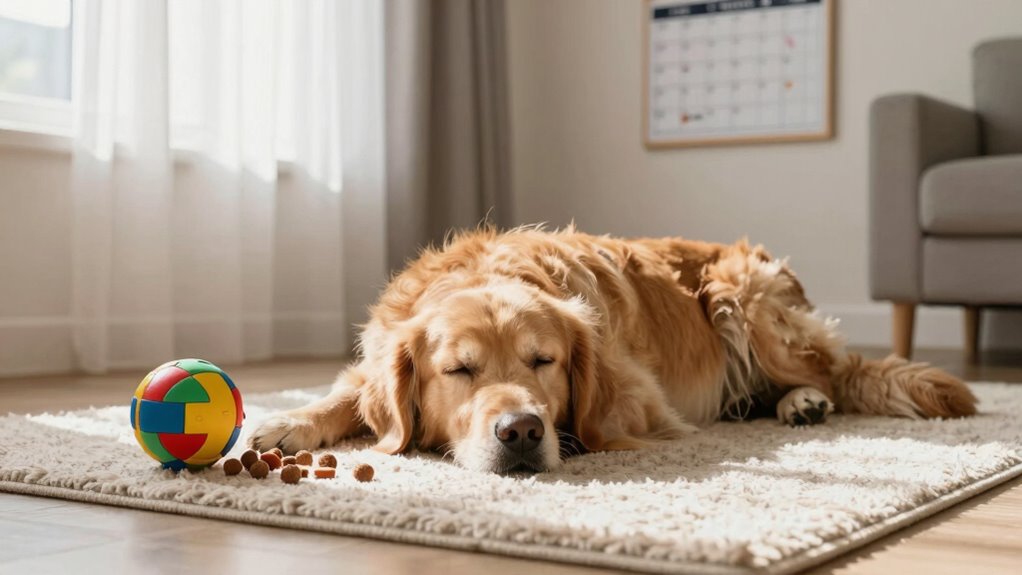
Incorporating toys and puzzles into your dog’s daily routine can help keep them calm, but consistent timing is key to managing anxiety effectively. Establishing a predictable schedule creates a sense of security for your dog, reducing uncertainty that triggers stress. Incorporate calming scents in their environment, like lavender or chamomile, to promote relaxation. Playing soothing music during quiet times can also reinforce a calm atmosphere. Stick to set times for walks, meals, and rest periods so your dog knows what to expect. This routine not only minimizes anxiety but also helps your dog feel more in control. Consistent routines can also support behavioral stability by building trust and familiarity. Using environmental modifications such as comfortable bedding and designated quiet spaces can further enhance your dog’s sense of security. Additionally, maintaining a consistent training routine can help reinforce positive behaviors and reduce anxiety triggers over time. Over time, a reliable schedule paired with calming scents and music can appreciably decrease your dog’s overall stress levels.
How to Track Your Dog’s Progress and Adjust Activities
Tracking your dog’s progress is essential to guarantee that the activities you implement are effective in reducing anxiety. Regular progress tracking helps you identify which activities are working and where adjustments are needed. Keep a journal or use an app to note your dog’s responses, such as changes in behavior, calmness levels, or signs of stress. Observe during and after activities to assess their impact. If your dog seems less anxious over time, continue with those routines. If not, consider activity adjustment—either increasing mental stimulation or trying new techniques. Consistent monitoring allows you to fine-tune your approach, ensuring your efforts are targeted and effective. Remember, patience and careful observation are key to helping your dog feel calmer and more secure.
Frequently Asked Questions
Can Enrichment Activities Replace Medication for Anxious Dogs?
Enrichment activities can’t fully replace medication for anxious dogs, but they can substantially reduce anxiety when combined with natural remedies and behavioral therapy. You might notice calmer behavior and less stress, helping your dog feel more secure. Always consult your vet before making changes, but incorporating mental stimulation and calming strategies alongside medication can enhance your dog’s overall well-being and help manage anxiety more effectively.
How Do I Know if My Dog Prefers Mental or Physical Enrichment?
You can tell if your dog prefers mental or physical enrichment by observing their behavior. If your dog enthusiastically engages with puzzle toys, problem-solving activities, or enjoys scent work, they likely favor mental enrichment. Conversely, if they love running, fetching, or active play, physical enrichment is their preference. Pay attention to how they respond to different activities, and tailor enrichment to what keeps them happiest and most engaged.
Are Certain Breeds More Responsive to Enrichment for Anxiety?
Some breeds are like open books, revealing their activity preferences through breed tendencies. You’ll find that herding or working breeds often thrive with mental challenges, while sporting or terrier breeds crave physical outlets. Tailor enrichment to your dog’s natural instincts, and you’ll see calmer, happier behavior. Recognizing these breed tendencies helps you craft effective anxiety remedies, turning your dog’s energy into a positive, calming force that speaks directly to their innate nature.
How Often Should I Change Enrichment Activities to Prevent Boredom?
You should change enrichment activities regularly, ideally following a rotation schedule to keep your dog engaged. Aim to introduce activity variety every few days or weekly, so your pup doesn’t get bored. By rotating toys, puzzles, and games, you stimulate their mind and prevent predictability. This approach helps maintain your dog’s interest, reduces anxiety, and promotes a calm, happy demeanor. Keep observing your dog’s reactions to fine-tune the schedule.
What Signs Indicate My Dog Is Overstimulated or Overwhelmed?
You’ll notice your dog is overstimulated or overwhelmed when their body language shows stress signals like panting, yawning, lip licking, or avoiding eye contact. They may also become restless, bark excessively, or seem tense. Pay attention to these signs, and if you see them, give your dog a break or switch to calming activities. Recognizing stress signals helps you prevent overload and supports your dog’s well-being.
Conclusion
By enriching your dog’s life with engaging activities, you give them a busy brain and a calm body. While their anxiety may not disappear overnight, each small step builds confidence and trust. Remember, a restless mind fuels stress, but a well-stimulated dog feels secure and relaxed. So, embrace these simple strategies—your effort transforms anxious paws into peaceful, happy moments you both cherish. After all, calmness starts with a busy, fulfilled mind.