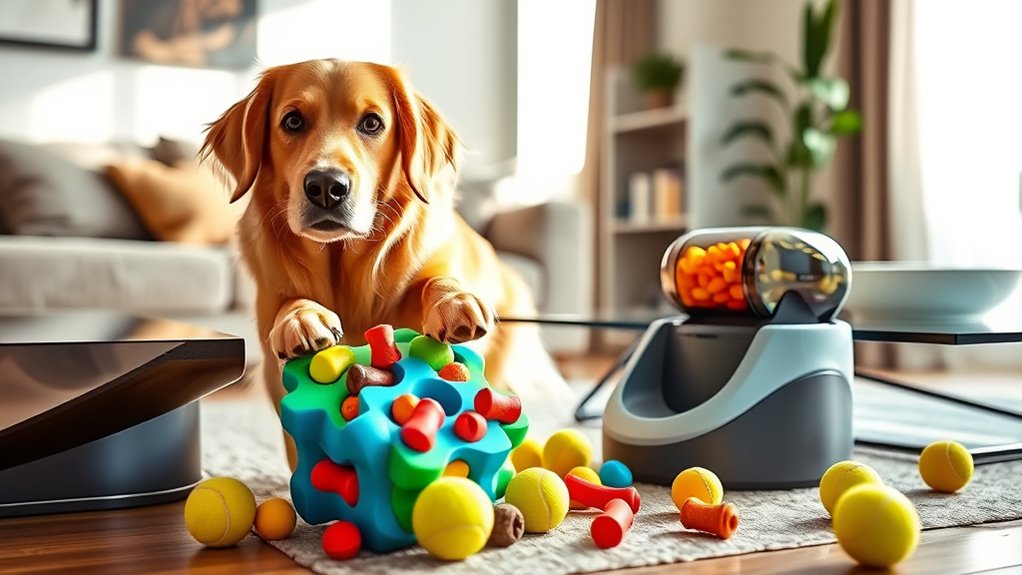

To keep your pup from getting bored, try fun brain games like hide and seek with treats, using puzzle toys, or creating DIY obstacle courses. Rotate activities to keep things fresh and introduce new challenges gradually. Praise your dog’s successes to boost confidence. Combining mental and physical exercises helps prevent destructive behaviors and promotes calmer, happier behavior. Curious about more ideas? Keep exploring to discover even more ways to mentally stimulate your pup.
Key Takeaways
- Use treat-hiding games like hide-and-seek to stimulate your dog’s natural hunting instincts.
- Provide puzzle toys that challenge your dog to access treats, gradually increasing difficulty.
- Create DIY obstacle courses with household items to promote problem-solving and physical activity.
- Rotate different toys and games regularly to keep your dog curious and engaged.
- Combine mental exercises with physical play to maximize stimulation and reduce boredom-induced behaviors.
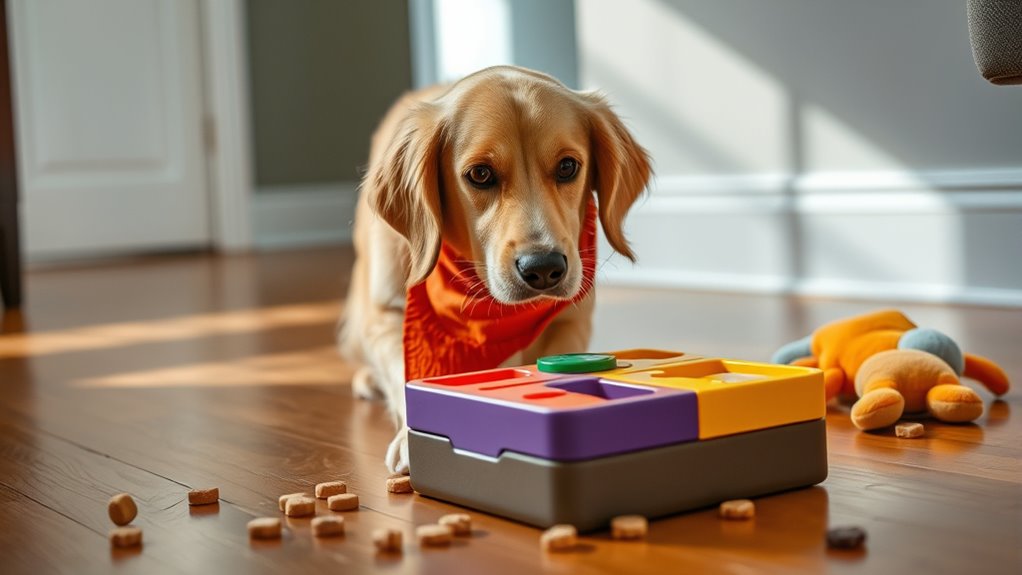
Bored pups can quickly become restless and destructive, but engaging their minds with fun brain games can keep them happy and stimulated. When your dog seems to be chewing on furniture or barking excessively, it’s a sign they need mental exercise. Instead of relying solely on physical activities, incorporating brain games into their routine can make a huge difference. These games challenge their problem-solving skills and keep their minds occupied, reducing unwanted behaviors caused by boredom.
Engage your dog with brain games to reduce boredom and destructive behaviors.
One simple yet effective game is the “hide and seek” with treats. Start by hiding small treats around the house or yard, then encourage your pup to sniff them out. This taps into their natural hunting instincts and makes them use their nose and brain. As they get better at the game, hide treats in more challenging spots to keep it interesting. Not only does it tire them out mentally, but it also boosts their confidence as they succeed in finding tasty rewards.
Puzzle toys are another excellent tool to keep your dog mentally engaged. These toys require your pup to figure out how to access treats or kibble hidden inside. Different puzzles have varying levels of difficulty, so you can start simple and gradually increase the challenge. This encourages problem-solving and patience, preventing boredom from setting in during long periods alone. Plus, puzzle toys can be a quiet, independent activity that keeps your dog occupied without constant supervision.
You can also create DIY brain games using everyday household items. For instance, place treats under cups and shuffle them around, then let your dog figure out which cup hides the prize. Alternatively, set up a mini obstacle course using chairs, broomsticks, or boxes for your pup to navigate. These activities stimulate their mind and body simultaneously, making training sessions more engaging and fun. They also strengthen your bond as you work together on these games.
Rotating different games and toys is essential to keep your pup from losing interest. If they become bored with one activity, switch to another, so they stay curious and motivated. Regularly introducing new challenges keeps their brain sharp and prevents stagnation. Remember, the goal is to make mental exercise a fun and rewarding experience, so always praise your pup and celebrate their successes. With consistent mental stimulation, you’ll notice fewer destructive habits, calmer behavior, and a happier pup overall.
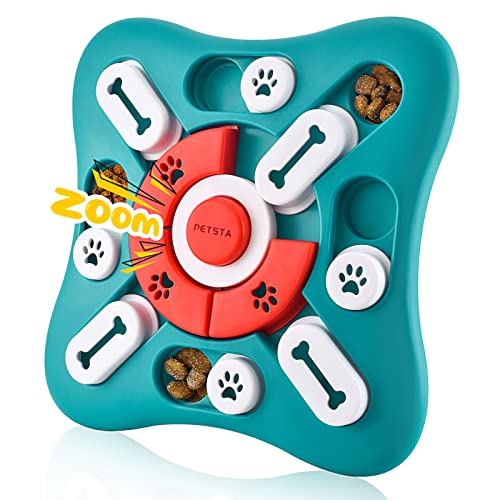
PETSTA Dog Puzzle Toys, Treat Dispensing Dog Enrichment Toys for IQ Training and Brain Stimulation, Interactive Mentally Stimulating Toys as Gifts for Puppies, Cats, Dogs
【PRODUCT SIZE】10 inch*10 inch*1.3 inch.
As an affiliate, we earn on qualifying purchases.
As an affiliate, we earn on qualifying purchases.
Frequently Asked Questions
How Often Should I Change the Difficulty Level of Brain Games?
You should change the difficulty level of brain games every one to two weeks, depending on your pup’s progress. If they master a game quickly, increase the challenge to keep their mind engaged. If they struggle, give them more time or simplify it. Pay attention to your pup’s enthusiasm and frustration levels, and modify accordingly to ensure the games stay fun and stimulating without causing frustration.
Are There Any Age-Specific Brain Games for Puppies Versus Senior Dogs?
Yes, there are age-specific brain games for puppies and senior dogs. For puppies, focus on simple puzzles that promote problem-solving without frustration, like treat-dispensing toys. For seniors, choose gentle, low-impact games that stimulate their minds without stressing their joints, such as scent work or gentle hide-and-seek. Adjust difficulty based on their abilities, and always guarantee the activities are safe and enjoyable for their age and health.
Can Brain Games Help Reduce Separation Anxiety in My Dog?
Did you know that engaging your dog in mental activities can reduce separation anxiety by up to 25%? Brain games help by providing mental stimulation, which keeps your dog occupied and less focused on your absence. When you incorporate puzzles or training exercises, you build confidence and reduce stress. So yes, regular mental challenges can markedly ease your pup’s separation anxiety, making both your lives calmer and happier.
What Safety Precautions Should I Take During Interactive Brain Games?
You should supervise your dog during interactive brain games to prevent choking or ingestion of dangerous objects. Use age-appropriate, non-toxic toys, and avoid small parts that could be swallowed. Make certain the playing area is safe, free of hazards like sharp objects or electrical cords. Watch for signs of frustration or fatigue, and give your pup breaks when needed. Always keep treats and tools within easy reach, and stop if your dog shows distress.
How Do I Know if My Dog Enjoys the Mental Stimulation?
You’ll know your dog enjoys mental stimulation when they enthusiastically engage with the game, show excitement through wagging tails or alert ears, and seem satisfied afterward. Remember, a happy dog is a content dog, so watch for signs of enthusiasm like focused eyes or playful behavior. If they look bored or frustrated, it’s time to switch activities. Pay attention to their body language—if they’re relaxed and eager, they’re truly enjoying the challenge.

CHEWFFON Dog Puzzle Toy, Interactive & Enriching Snuffle Game for Small & Medium Dogs, Hide and Seek Crinkle Toy, Treat Dispensing & Nose Work Fun
Tasty and Adorable: Our Dog Ramen Puzzle Toy is the perfect blend of cuteness and functionality. Made of…
As an affiliate, we earn on qualifying purchases.
As an affiliate, we earn on qualifying purchases.
Conclusion
Keeping your pup engaged is like watering a garden—it prevents boredom from taking root. Just last week, I saw a dog transform from restless to relaxed after trying a simple puzzle game. Studies show mental stimulation boosts their happiness and reduces destructive behaviors. So, don’t let boredom grow like weeds—try these brain games and watch your pup blossom into a confident, happy companion. Your effort today plants the seeds for a joyful, well-rounded pup tomorrow.

JMMPOO Dog Agility Training Equipment, 60-piece Dog Obstacle Course Training Starter Kit Pet Outdoor Game with Tunnel, Agility Hurdle, Weave Poles, Jump Ring, Pause Box, Toy Balls and Storage Bag
UNIQUE & HEALTH: Running, jumping, playing, and most of exercising for maximum dog agility. Whether training for competition…
As an affiliate, we earn on qualifying purchases.
As an affiliate, we earn on qualifying purchases.
PETSTA Dog Puzzle Toys, Treat Dispensing Dog Enrichment Toys for IQ Training and Brain Stimulation, Interactive Mentally Stimulating Toys as Gifts for Puppies, Cats, Dogs
【PRODUCT SIZE】10 inch*10 inch*1.3 inch.
As an affiliate, we earn on qualifying purchases.
As an affiliate, we earn on qualifying purchases.