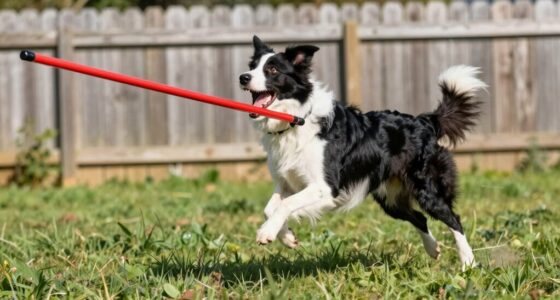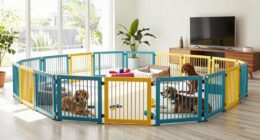

Many energetic breeds like Jack Russell Terriers and Border Collies can thrive in small apartments if you commit to regular exercise, mental stimulation, and structured routines. Daily walks, puzzle toys, and social outings help burn off energy and prevent destructive behaviors. Proper training and boundaries make living with a lively dog manageable and enjoyable. Keep in mind, with the right planning, big-energy dogs can have happy lives in small spaces—there’s more to discover on how to make it work smoothly.
Key Takeaways
- Many energetic breeds can thrive in apartments with proper exercise and mental stimulation routines.
- Daily walks, play, and puzzle toys help burn off energy and prevent destructive behaviors.
- Consistent training and boundaries teach active dogs to settle indoors peacefully.
- Regular outdoor socialization and visits to parks are essential for high-energy dogs in small spaces.
- Commitment to routines and planning ensures energetic dogs remain happy and well-adjusted in apartment living.
Living in an apartment doesn’t mean you have to give up on having a dog. In fact, many breeds thrive in small spaces, as long as you understand their needs and manage their energy levels. The key is choosing the right dog and establishing routines that keep them happy and healthy. You might think that only small, calm dogs can live comfortably in apartments, but even high-energy breeds can adapt if you’re willing to put in the effort. It’s all about providing enough mental and physical stimulation to prevent restlessness and destructive behavior.
Living in an apartment is compatible with energetic breeds with proper routines and stimulation.
One of the most important things you can do is to understand your dog’s natural instincts and activity requirements. For example, breeds like Jack Russell Terriers or Border Collies are known for their energy, but they can thrive in apartments if you commit to regular exercise and mental challenges. Daily walks, playtime, and puzzle toys can make a significant difference. You don’t necessarily need a backyard to tire out a lively dog; consistent outings and engaging activities can do the trick. It’s also helpful to create a structured environment, so your dog knows when it’s time to play, rest, and go for walks. This consistency reduces anxiety and helps your dog settle in better.
Training is another critical component. Teaching your dog commands like “sit,” “stay,” and “quiet” can help manage their energy indoors. When your pup learns boundaries, they’re less likely to engage in destructive behaviors. Crate training can also be beneficial, providing your dog with a safe space to relax and reducing the chances of accidents or damage when you’re not home. Remember, patience and positive reinforcement will help your dog learn faster and feel more secure in their environment.
Additionally, socialization is essential. Dogs are social animals, and living in an apartment often means limited outdoor space. Regular visits to the park or dog-friendly areas will give your pup an outlet for social interaction and exercise. If you can, schedule playdates or walks with other dogs in your building or neighborhood. This not only helps burn off energy but also prevents behavioral issues caused by boredom or loneliness. Incorporating knowledge about RMDs can also help you plan your pet’s exercise routines to ensure they get enough activity without overexertion.
Ultimately, having an energetic dog in an apartment requires commitment, planning, and understanding. With the right breed, routines, and training, you can provide a fulfilling life for your dog while living comfortably in a small space. It’s about balancing their needs with your lifestyle, making sure both of you enjoy a harmonious, happy coexistence.

Zoosky 3 in 1 Pet Stroller with Removable Carrier, Folding Stroller for Small/Medium Dogs and Cats, Waterproof, All-Terrain, with Sun Shades, Car Seat
【𝟑-𝐢𝐧-𝟏 𝐅𝐮𝐧𝐜𝐭𝐢𝐨𝐧𝐚𝐥𝐢𝐭𝐲 𝐟𝐨𝐫 𝐅𝐚𝐦𝐢𝐥𝐢𝐞𝐬 𝐨𝐧 𝐭𝐡𝐞 𝐆𝐨】ZOOSKY 3-in-1 small pet stroller is made for families who take their...
As an affiliate, we earn on qualifying purchases.
Frequently Asked Questions
How Do I Prevent My Apartment Dog From Barking Excessively?
To prevent your apartment dog from barking excessively, identify triggers like doorbells or strangers and desensitize them gradually. Use positive reinforcement to reward quiet behavior and avoid reinforcing barking by giving attention when they bark. Confirm your dog gets enough mental and physical stimulation through play and walks. Establish a consistent routine and provide a comfortable space where they feel secure, helping reduce anxiety that leads to excessive barking.
What Are the Best Toys for Energetic Apartment Dogs?
You want the best toys for your energetic apartment dog? Get them puzzle toys that challenge their mind and tire them out, like treat-dispensing balls or interactive puzzles. Rubber toys for chewing, sturdy tug-of-war ropes, and fetch-friendly balls will keep them busy and happy. Remember, a tired dog is a quiet dog, so mix mental and physical toys to curb that boundless energy in your cozy space.
How Often Should I Walk My High-Energy Dog Indoors?
You should aim to walk your high-energy dog indoors at least two to three times a day, with each session lasting 15 to 30 minutes. These walks help burn off excess energy and keep your dog mentally stimulated. Incorporate play and training during these times to further tire them out. Consistency is key, so stick to a routine that matches your dog’s activity level and needs.
Can Small Spaces Affect a Dog’s Mental Health?
A small space can feel like a cage for your dog, impacting their mental health. Without enough room to roam or mental stimulation, they might become anxious, bored, or even destructive. You’re responsible for creating a safe, engaging environment. Regular play, training, and outdoor walks can help keep your pup happy and mentally healthy, turning their cramped quarters into a place where they feel secure and loved.
What Training Techniques Suit Apartment Dogs With Big Personalities?
You should use positive reinforcement to train your apartment dog with a big personality. Consistently reward good behavior and set clear boundaries to help them understand what’s expected. Incorporate short, engaging training sessions to keep their attention, and use plenty of mental stimulation like puzzle toys. Regular exercise also helps burn off excess energy, making training easier and your dog calmer in small spaces.
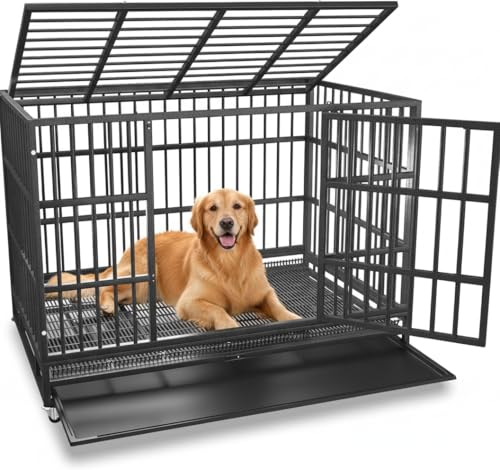
KOKOTANGS 48 Inch Heavy Duty Dog Crate Cage with Wheels, Indestructible and Escape Proof Steel Kennel Indoor for High Anxiety Dogs with Sturdy Locks, Double Door and Tray, Extra Large XL XXL
【STURDINESS: CHEW-PROOF & ESCAPE-PROOF】42-Inches 20-gauge steel and reinforced 0.6 inch diameter steel tubes. Much stronger than fine wire...
As an affiliate, we earn on qualifying purchases.
Conclusion
So, if you think your tiny apartment can’t handle the big personality of your dog, think again. With a little patience, a lot of love, and some clever tricks, your small space can become a kingdom for your four-legged dynamo. Remember, even in a shoebox-sized home, your dog’s big energy can shine brighter than a stadium. Embrace the chaos, because with the right mindset, your apartment dog’s personality will outgrow any tiny space—literally!

BOLDBONE 48 inch Heavy Duty Indestructible and Escape-Proof Dog Crate Cage Kennel for Large Dogs, High Anxiety Dog Crate with Removable Wire Trays and Wheels, Extra Large XL XXL, Black
【Indestructible & Safe】Upgraded 20-gauge steel frame and reinforced 0.5-inch-diameter steel tubes make our metal dog crate much sturdier...
As an affiliate, we earn on qualifying purchases.

Oranland 48 inch Heavy Duty Indestructible Dog Crate,2025 New Upgraded Reinforced Baseplate for Large Dogs,XL Dog Crate for High Anxiety Dogs/Max Load Capacity 250lbs/Double Door with Wheels
Military-Grade Protection: Constructed with 48-inch 20-gauge steel panels and reinforced 0.8-inch diameter steel piping.While many sales cut corners...
As an affiliate, we earn on qualifying purchases.