
To build a quiet zone and stop your dog from barking at the window, start by blocking their line of sight with frosted film, curtains, or blinds. Combine this with training by rewarding quiet behavior and using commands like “quiet.” Create a cozy retreat area away from the window with calming elements such as white noise or soothing music. Managing their environment and behavior helps reduce reactive barking, and you’ll discover more effective tips if you keep exploring further.
Key Takeaways
- Install visual barriers like frosted film, curtains, or blinds to block your dog’s view of outside stimuli.
- Create a designated quiet space away from windows with comfortable bedding and calming elements.
- Use positive reinforcement, rewarding your dog for remaining quiet when near the window.
- Limit window access by closing blinds or using barriers during peak barking times.
- Provide mental stimulation and regular exercise to reduce overall reactivity and energy levels.
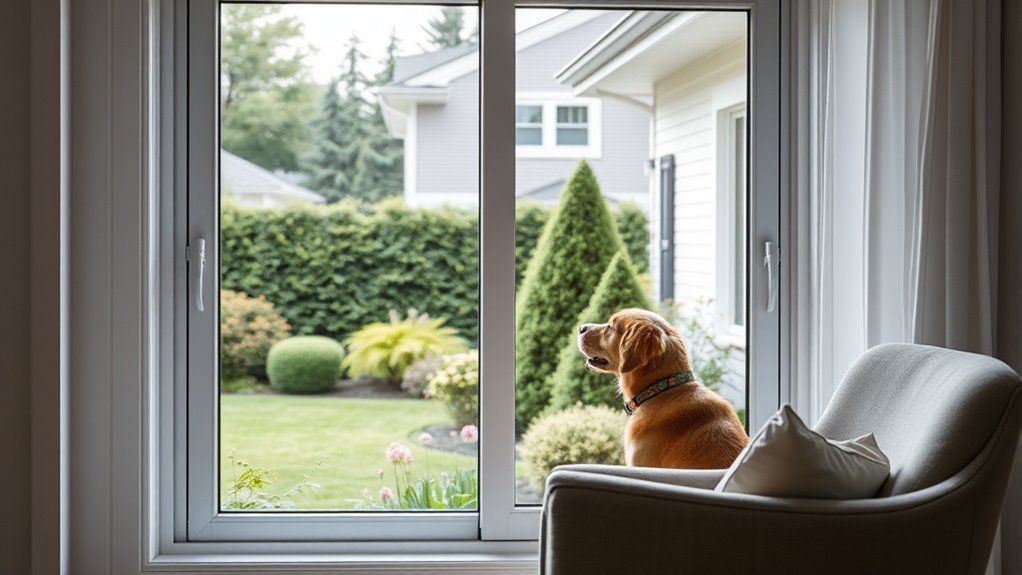
Creating a quiet zone is essential for improving focus, reducing stress, and fostering a peaceful environment. When your space is noisy or filled with constant distractions, it becomes difficult to concentrate on your tasks or relax. Whether you’re working from home, studying, or simply trying to unwind, a quiet zone helps you reclaim control over your environment. One common source of noise that disrupts tranquility is barking dogs, especially when they bark at the window. These sounds can be startling and persistent, making it hard to concentrate or enjoy a moment of calm. Addressing this issue begins with understanding why your dog barks at the window and then implementing practical solutions to minimize the disturbance.
First, recognize that dogs often bark at the window because they are alerting you to perceived threats or simply reacting to visual stimuli. They might see people walking by, other animals, or moving objects that catch their attention. To reduce this behavior, start by limiting their view of the outside world. Installing frosted window film, curtains, or blinds can block their line of sight without entirely shutting out natural light. When your dog can’t see outside, they are less likely to bark at every passing movement. Make sure these coverings are easily adjustable so you can open them when you want your dog to see outside or close them when you need silence.
Another effective approach involves training your dog to stay calm in front of the window. Use positive reinforcement to reward quiet behavior around the area. When your dog notices something outside and remains silent, praise them or give them a treat. Over time, they’ll associate being quiet with reward rather than barking. Consistency is key here; every time they bark at the window, gently redirect their attention with a command like “quiet” or “settle,” and reward compliance.
Providing your dog with alternative outlets for their energy can also reduce their urge to bark. Regular exercise and mental stimulation, such as puzzle toys or training sessions, help tire them out and lessen their reactive tendencies. When your dog is more engaged and less anxious, they’ll be less likely to bark at passing sights.
Lastly, consider creating a designated quiet space away from the window where your dog can retreat and relax. Use comfortable bedding and calming elements like white noise or calming music to drown out outside sounds. This area becomes a sanctuary where your pet can feel safe and undisturbed, contributing to a more peaceful environment for everyone. By combining these strategies—blocking outside views, training, providing stimulation, and creating a quiet retreat—you can considerably reduce barking triggers. This not only helps build a calmer space but also enhances the overall tranquility of your environment.
Frequently Asked Questions
What Materials Are Best for Soundproofing Windows?
You should choose laminated glass or double-pane windows with gas fills like argon for effective soundproofing. These materials help absorb and block sound waves better than standard glass. Adding weatherstripping or acoustic caulk around your window frame can further reduce noise leaks. For extra isolation, consider installing soundproof curtains or window inserts, which are affordable and easy to use, enhancing your quiet space considerably.
How Long Does It Take to See Results?
They say patience is a virtue, and that’s true here. You’ll typically start noticing a reduction in noise within a few days to a week after installing soundproofing materials. For the best results, give your new setup at least two weeks. Keep in mind, consistent effort and proper sealing are key. The more diligently you work, the sooner you’ll enjoy a peaceful, quiet space away from barking and outside noise.
Can I Install a Quiet Zone Myself?
Yes, you can install a quiet zone yourself if you’re comfortable with basic DIY tasks. Start by measuring your window area accurately and gather the necessary materials like soundproof curtains or window inserts. Follow clear instructions carefully, and take your time to guarantee a proper fit. With patience and attention to detail, you can effectively reduce noise and create a peaceful space without professional help.
Will Noise From the Street Still Be Audible?
Will street noise still be audible? You might hear some sounds, but a well-built quiet zone substantially reduces the noise. Think about how much quieter your space will feel and how better your focus or relaxation will be. Proper installation of soundproofing materials creates a barrier that muffles external noise, making your environment more peaceful. Isn’t a calmer, quieter home worth the effort? Yes, it definitely is.
Are There Any Legal Restrictions on Window Modifications?
Yes, there are typically legal restrictions on window modifications, especially if you live in a regulated neighborhood or apartment complex. You need to check local building codes and homeowners’ association rules before making changes. Some modifications, like adding soundproofing or tinting, may require permits. Always consult your local authorities or a legal expert to guarantee your upgrades comply with regulations and avoid potential fines or penalties.
Conclusion
By creating a quiet zone, you’re planting a peaceful garden amidst the noise, where calm can grow and flourish. Stop barking at the window, and instead, nurture a space of tranquility that invites understanding and patience. Like a gentle breeze calming restless leaves, your efforts will transform chaos into harmony. Remember, silence isn’t emptiness—it’s the fertile ground where peace takes root and blossoms into a serene sanctuary, just waiting for you to tend it.