
Creating DIY cardboard puzzle feeders is a budget-friendly way to keep your pet entertained and mentally stimulated using free recyclable materials. You can easily craft designs like sliding blocks, rotating discs, or hidden compartments with simple tools like scissors and tape. Customizing these puzzles with colors or treats boosts engagement, while regular maintenance guarantees safety and durability. If you want to explore five creative, cost-free designs, continue exploring ideas you can make today.
Play games included with Prime
Start a Prime free trial and play with Amazon Luna on your devices.
As an affiliate, we earn on qualifying purchases.
Key Takeaways
- Use recycled cardboard and household materials to create engaging puzzle feeders at no cost.
- Design simple, effective puzzles like hidden compartments, sliding blocks, or rotating disks.
- Incorporate everyday items such as cereal boxes, paper tubes, or folded cardboard for variety.
- Secure parts with non-toxic glue or tape, ensuring safety and durability for your pet.
- Personalize and modify designs easily using free materials to keep your pet mentally stimulated.
As an affiliate, we earn on qualifying purchases.
Why Make Your Own Cardboard Puzzle Feeders for Pets? Benefits and Inspiration
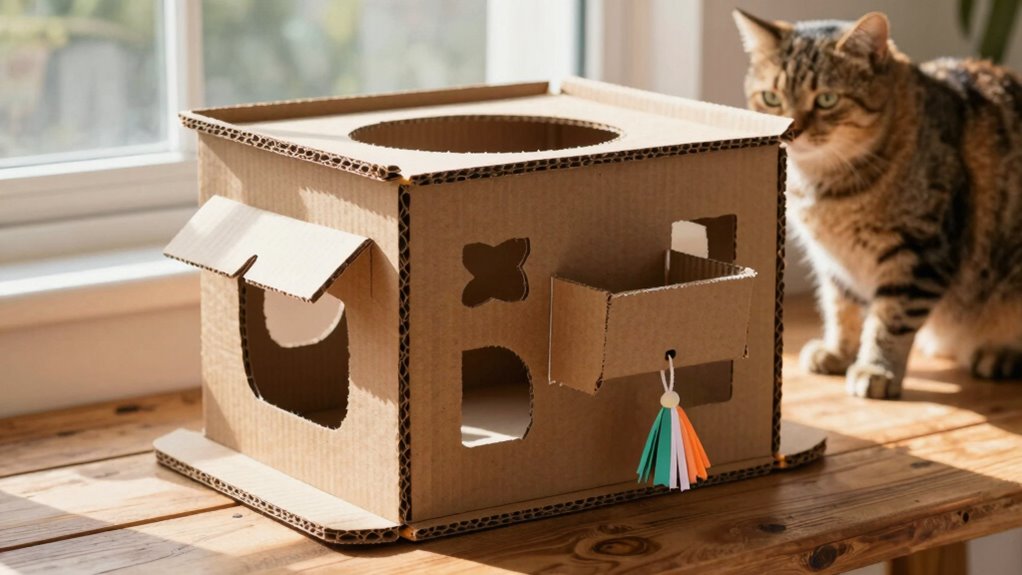
Creating your own cardboard puzzle feeders for pets offers a simple, cost-effective way to keep your furry friend mentally stimulated and engaged. These DIY toys provide essential pet enrichment by encouraging natural behaviors like problem-solving and foraging. They also promote environmental stimulation, helping prevent boredom and related issues such as anxiety or destructive behaviors. By designing and building your own puzzle feeders, you customize the level of difficulty and shape to suit your pet’s preferences and skill. Plus, using recycled cardboard makes the process eco-friendly and budget-friendly. This hands-on activity not only strengthens your bond with your pet but also offers a rewarding way to give them daily mental exercise without expensive store-bought toys. Additionally, understanding the importance of color accuracy can help in creating visually appealing and stimulating puzzle designs that engage your pet’s curiosity. Incorporating visual stimulation through carefully chosen colors can enhance your pet’s interest and response to the puzzle. Moreover, paying attention to material safety ensures that your DIY feeders are safe and durable for your pet to explore.
What Materials and Tools Do You Need to Build DIY Puzzle Feeders?
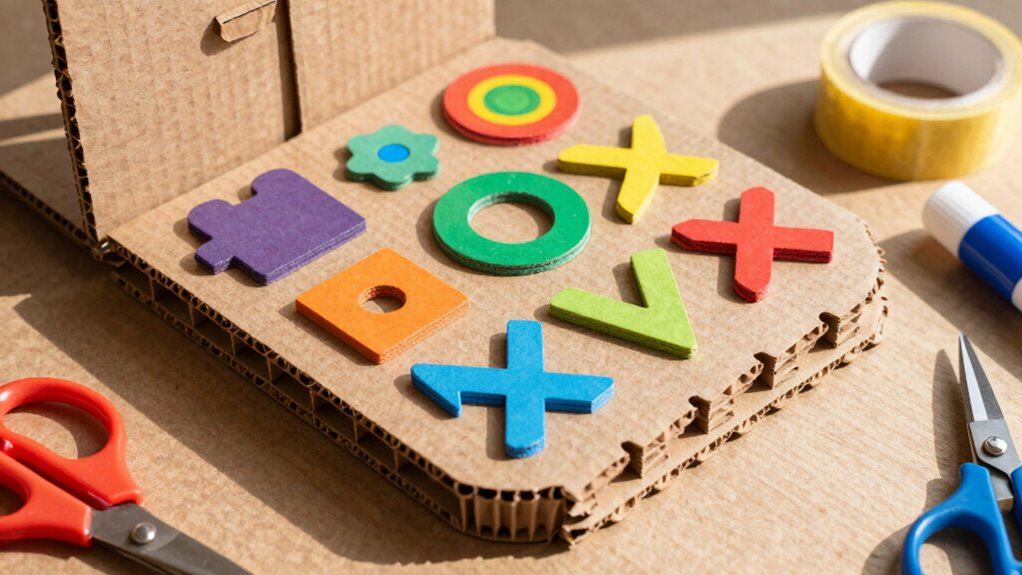
To build your own cardboard puzzle feeder, gather the right materials and tools to guarantee the project goes smoothly. Focus on reuse techniques by repurposing cardboard boxes, cereal packages, or other sturdy, eco friendly materials you already have at home. These materials are free and help reduce waste. You’ll also need basic tools like scissors, a craft knife, and a ruler to cut and shape the cardboard accurately. A glue stick or non-toxic adhesive ensures your pieces stay secure without harmful chemicals. Optional items like tape or rubber bands can add stability or help create moving parts. Using recycled, eco friendly materials not only saves money but also supports sustainability, making your DIY project both fun and environmentally conscious. Being aware of global chaos like outages can also inspire you to create resilient, sustainable solutions. Incorporating environmentally friendly practices in your crafting process further enhances the eco-conscious aspect of your project. Additionally, understanding self-sufficiency principles can guide you in designing feeders that are durable and adaptable for long-term use. Developing a simple, effective design can help ensure your puzzle feeder remains functional over time with minimal maintenance.
How to Build Your First Cardboard Puzzle Feeder : A Step-by-Step Guide
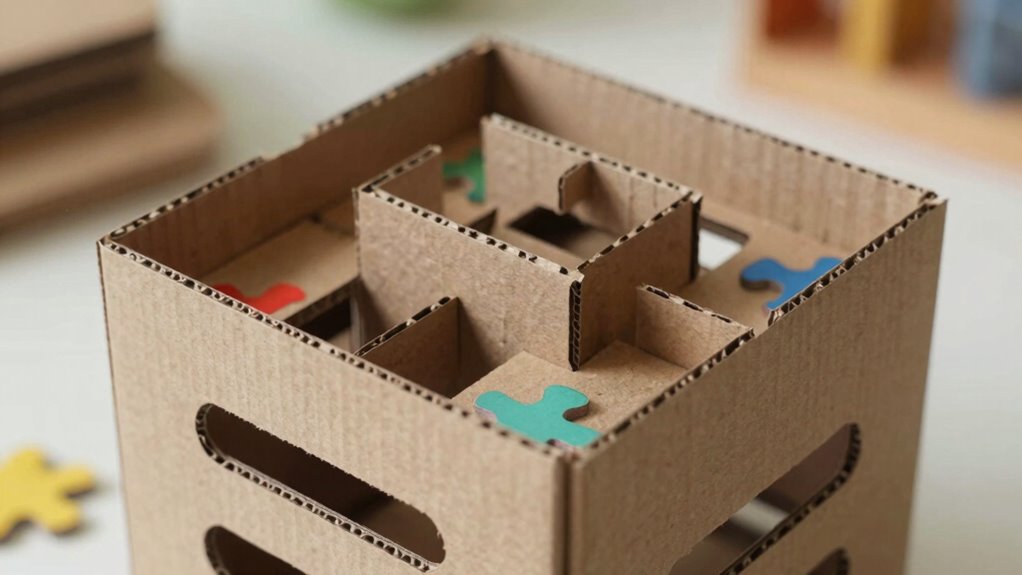
Building your first cardboard puzzle feeder is straightforward if you follow a clear step-by-step process. Start by gathering recycled cardboard boxes, which supports recycling strategies and keeps costs low. Cut out various shapes like flaps, tubes, and compartments to create engaging puzzle elements. Use non-toxic glue or tape to assemble these pieces into a structure that challenges your pet’s problem-solving skills. Consider creating compartments that hide treats, encouraging pet enrichment through mental stimulation. Keep the design simple at first—focus on functionality rather than elaborate details. Once assembled, test the puzzle to ensure it’s stable and safe. This process not only promotes recycling but also provides a fun, stimulating activity that enriches your pet’s environment without spending money. Additionally, understanding the history of pinball machines can inspire creative designs for your puzzle feeder, making the project both educational and enjoyable. Incorporating design principles from game mechanics can further enhance the puzzle’s effectiveness and engagement level. Exploring DIY project techniques can help you customize your feeder for better challenge and durability, as well as introduce creative problem-solving approaches to your design process.
What Are Some Fun and Creative Cardboard Puzzle Designs for Pets?
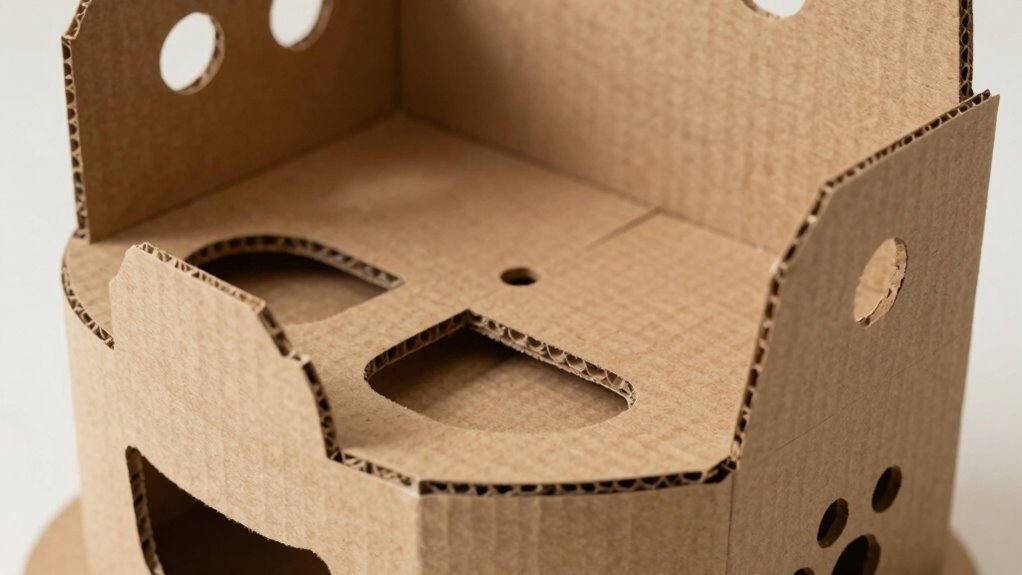
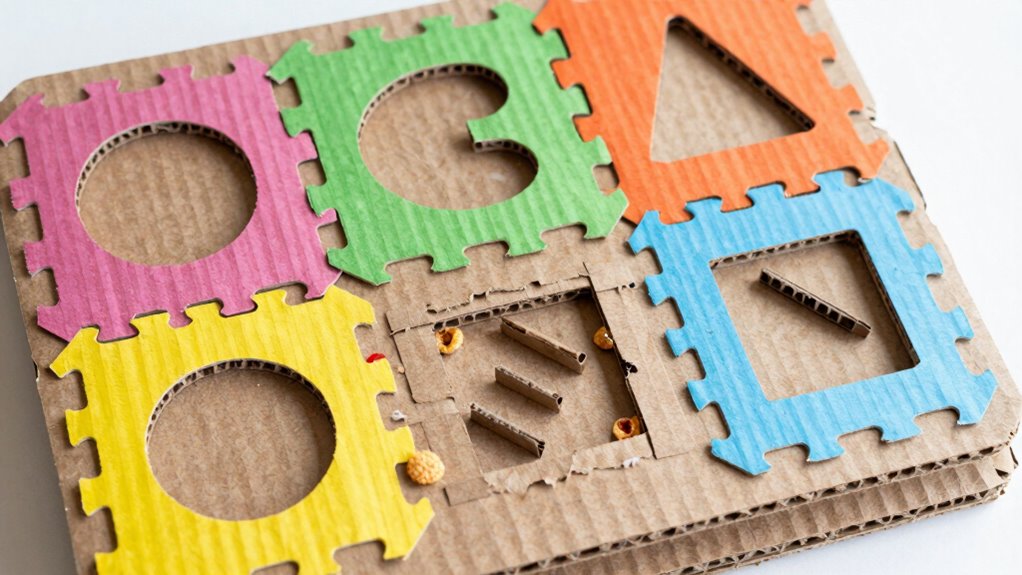
Once you’ve mastered assembling a basic cardboard puzzle feeder, you can get creative with fun and engaging designs that keep your pet excited. Think about incorporating interactive challenges that stimulate their mind. For example, create color-coded puzzles where different sections hide treats, encouraging problem-solving. You can also design layered puzzles with sliding or rotating parts to add complexity. Here’s a quick idea in a table:
| Puzzle Type | Description | Challenge Level |
|---|---|---|
| Color Coded Puzzles | Use different colors for compartments | Easy to Moderate |
| Sliding Blocks | Blocks slide to reveal treats | Moderate |
| Rotating Discs | Discs rotate to hide or show treats | Moderate to Hard |
| Hidden Compartments | Concealed compartments for treats | Hard |
Mix and match these ideas to keep your pet engaged and entertained! Additionally, DIY backyard projects can enhance the overall fun and functionality of your pet feeding area. Incorporating sound and sensory stimuli into your designs can further enrich your pet’s experience and keep them mentally stimulated. To maximize the benefits of your puzzle feeder, understanding the plant properties of various herbs can help you create calming or stimulating environments around your pet, promoting overall wellness.
How Can You Personalize and Maintain Your DIY Pet Puzzle Feeders?
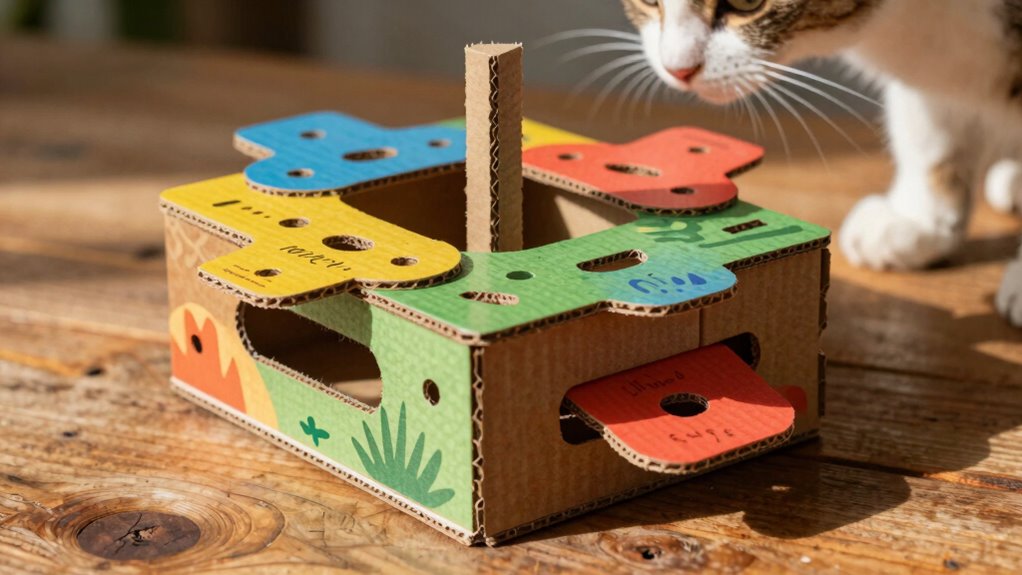
Personalizing your DIY pet puzzle feeders makes them more engaging and special for your furry friend. You can explore various customization options, like adding colorful paper, stickers, or non-toxic paint to make the feeder visually appealing. To keep it safe and functional, follow simple maintenance tips: regularly check for any damage or wear, clean with gentle soap and water, and ensure no small pieces break off that could be swallowed. If your pet tends to chew or scratch, reinforce the structure with extra tape or glue. Rotating different designs or adding new elements also keeps your pet interested. Incorporating weather-resistant materials can help protect your DIY feeder from the elements if it’s used outdoors. Additionally, using durable materials can extend the longevity of your puzzle feeder and withstand your pet’s activity levels. Proper maintenance and creative personalization not only extend the life of your puzzle feeder but also make mealtime more fun and stimulating for your pet. Being aware of safety considerations can help you select safer materials and placement options to ensure your pet’s safety during outdoor use.
Frequently Asked Questions
How Long Do Homemade Cardboard Puzzle Feeders Typically Last?
Your homemade cardboard puzzle feeder usually lasts about 1 to 2 weeks, depending on your pet’s activity level. The durability lifespan is limited because the material degrades quickly with chewing and moisture. To extend its use, you can reinforce it with tape or replace parts as needed. Keep an eye on the condition of the cardboard to prevent it from falling apart, ensuring your pet’s safety and continued fun.
Are There Safety Concerns With Using Recycled Cardboard for Pets?
Using recycled cardboard for your pet’s puzzle feeder can pose safety concerns, especially regarding cardboard toxicity and pet ingestion risks. You should verify the cardboard is free from harmful dyes, adhesives, or chemicals. Always supervise your pet during use, and regularly check for wear or damage. If your pet tends to chew aggressively, consider alternatives, as ingestion of cardboard pieces can cause choking or digestive issues.
Can These DIY Feeders Be Used for Multiple Pet Types?
You wonder if these DIY feeders work for multiple pet types? Absolutely, but you’ll need to take into account pet-specific designs to ensure safety and engagement. Imagine a puzzle that challenges a curious cat and a playful dog—each with tailored compartments. By customizing your design for multi-pet compatibility, you prevent conflicts and keep everyone safe. It’s a simple, cost-effective way to enrich your pets’ lives while keeping their feeding routine fun and safe.
What Are the Best Cleaning Practices for Cardboard Pet Puzzles?
To keep your cardboard pet puzzles clean and safe, use gentle, eco-friendly materials like mild soap and water for surface cleaning. Avoid soaking the cardboard to prevent warping. Always follow pet safety tips by supervising play and removing puzzles if they become damaged. Regularly inspect for tears or loose parts, and replace when necessary. This ensures your pet stays safe and your DIY puzzle remains a fun, eco-conscious activity.
How Can I Make My Cardboard Puzzle More Challenging?
To make your cardboard puzzle more challenging, increase its interactive difficulty by adding hidden compartments or multiple layers your pet has to explore. Use sturdier materials or reinforce areas to improve material durability, ensuring it withstands extra use. You can also incorporate different textures or incorporate treats in tricky spots, which encourages problem-solving and keeps your pet engaged longer. These tweaks challenge your pet’s skills while maintaining the puzzle’s functionality.
Conclusion
Creating your own cardboard puzzle feeders costs nothing but offers endless fun and mental stimulation for your pets. It’s a simple, eco-friendly way to keep them entertained—an inexpensive hobby that’s also rewarding. While these DIY projects are budget-friendly, they can still be personalized and durable, proving that sometimes, the best things in life are free and homemade. So, embrace your creativity and turn everyday materials into delightful, enriching experiences for your furry friends.
Fall yard work Picks
leaf blowers
As an affiliate, we earn on qualifying purchases.