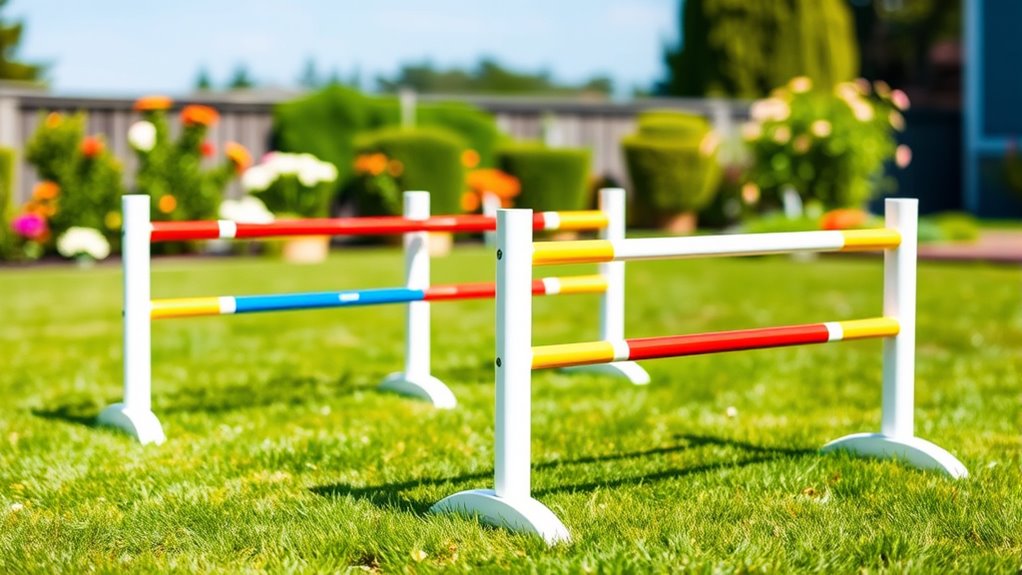

To build a backyard agility jump from PVC, start by measuring and cutting PVC pipes for the desired height and width. Use PVC connectors like T-joints and elbows to assemble the frame, ensuring all connections are secure. For added stability, attach the vertical pipes to weighted bases or stakes in the ground. Smooth rough edges and check all joints regularly for safety. Keep reading to discover easy steps to customize and stabilize your PVC agility jump for your dog.
Key Takeaways
- Measure your dog’s jump height and cut PVC pipes accordingly, allowing extra length for stability.
- Assemble vertical and horizontal pipes using PVC connectors, ensuring tight, secure connections.
- Attach vertical pipes to weighted bases or stake them into the ground for stability.
- Smooth all rough edges and check all connections regularly for safety and durability.
- Adjust jump heights as your dog progresses and include multiple jumps for a comprehensive agility course.

Creating backyard agility jumps from PVC is an affordable and customizable way to keep your dog active and engaged. Building your own jumps allows you to tailor the height and style to suit your dog’s size and skill level, all while saving money compared to store-bought options. Plus, PVC is lightweight, durable, and easy to work with, making it ideal for DIY projects. With a few simple tools and materials, you can create sturdy, safe, and adjustable agility jumps that will challenge your dog and provide hours of fun.
Start by measuring and deciding on the height of your jumps. Keep your dog’s size in mind—if they’re small, don’t make the jump too high; for larger dogs, you can go a bit taller. Once you know the height, cut your PVC pipes accordingly. Typically, you’ll need two vertical pipes for each jump and a horizontal pipe for the bar. For example, if you want a 12-inch jump, cut two vertical pipes to that height plus a few inches for stability, and a horizontal pipe that spans across the top. Use a PVC cutter or a saw to ensure clean, straight cuts.
Next, assemble the frame. Insert the horizontal pipe into the top of each vertical pipe. To make the setup more secure, you can drill small holes through the vertical pipes and the horizontal pipe, then insert bolts or pins to hold everything in place. If you prefer a simpler design, you can use PVC connectors—like T-joints or elbows—to connect the pipes without drilling. These connectors make assembly quick and allow for easy disassembly for storage or adjustment.
To add stability, consider creating a weighted base or anchoring the jump to the ground. You can do this by attaching the bottom of the vertical pipes to weighted plates or burying the base slightly into the ground and securing it with stakes or additional PVC stakes. This prevents the jump from tipping over when your dog jumps or pushes against it. For added safety, smooth out any rough edges or burrs after cutting with sandpaper or a file, and ensure all connections are tight and secure.
Finally, place your jumps in a safe, open area free of obstacles. Adjust the height if needed, and start training your dog by encouraging them to jump over the bar with treats and praise. Regular practice not only keeps your dog physically fit but also mentally stimulated. Building your own PVC agility jumps is a fun project that pays off by creating a customized, cost-effective obstacle course your dog will love to navigate.

1" Jump Cups-Dog Agility Equipment-Set of Ten for Factory Labeled 1" PVC Pipe. See Description Before Ordering.
Will ONLY fit PVC pipe FACTORY LABELED 1". Measuring the outside of your pipe is incorrect and will…
As an affiliate, we earn on qualifying purchases.
As an affiliate, we earn on qualifying purchases.
Frequently Asked Questions
What Are the Safety Considerations for DIY PVC Agility Jumps?
You should guarantee the PVC jumps are sturdy and well-assembled to prevent collapsing during use. Always check for sharp edges and sand down rough spots to avoid injuries. Use non-slip surfaces on the ground and avoid unstable or uneven terrain. Regularly inspect the jumps for cracks or damage, and supervise your dog during training to prevent accidents. Safety always comes first to keep your pet happy and injury-free.
How Do I Customize Jumps for Different Dog Sizes?
Imagine your dog as a star, shining brighter with each tailored jump. To customize for different sizes, measure your dog’s height at the withers and adjust the bar height accordingly, ensuring it’s just above their shoulders for smaller dogs and lower for seniors. Use adjustable PVC fittings or removable bars. This way, each dog feels confident, safe, and proud, like a star reaching for the sky.
Can PVC Jumps Be Used Outdoors Year-Round?
Yes, PVC jumps can be used outdoors year-round if you take proper care. You should regularly inspect the PVC for cracks or damage, especially after harsh weather. To prolong their lifespan, consider applying a protective sealant and storing them indoors during extreme weather conditions like heavy snow or intense heat. This way, you guarantee your jumps stay safe and sturdy for your dog’s agility training all year.
What Tools Are Necessary for Building PVC Agility Jumps?
Imagine the perfect toolset for building PVC agility jumps—it’s simple yet essential. You’ll need a hacksaw or pipe cutter to trim pipes precisely, a measuring tape to ensure accurate dimensions, and a drill with bits to assemble parts securely. Additionally, PVC cement helps hold everything together firmly. These tools are your trusted allies, turning basic PVC pipes into sturdy, safe jumps that will keep your dog engaged and active outdoors year-round.
How Do I Maintain and Store PVC Agility Equipment?
You should regularly inspect your PVC agility equipment for cracks or damage, and clean it with mild soap and water to keep it in good shape. To store, disassemble the jumps and keep all parts in a dry, cool place, preferably in a bin or on a shelf. Avoid prolonged exposure to direct sunlight, which can weaken the PVC over time. Proper maintenance guarantees your equipment stays safe and durable.

JMMPOO Dog Agility Training Equipment, 60-piece Dog Obstacle Course Training Starter Kit Pet Outdoor Game with Tunnel, Agility Hurdle, Weave Poles, Jump Ring, Pause Box, Toy Balls and Storage Bag
UNIQUE & HEALTH: Running, jumping, playing, and most of exercising for maximum dog agility. Whether training for competition…
As an affiliate, we earn on qualifying purchases.
As an affiliate, we earn on qualifying purchases.
Conclusion
So, you’ve built these simple PVC jumps, turning your yard into an agility playground. Who knew that some pipes and a bit of effort could transform your backyard into a professional training ground? Now, your dog gets to show off their skills, all while you secretly marvel at how a few cheap materials could outshine those fancy, store-bought obstacles. Guess sometimes, the best jumps are made from PVC and a little DIY magic.

Pet Prime Dog Agility Training Equipment for Dog Obstacle Course Backyard Height Adjustable Jumper Hurdle Bar Portable Dogs Park Exercise Tool
Customizable Height: Our agility hurdles can be adjusted to fit dogs of all sizes and skill levels, making…
As an affiliate, we earn on qualifying purchases.
As an affiliate, we earn on qualifying purchases.
JMMPOO Dog Agility Training Equipment, 60-piece Dog Obstacle Course Training Starter Kit Pet Outdoor Game with Tunnel, Agility Hurdle, Weave Poles, Jump Ring, Pause Box, Toy Balls and Storage Bag
UNIQUE & HEALTH: Running, jumping, playing, and most of exercising for maximum dog agility. Whether training for competition…
As an affiliate, we earn on qualifying purchases.
As an affiliate, we earn on qualifying purchases.