To build a cleaner potty path from your house to the kennel, create a direct, obstacle-free route using durable materials like gravel, pavers, or concrete that are easy to clean. Use visual markers, such as stepping stones or flags, to guide your dog, and add low-maintenance, non-toxic plants along the sides for aesthetics. Make sure the path is predictable and clear to encourage calm walks. Keep it well-maintained to prevent overgrowth—discover more tips for a smooth setup below.
Key Takeaways
- Choose a direct, obstacle-free route with durable, easy-to-clean materials like pavers or gravel.
- Incorporate clear visual markers or cues to guide your dog along the path.
- Use low-maintenance, dog-safe plants and natural barriers for aesthetic appeal and safety.
- Train your dog with consistent commands and positive reinforcement along the route.
- Keep the pathway well-maintained by trimming, weeding, and regularly cleaning the surface.
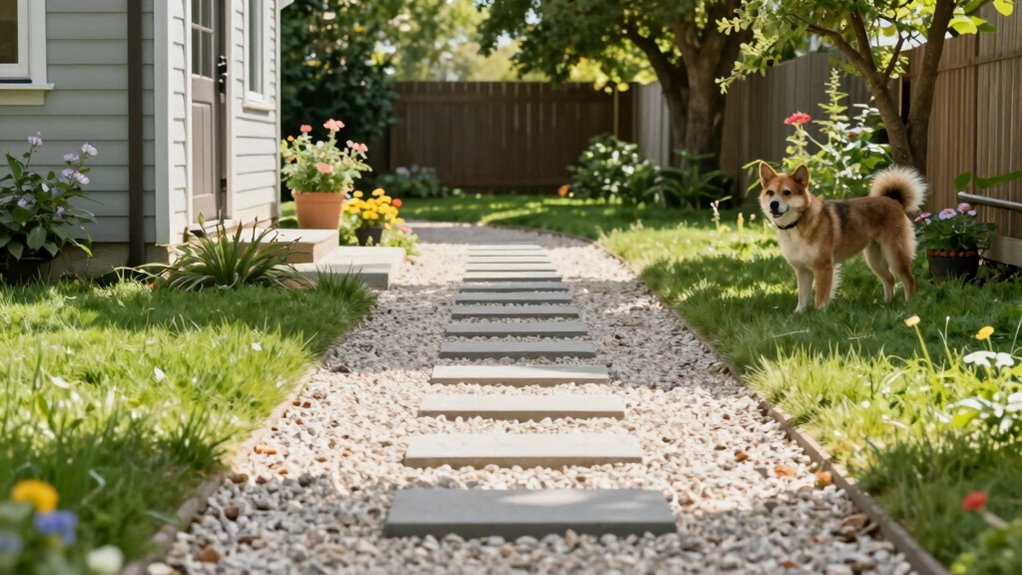
Creating a clean and efficient route from your house to your dog’s kennel can make potty breaks easier and cleaner for both of you. When designing this pathway, consider how it fits into your overall dog training routine. A well-structured route helps reinforce good habits, reducing indoor accidents and encouraging your dog to go to the designated spot. Start by choosing a direct, obstacle-free path that minimizes distractions. Keep in mind that consistency is key, so aim to use the same route each time. This predictability helps your dog associate the path with potty time, making training smoother.
A direct, obstacle-free route reinforces good potty habits and makes training smoother for your dog.
Landscaping tips can considerably improve both the function and appearance of your potty path. Use durable, easy-to-clean materials like gravel, pavers, or concrete to create a sturdy surface that withstands weather and foot traffic. Avoid loose soil or grass in the immediate area, as these can become muddy or overgrown, complicating cleanup. If you want a softer look, consider installing a layer of mulch or bark, but remember that these materials might require more maintenance. To keep the area tidy, incorporate edging or borders—plastic or metal strips work well—to contain the materials and prevent spreading into your yard.
Planting low-maintenance, dog-friendly vegetation along the sides of your path adds a natural barrier that guides your dog and improves aesthetics. Choose non-toxic, hardy plants that won’t cause allergic reactions or harm if ingested. Avoid thorny or sharp-edged plants that could injure your dog’s paws. Regular landscaping maintenance, like trimming and weeding, keeps the path neat and prevents overgrowth, which can interfere with training. You might also add small, decorative features like stepping stones or flags to mark the route clearly, making it more inviting and easier to follow. Incorporating landscape design techniques can further enhance the effectiveness and visual appeal of your potty path. Additionally, considering dog-friendly plants can help create a safe and inviting environment for your pet.
Incorporate dog training techniques into your landscaping plan by placing cues along the path. Use visual markers or specific sounds to signal your dog that it’s time to go potty. Training your dog to walk calmly on a leash along this route builds good habits and prevents pulling or hesitation. Consistent commands and positive reinforcement reinforce the desired behavior, making potty breaks quicker and less stressful. Over time, this dedicated path becomes a predictable routine, helping your dog feel secure and confident, while keeping your yard clean. Additionally, smart home technology can be integrated to monitor or assist during potty breaks, adding convenience and efficiency to your routine. A thoughtfully designed route, combined with effective dog training and smart landscaping tips, transforms potty time into an efficient, mess-free part of your daily routine.
dog potty path gravel pavers
As an affiliate, we earn on qualifying purchases.
As an affiliate, we earn on qualifying purchases.
Frequently Asked Questions
What Materials Are Best for a Durable Potty Path?
For a durable potty path, material options like gravel, concrete, or pavers work best because they withstand weather and heavy use. Gravel is easy to maintain, just add more as needed. Concrete offers longevity but needs sealing periodically. Pavers are stylish and durable, though a bit more expensive. Regular maintenance tips include keeping the surface clean, removing debris, and addressing any weeds or cracks promptly to guarantee the path stays functional and safe.
How Do I Prevent My Pet From Slipping?
To keep your pet steady on the path, focus on pet safety and path aesthetics. Use textured, non-slip surfaces like rubber mats or stamped concrete to reduce slipping. Regularly clean and check for smooth spots, and consider adding gentle ramps or gentle slopes. These steps create a safer, more inviting route, ensuring your pet feels confident and secure while maintaining the path’s visual appeal.
How Often Should I Clean the Potty Path?
You should clean the potty path daily to guarantee pet safety and maintain cleanliness. Regular maintenance tips include sweeping away debris, washing the surface with pet-safe disinfectant, and inspecting for damage or hazards. This routine prevents dirt buildup, reduces slipping risks, and keeps the area inviting for your pet. Consistent cleaning not only promotes hygiene but also shows your pet that their comfort and safety matter.
Can I Customize the Path for Different Dog Sizes?
Yes, you can customize the path for different dog sizes by exploring custom path options and adjusting for size. Use materials like adjustable stepping stones or flexible edging to create a safe, comfortable route for small and large dogs alike. You might also consider adding ramps or textured surfaces where needed. By tailoring the design, you guarantee every dog feels secure and comfortable while using the potty path.
What Is the Ideal Width for the Potty Path?
The ideal width for your potty path is about three to four feet. This width works well for ensuring space for pets and provides pleasing path aesthetics. You can explore landscaping options like gravel, mulch, or stepping stones to enhance the pathway’s appearance and practicality. A wider path allows multiple pets to walk comfortably side by side, making potty time more pleasant and preventing crowding or confusion.
dog-friendly landscaping plants
As an affiliate, we earn on qualifying purchases.
As an affiliate, we earn on qualifying purchases.
Conclusion
By following these simple steps, you’ll create a cleaner, more pleasant potty path from your house to the kennel, making your daily routine easier and more hygienic. Remember, taking the time to maintain this pathway not only keeps your yard tidy but also shows your love and care for your furry friend. Just like a well-kept garden, a tidy path brings peace of mind—think of it as your modern-day “Rosebud” moment, echoing simpler times of love and devotion.
dog training visual markers
As an affiliate, we earn on qualifying purchases.
As an affiliate, we earn on qualifying purchases.
outdoor dog potty pathway materials
As an affiliate, we earn on qualifying purchases.
As an affiliate, we earn on qualifying purchases.