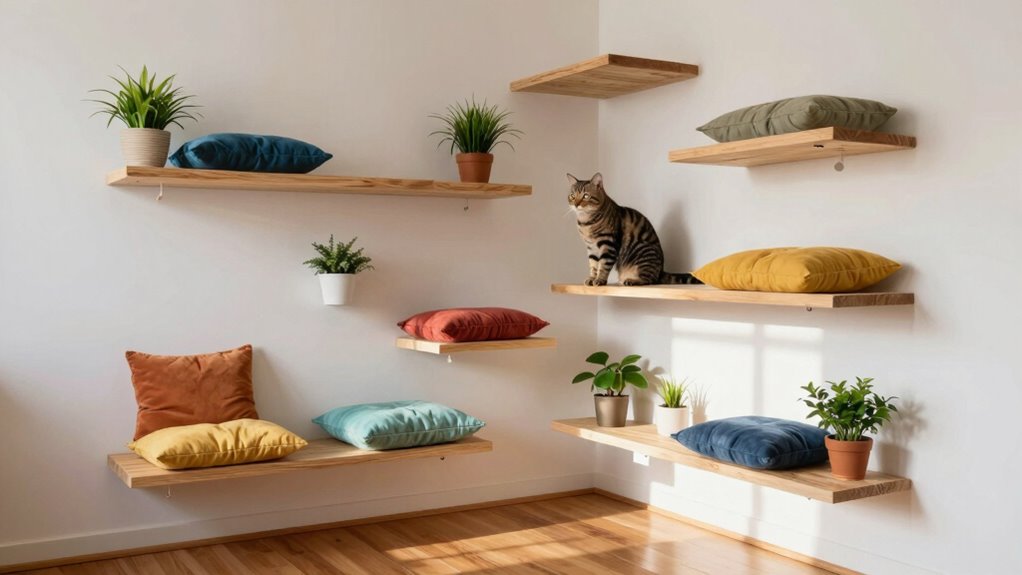

To create a cat ‘vertical zone’ with shelves and perches, start by evaluating your space and measuring wall areas for safe, sturdy installations. Choose durable, non-toxic shelves and secure them well with appropriate anchors or mounts, avoiding fragile spots like radiators or outlets. Vary the heights and include cozy spots, climbing toys, and scratching posts to keep your cat engaged and happy. Keep safety, comfort, and your cat’s preferences in mind as you plan your vertical setup. If you continue, you’ll explore how to design this space to optimize your cat’s well-being.
Key Takeaways
- Measure wall space accurately and select sturdy shelves and perches that support your cat’s weight safely.
- Install shelves at varying heights using high-quality brackets and appropriate anchors for stability.
- Position perches for easy access and ergonomic comfort, including low resting spots and high vantage points.
- Incorporate scratching posts, climbing toys, and secure platforms to stimulate your cat mentally and physically.
- Regularly inspect, clean, and adjust the setup to ensure safety, comfort, and ongoing engagement for your cat.
Why Cats Love Vertical Spaces and How They Benefit Your Pet
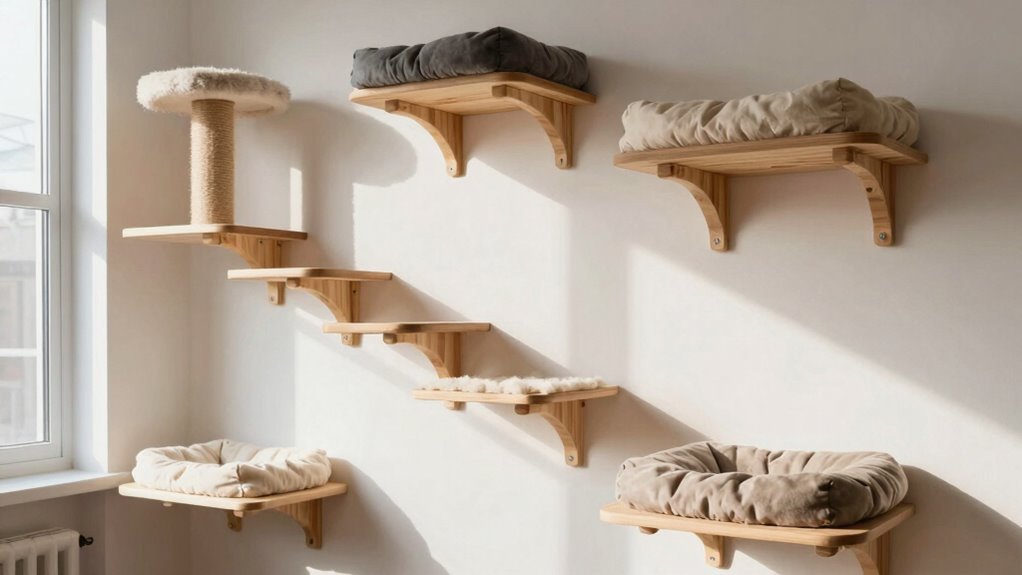
Cats instinctively seek out vertical spaces because they provide a safe vantage point where they can observe their surroundings and feel secure. Cat climbing offers these animals a sense of control and reduces stress, making them happier and more confident. Vertical enrichment allows your cat to fulfill their natural instincts, such as stalking, watching, and exploring from above. By providing shelves and perches, you give your feline friend opportunities for healthy activity and mental stimulation. These elevated spots also help prevent boredom and destructive behaviors by giving them a designated space to satisfy their curiosity. When your cat climbs and perches, it strengthens their muscles and improves agility. Proper color accuracy in the design and placement of these spaces can enhance their visual appeal and comfort. Incorporating natural behaviors into their environment can further boost their overall well-being. Additionally, well-placed vertical spaces can promote physical activity, which is essential for maintaining a healthy weight and overall fitness. Creating a variety of height levels can also cater to different preferences and activity patterns of your cat, making the environment even more enriching. Overall, vertical spaces are essential for your pet’s well-being, enriching their environment and supporting their natural behaviors.
How to Assess Your Home Space for a Cat Vertical Zone
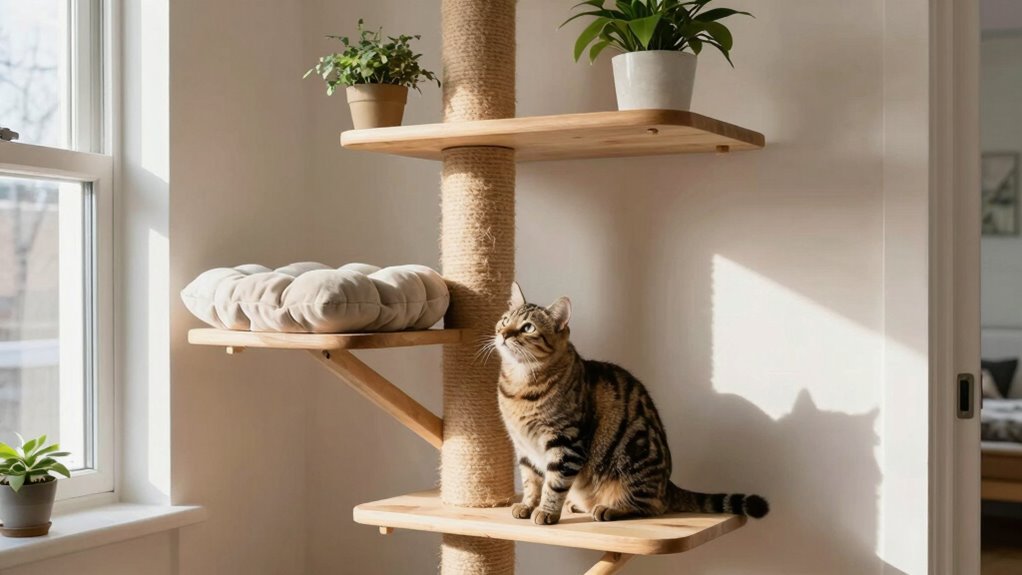
Start by measuring the wall space where you want to install shelves or perches to make certain they fit comfortably. Next, identify areas that are sturdy and safe for mounting, avoiding places near hazards or unstable surfaces. Taking these steps helps you create a secure and enjoyable vertical zone for your cat. Additionally, considering proper materials and construction, such as using high-quality brackets and durable shelves, will ensure your cat’s safety and the longevity of the setup. Incorporating AI-powered design tools can also help you plan the most efficient layout for your space. Reviewing safety standards and guidelines ensures your setup complies with safety standards and best practices for pet furniture.
Measure Available Wall Space
Before you begin installing shelves and perches, it’s essential to accurately measure your available wall space. Take precise wall measurements to determine the height, width, and depth of the area where you want to create your cat’s vertical zone. This helps you plan furniture compatibility, ensuring the shelves and perches fit comfortably without overcrowding the room. Use a tape measure to record dimensions, noting any obstructions like radiators, windows, or electrical outlets. Consider how much space your cat needs to move comfortably and whether the wall can support the weight of the furniture you plan to install. Proper measurements prevent purchasing ill-fitting items and ensure your cat’s new space is both functional and safe. Additionally, understanding best woods for farmhouse tables can inspire the selection of durable, supportive materials for your cat furniture to withstand daily use. Taking the time to measure weight capacity of your wall and furniture ensures safety and longevity for your cat’s vertical zone. To further enhance stability, researching wall mounting techniques can help you securely attach shelves and perches. Moreover, verifying the weight limits of wall anchors can prevent accidents and ensure your installations remain secure over time.
Identify Safe Mounting Areas
To guarantee your cat’s vertical zone is safe and functional, you need to identify suitable mounting areas on your walls. Look for spots that are sturdy and free from electrical wiring, pipes, or other obstructions. Check the wall’s material to ensure it can support the weight capacity of shelves and perches. Use wall anchors designed for your wall type—whether drywall, plaster, or concrete—to securely fasten mounts. Avoid areas with weak drywall or insufficient support, as these can pose safety risks. Test the sturdiness by gently applying pressure before mounting. Properly anchored and supported shelves will hold your cat comfortably and securely, giving them a safe and enjoyable vertical space. Additionally, understanding dark psychology tactics can help you recognize potential safety hazards or manipulative influences that could compromise your home’s security and your pet’s well-being. Being aware of home safety considerations ensures you create a secure environment for your feline friend. When planning your setup, consider structural support factors to ensure the stability of your shelves over time.
How to Pick Safe and Comfortable Shelves and Perches for Your Cat
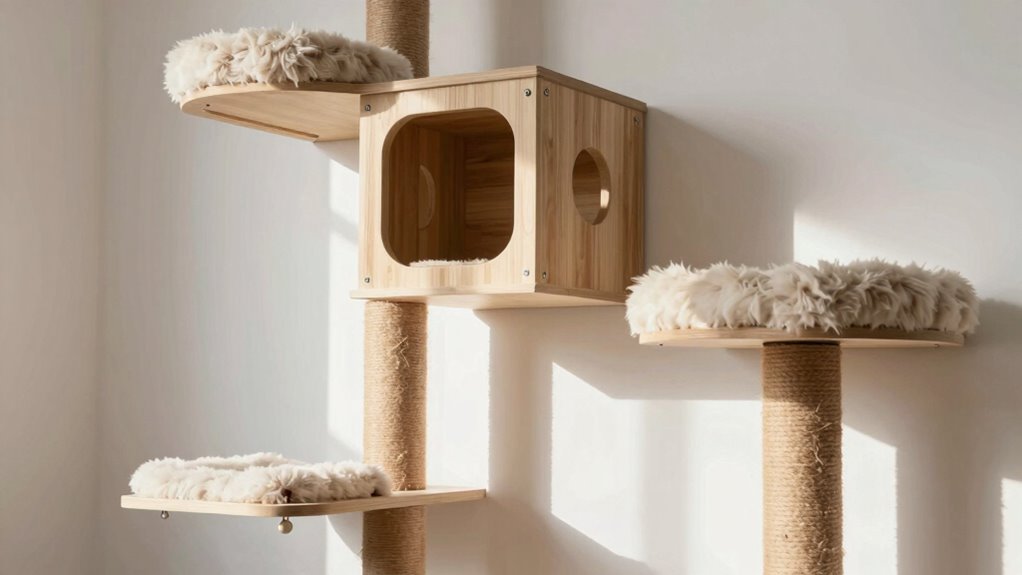
Choosing the right shelves and perches for your cat is essential for their safety and comfort. Look for sturdy, well-made cat furniture that can support your cat’s weight without wobbling. Guarantee the materials are non-toxic and smooth to avoid scratches or splinters. Comfortable perches should have soft, washable surfaces that provide cozy resting spots. Incorporate scratching posts nearby to encourage healthy scratching and prevent damage to furniture. Avoid shelves that are too narrow or unstable, as these can cause slips or falls. Consider the height and positioning to give your cat easy access and a sense of security. Proper cat furniture design ensures your pet’s safety and promotes healthy activity. Additionally, selecting options that are sustainable and eco-friendly can help reduce environmental impact. By selecting durable, comfy options and integrating scratching posts, you create a safe, engaging vertical space that your cat will love. When designing your cat’s vertical zone, think about ergonomic placement to maximize comfort and accessibility for your feline friend.
How to Install Cat Shelves and Perches Securely Without Wall Damage
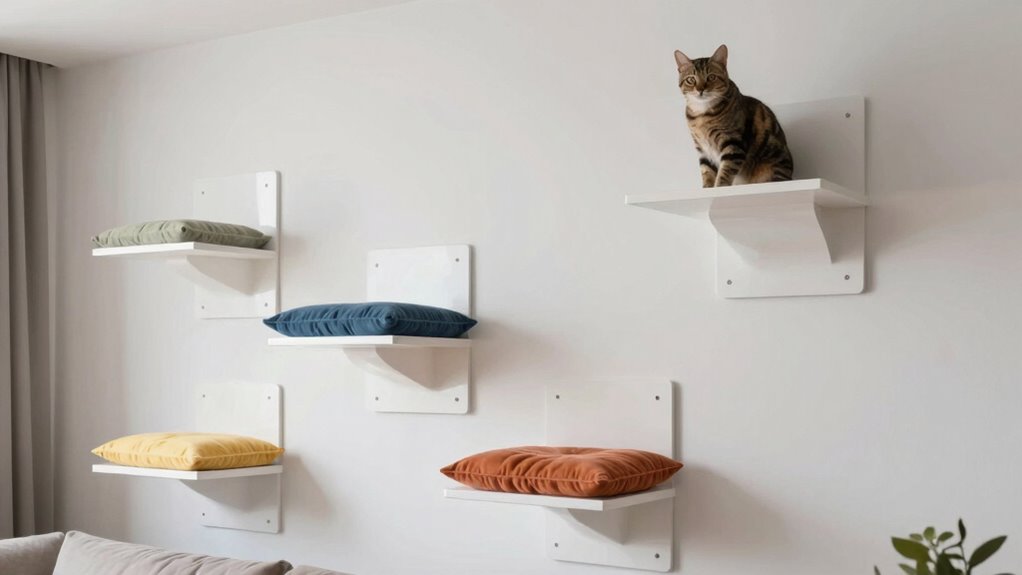
Installing cat shelves and perches securely without damaging your walls requires careful planning and the right tools. First, choose mounting options that suit your wall type, such as adhesive mounts, tension rods, or wall anchors. Second, always consider safety considerations by ensuring shelves are level and well-supported to prevent falls. To do this effectively:
- Use a stud finder to locate wall studs for heavy or high-traffic perches.
- Select appropriate hardware based on your wall type—drywall, plaster, or brick.
- Test each mount’s stability before allowing your cat to use the shelf.
Designing a Fun, Engaging Vertical Environment for Your Cat
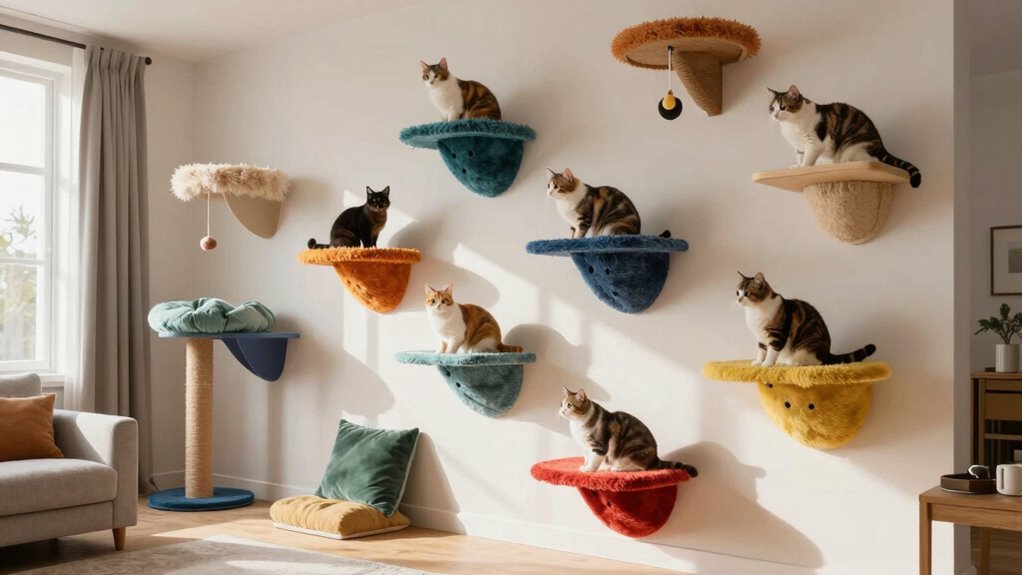
To create a fun, engaging vertical space, start by choosing durable materials that can withstand your cat’s activity. Vary the heights of the shelves and perches to keep your cat interested and encourage exploration. This approach makes the environment stimulating and safe for your feline friend.
Choose Durable Materials
Selecting the right materials is essential to creating a safe and durable vertical space for your cat. You want materials that withstand scratching and daily use, ensuring long-term pet safety. Consider these options:
- Use sturdy, high-quality wood or engineered composites that resist wear and tear. These materials are known for their durability and safety, making them ideal for active cats.
- Opt for sisal or rough fabric coverings on posts to encourage scratching without damaging furniture.
- Avoid cheap or fragile materials like flimsy particleboard or thin plastics that can break easily or pose safety risks.
- Incorporate vetted materials known for their durability and safety to ensure your cat’s environment remains intact over time.
- Additionally, choosing non-toxic materials is crucial to prevent any health issues if your cat chews or scratches the surfaces. Researching and selecting safe, pet-friendly options can further enhance your cat’s environment.
Choosing durable materials not only prolongs the life of your cat’s environment but also keeps your pet safe from potential hazards. Prioritize material durability to create a reliable, engaging space your cat can enjoy for years.
Incorporate Varied Heights
Creating a stimulating vertical space for your cat involves incorporating shelves and perches at various heights. This setup encourages cat climbing and keeps your feline engaged with vertical play. By varying the heights, you give your cat different vantage points, satisfying their natural instincts to observe and explore. Use a mix of low, mid, and high levels to create a dynamic environment that appeals to your cat’s curiosity. Here’s a simple layout to guide you:
| Low Level | Mid Level | High Level |
|---|---|---|
| Bed or perch | Shelf for lounging | Tall cat tree or perch |
| Jumping spot | Climbing ladder | Window perch |
| Play area | Scratching post | Ceiling-mounted perch |
This arrangement promotes movement, mental stimulation, and exercise, making your cat’s vertical zone fun and engaging. Incorporating varied heights ensures your cat remains active and mentally stimulated, similar to how diverse setups in deep-sky imaging help achieve optimal results. Additionally, integrating safe climbing structures helps prevent accidents and supports your cat’s natural agility.
Tips to Customize Your Vertical Space Based on Your Cat’s Preferences
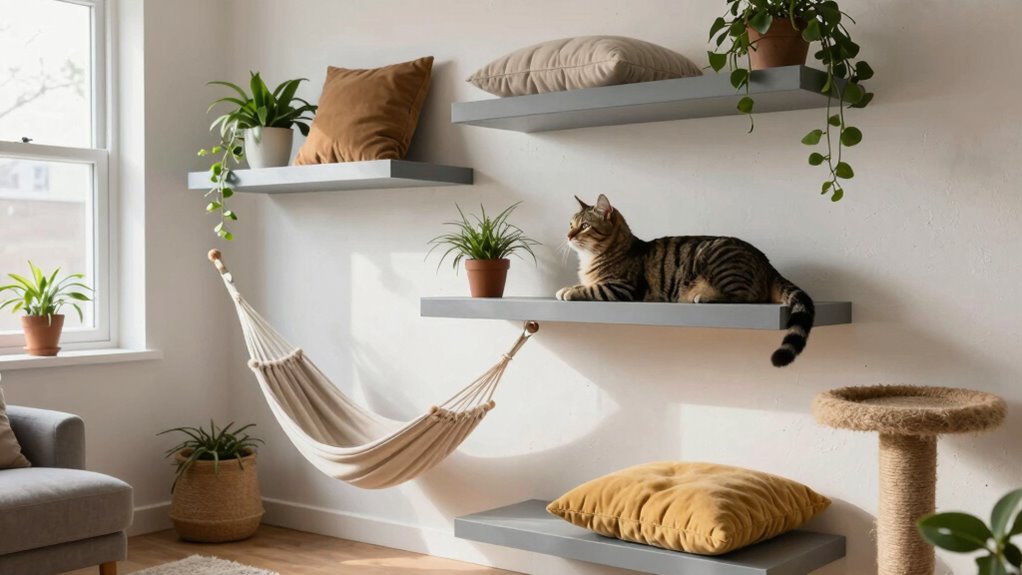
Understanding your cat’s individual preferences is key to designing a vertical space they’ll love. Observe whether your cat prefers high perches or cozy hideaways. To customize effectively, consider these tips:
Knowing your cat’s preferences helps create a vertical space they’ll truly enjoy.
- Add cat furniture that matches their activity level, like soft perches for lounging or sturdy platforms for jumping.
- Incorporate climbing toys to encourage playful exploration and satisfy their need for movement.
- Adjust the placement of shelves and perches based on your cat’s habits—some prefer quiet corners, others like open views.
Common Mistakes to Avoid When Setting Up Your Cat’s Vertical Zone
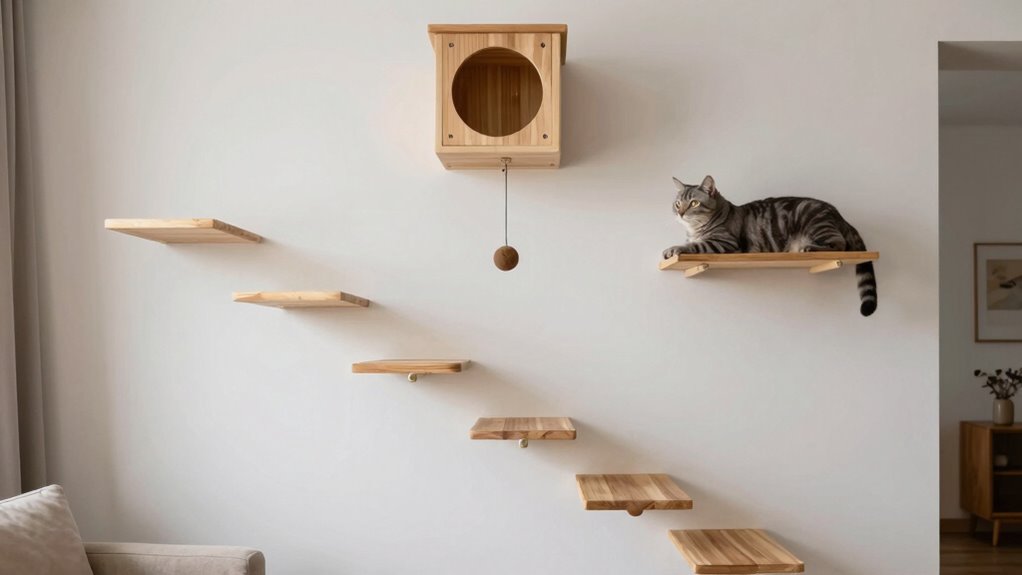
When setting up your cat’s vertical zone, it’s easy to overlook common pitfalls that can make the space less enjoyable or even unsafe for your feline friend. Avoid placing cat furniture too close to furniture or fragile items, which can cause accidents during vertical climbing. Make certain shelves are securely mounted and sturdy enough to support your cat’s weight, preventing falls or injuries. Don’t clutter the area with too many small or unstable perches, as this can discourage your cat from using the space confidently. Also, steer clear of high platforms without escape routes or easy access, which can cause frustration or accidents. Remember, safety and stability are key to creating a successful vertical zone your cat will love and use safely.
How to Maintain and Update Your Cat’s Vertical Space Over Time
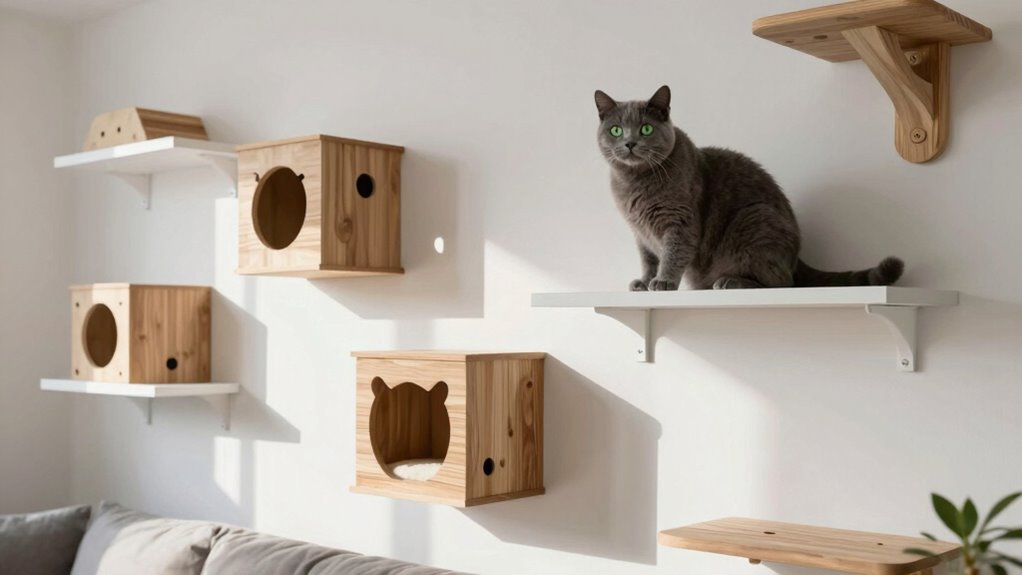
Regularly inspecting your cat’s vertical space is essential to guarantee it remains safe and inviting. Over time, wear and tear can affect accessory options and safety. To keep things in top shape:
Regularly inspect and maintain your cat’s vertical space for safety and comfort.
- Check shelves, perches, and attachments for stability and signs of damage.
- Clean accessories regularly to prevent dirt buildup and ensure they stay appealing.
- Update or replace worn-out items, such as scratching posts or cushions, to maintain comfort and safety.
Implementing routine maintenance routines helps prevent accidents and keeps your cat engaged. Adjust your setup as your cat grows or shows new preferences to keep the space stimulating. Staying proactive guarantees your vertical zone remains a secure, fun environment that encourages your cat’s natural climbing instincts.
How a Vertical Zone Can Reduce Stress and Improve Your Cat’s Behavior
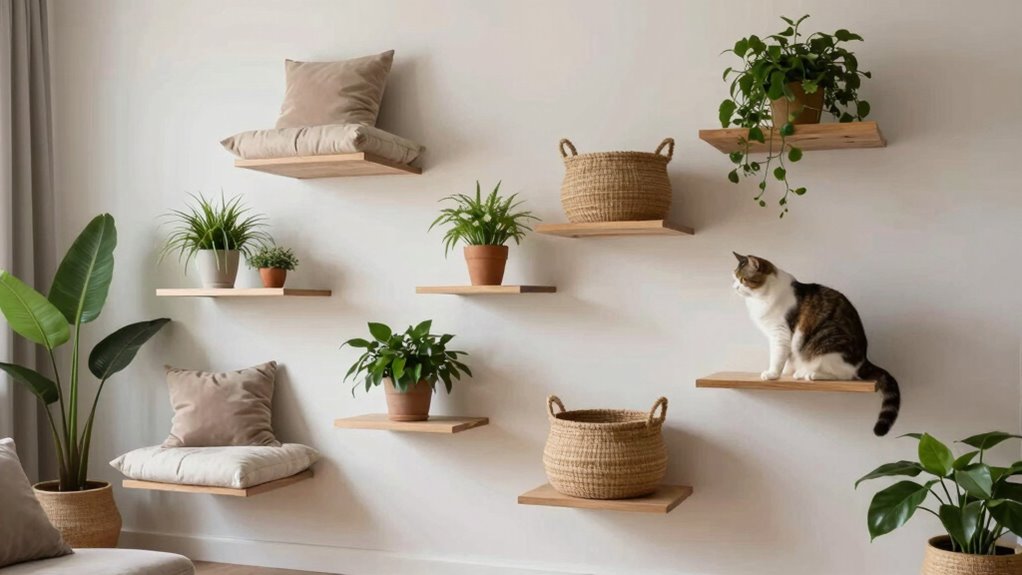
A well-designed vertical zone can considerably reduce your cat’s stress by providing a safe, private retreat where they feel secure. When cats have access to high perches and shelves, they can escape from loud noises or household chaos, promoting stress reduction. This sense of control helps prevent anxiety and minimizes aggressive or destructive behaviors. A vertical space allows your cat to observe their environment from a safe vantage point, satisfying their natural instincts and lowering stress levels. As a result, their overall behavior improves, showing fewer signs of fear or agitation. Creating a dedicated vertical zone offers your cat a calming refuge, which benefits both their mental well-being and your household harmony.
Frequently Asked Questions
How High Should Cat Shelves Ideally Be Installed?
You should install cat shelves at varying heights, ideally starting around 3 feet off the ground and going up to 6-7 feet. This range provides a comfortable climbing experience and space for your cat to observe their environment. When doing shelf installation, make certain each shelf is sturdy and secure, supporting your cat’s weight. This creates a stimulating vertical zone, keeps your cat entertained, and encourages healthy exercise.
Can Multiple Cats Share the Same Vertical Space Safely?
Think of a well-designed vertical territory as a bustling cityscape where cats can coexist peacefully. Multiple cats can share this space safely if you provide enough shelves and perches for everyone, respecting their individual boundaries. When each cat has its own spot, you promote multi-cat harmony and reduce conflicts. Keep an eye on their interactions, and adapt the setup as needed to guarantee a harmonious, clutter-free vertical environment.
What Materials Are Best for DIY Cat Shelves?
For DIY cat shelves, choose sturdy, safe materials like solid wood or MDF, which provide durability and stability. Avoid sharp edges and toxic finishes to guarantee safety. Use non-slip pads or rugs on shelves to prevent slipping. Opt for strong brackets and secure mounting to support your cat’s weight. Prioritize DIY shelving safety by selecting materials that are easy to clean, non-toxic, and capable of holding your cat comfortably and securely.
How Often Should I Clean and Inspect the Shelves?
Dust and fur gather quickly, so you should clean and inspect your shelves weekly. Regular shelf maintenance helps you spot loose brackets, worn-out materials, or scratches that could harm your cat. Inspection frequency depends on your cat’s activity and how often they use the shelves. By staying vigilant, you guarantee a safe, sturdy vertical zone, keeping your feline friend happy and healthy while preventing accidents.
Are There Specific Designs That Encourage Active Play?
Yes, you can find specific designs that encourage active play, like shelves with built-in interactive toys and climbing obstacles. Look for vertical zones with varied heights and textures to keep your cat engaged. Adding features like dangling toys or puzzle feeders on shelves stimulates their natural hunting instincts. These designs promote exercise and mental stimulation, helping your cat stay active and happy while exploring their vertical environment.
Conclusion
Creating a cat’s vertical zone transforms your home into a feline wonderland, turning everyday spaces into thrilling adventures. With shelves and perches, you’re building a skyscraper of comfort and curiosity, where your cat can climb, perch, and relax. Think of it as giving your kitty a personal skyline—an oasis of safety and fun. When you craft this vertical paradise, you’re not just setting up furniture; you’re opening a doorway to happiness and harmony for your furry friend.