
To introduce your robot vacuum to pets gradually, start by keeping it on a low noise setting and in a different room when you’re not home. Use positive reinforcement and calm voices to help your pet associate the device with good experiences. Allow them to observe it from a safe distance and slowly bring it closer over time. Stay patient and supportive throughout, and you’ll find ways to ease their fears—continue with the tips below to learn more.

Get pet supplies delivered free — and shop member deals
- Fast, free delivery on millions of items
- Access to Prime Big Deal Days deals on October 6–7
- Prime Video, Amazon Music and more included
Key Takeaways
- Start with the vacuum on a low setting and in an empty room to reduce initial stress.
- Use positive reinforcement, like treats and praise, to create a calm association.
- Gradually increase exposure by moving the vacuum closer as your pet becomes comfortable.
- Create a safe retreat space where your pet can watch the vacuum from a distance.
- Choose quieter vacuum models and schedule cleaning when pets are relaxed or out of the house.
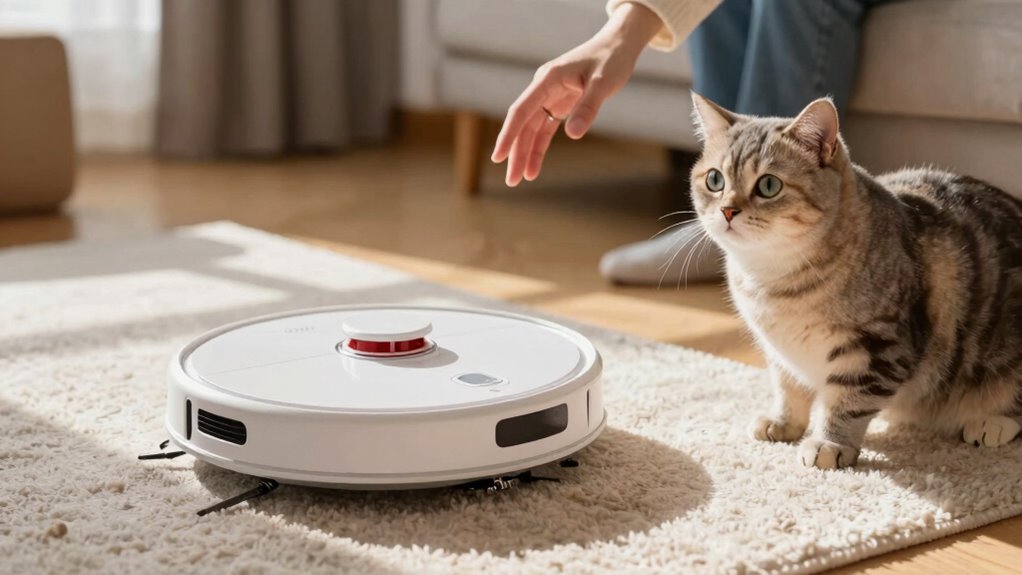
Many pets are naturally wary of robot vacuums, and their fear can sometimes lead to stress or even avoidance behaviors. When you first introduce a robot vacuum into your home, it’s essential to weigh the noise levels, as loud sounds can startle your pet and reinforce their fear. Keeping the vacuum on at a lower setting or running it when you’re not around can help reduce the initial shock. Over time, your pet may become more accustomed to the gentle hum, especially if you pair the experience with positive reinforcement.
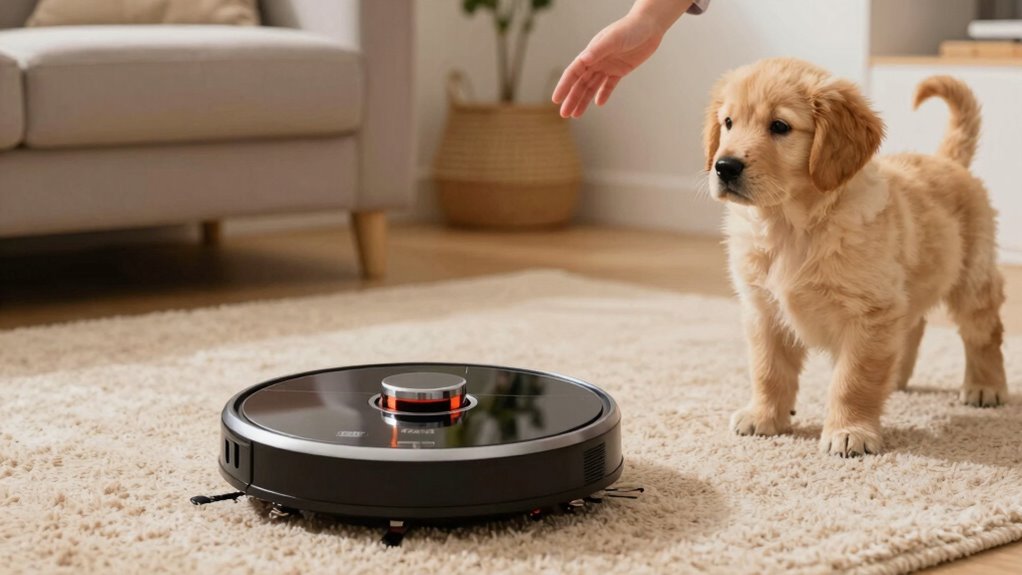
Introduce your robot vacuum gradually, using positive reinforcement to help your pet become comfortable with its noise and presence.
Pet training plays a vital role in easing their anxiety. Start by introducing the robot vacuum gradually. Turn it on in a different room first, so your pet can hear the noise from a distance without feeling threatened. Use calm, reassuring voice commands to let them know everything is okay. When they remain calm, reward them with treats or praise. This helps your pet associate the vacuum’s presence and noise with positive experiences instead of fear. As they get more comfortable, you can move the vacuum closer to their usual space, always monitoring their reactions and providing comfort.
Consistency is key. Stick to a routine where the vacuum runs at predictable times, so your pet can anticipate its presence rather than be caught off guard. This predictability, combined with pet training techniques, minimizes stress and fosters trust. If your pet seems particularly anxious, think about creating a safe space they can retreat to during cleaning sessions, such as a cozy corner or a separate room. This gives them control over their environment and reduces feelings of being trapped or overwhelmed.
Another effective approach is to involve your pet in the process gradually. Let them observe the vacuum from a safe distance, perhaps while it’s turned off, and reward their curiosity. Then, activate it in short, controlled bursts, gradually increasing the duration as they tolerate it better. Over time, your pet will learn that the vacuum isn’t a threat, especially if you remain calm and supportive throughout the process. Additionally, understanding the noise levels of the vacuum and their impact on pets can help you choose models that are less likely to cause distress. Being aware of pet sensitivities can also guide you in selecting the right time and environment for cleaning. Recognizing pet behavior cues can further help you tailor your approach to each individual animal’s needs. Incorporating proper training methods and understanding biodiversity concepts can also promote a more harmonious environment for both pets and the planet.
As an affiliate, we earn on qualifying purchases.
Frequently Asked Questions
Can Robot Vacuums Harm Small or Young Pets?
Robot vacuums generally don’t harm small or young pets, but pet noise sensitivity and vacuum safety concerns are valid. Some pets might be frightened by the noise or movement. To keep them safe and comfortable, supervise initial introductions, keep the vacuum on low, and provide a safe space. Over time, your pet can become accustomed, reducing stress and ensuring both pet safety and effective cleaning.
What Features Help Reduce Pet Anxiety During Vacuuming?
Think of your robot vacuum as a gentle breeze, not a thunderstorm. Features like low noise levels and pet-friendly design help reduce pet anxiety during vacuuming. For example, choosing a vacuum with quiet operation can keep your pet calm, like a lullaby. Ensuring a pet-friendly design, such as soft bumpers and unobtrusive sensors, makes your pet feel safe rather than threatened, easing their fears and promoting a peaceful coexistence.
How Long Does It Typically Take for Pets to Adjust?
It usually takes a pet a few days to a few weeks to adjust to a robot vacuum, depending on their pet behavior and individual temperament. Be patient and observe their reactions closely. Consistent, gentle introductions help speed up the adjustment timeline. Over time, your pet will become more comfortable, especially if you reward calm behavior. Remember, every pet is unique, so some may need more time than others.
Are There Specific Robot Vacuum Models Better for Pet Households?
Yes, some robot vacuums are better for pet households. Look for models with high pet hair capacity and durable brushes that withstand frequent use. Brands like iRobot Roomba and Shark often offer models with strong suction, large dustbins, and durable components, making them ideal for pet hair and messes. These features guarantee efficient cleaning while lasting longer, so you can keep your home tidy without constant replacements.
How Can I Train My Pet to Tolerate Robot Vacuums?
Like a gentle tide easing onto the shore, you can train your pet to tolerate robot vacuums by gradually introducing them. Start with short sessions, rewarding calm pet behavior and managing noise sensitivity by choosing quieter models. Use positive reinforcement, like treats and praise, to create a peaceful association. Over time, your pet learns to accept the vacuum, transforming apprehension into acceptance and trust.
Conclusion
Remember, introducing a robot vacuum to your pet is like planting a seed; patience helps it grow into acceptance. By taking gradual steps and offering comforting reassurance, you turn a potential storm into a gentle breeze. Over time, your furry friend can learn to see the vacuum not as a threat, but as a part of the family landscape. With a little kindness and patience, you’ll both find harmony amidst the hum of technology.
Halloween Picks
halloween
As an affiliate, we earn on qualifying purchases.