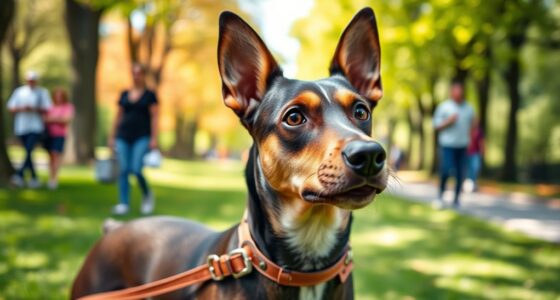
To prevent a bite when your dog growls at guests, recognize early signs of discomfort like tense muscles or pinned-back ears. Create a calm space for your dog before visitors arrive, and introduce them gradually while rewarding relaxed behavior. Use commands like “Sit” and “Quiet” to help your dog stay calm. Managing interactions and setting boundaries is key—continue exploring these effective steps to keep everyone safe and your dog comfortable.
Key Takeaways
- Recognize early stress signals such as tense muscles or pinned ears to intervene before growling escalates.
- Create a calm environment with a designated quiet space for the dog prior to guest arrival.
- Use positive reinforcement and commands like “Sit,” “Stay,” and “Quiet” to promote calm behavior around visitors.
- Gradually introduce guests in controlled steps, rewarding calm responses and avoiding overwhelming the dog.
- Establish clear boundaries and inform guests of the dog’s comfort level to minimize triggers and ensure safety.

HerCcreta wigge Dog Ramp for Car 63" Long & 17" Wide Portable Dog Ramps for Large Dogs with Non-Slip Rug Surface Dog Car Ramp for SUV Car & Truck, Folding Dog Ramp Up to 250LBS
【 Sturdy & Stable Dog Car Ramp 】The large dog's pet ramp is made of high-grade aluminum which...
As an affiliate, we earn on qualifying purchases.
Why Does My Dog Growl at Guests? Understanding the Behavior

If your dog growls at guests, it’s usually a way of communicating discomfort or warning you of potential fear or threat. Your dog’s temperament plays a significant role in how they react around new people. Some dogs are naturally more anxious or reserved, which can lead to growling as a protective response. Proper guest training helps your dog understand that visitors are not a threat, reducing their instinct to growl. When guests approach calmly and give your dog space, it can help ease their anxiety. Remember, growling isn’t aggression but a signal that your dog feels uneasy. Recognizing these signs and understanding your dog’s temperament allows you to address issues early and create a safer environment for everyone. Additionally, understanding your dog’s behavioral signals can help prevent escalation and ensure positive interactions. Recognizing early warning signs of stress is crucial for managing your dog’s reactions effectively. Being aware of calming signals can also assist in soothing your dog before they become overwhelmed, and practicing desensitization techniques can gradually increase their comfort with visitors.

Deergym Dog Stairs for Large Dogs - 5 Step Wide 16in High 34in Foldable Dog Ramp for Car Non-Slip Surface Support up to 230lbs - Suitable for SUV,Truck, Sofas, Bed
【Measurement required before purchase】Please measure the height from your vehicle's trunk to the ground before purchasing. If you...
As an affiliate, we earn on qualifying purchases.
How to Spot When Your Dog Is Uncomfortable or Anxious

To keep your dog comfortable around guests, it is crucial to recognize warning signs of anxiety or discomfort. Pay close attention to their body language, such as tense muscles or pinned-back ears. Noticing these signals early helps you respond quickly and prevent potential issues. Additionally, understanding proper handling techniques can further reduce stress and foster a positive environment for your dog. Being aware of dog body language cues can also help you interpret their emotional state more accurately and respond appropriately. Recognizing signs like body language signals is essential for preventing escalation and ensuring your dog feels safe. Incorporating behavioral observations can help you better assess your dog’s comfort levels in various situations.
Recognize Warning Signs
Recognizing when your dog is uncomfortable or anxious is essential for preventing potential issues like growling or aggression. By understanding dog body language and stress signals, you can intervene early. Look for signs such as lip licking, yawning, or avoiding eye contact. These signals indicate your dog may need space or reassurance. Pay attention to physical cues like a stiff body, raised hackles, or a tucked tail. The table below highlights common stress signals:
| Signal | Body Language | Behavior |
|---|---|---|
| Lip licking | Tense muscles | Pacing |
| Yawning | Avoiding eye contact | Growling quietly |
| Tucked tail | Ears back | Snapping or retreating |
| Raised hackles | Stiff stance | Barking or lunging |
Being attentive helps you recognize these early signs and prevent escalation. Additionally, knowing about water-based techniques like hydrotherapy can help promote relaxation and reduce stress in anxious dogs. Incorporating calming methods such as gentle massage or environmental modifications can also be effective in easing your dog’s anxiety.
Observe Body Language
Noticing your dog’s body language is key to understanding when they feel uncomfortable or anxious. Watch for body language cues that indicate stress signals, such as lip licking, yawning, or avoiding eye contact. Tense muscles, raised hackles, or a stiff posture also suggest your dog is uneasy. Pay attention to tail position—if it’s tucked or held low, your dog may be feeling insecure. Ears pinned back or a furrowed brow further signal discomfort. Recognizing these stress signals early allows you to intervene before your dog becomes overwhelmed or growls. Being aware of reconditioning batteries can also help in understanding how external factors influence your dog’s environment and behavior. Additionally, understanding dog body language enhances your ability to interpret subtle cues and respond appropriately. By observing these subtle cues, you can better gauge your dog’s emotional state and create a calming environment, reducing the likelihood of aggressive behaviors around guests. Developing your knowledge of animal communication can further improve your ability to anticipate and prevent unwanted reactions.
Amazon Product B0D2NMKNWH
As an affiliate, we earn on qualifying purchases.
Create a Calm Space for Your Dog Before Visitors Arrive

Creating a calm space for your dog before visitors arrive helps them feel secure. You can include familiar comfort items to ease their nerves and create a cozy environment. Practicing calm behavior yourself can also help your dog stay relaxed when guests come over. Implementing simple systems to manage your dog’s environment promotes a sense of calm and prevents overstimulation. Using proper enrichment and routine adjustments can further reduce stress and help your dog feel more comfortable during social visits. Incorporating environmental management techniques can help prevent triggers that lead to growling or aggression. Establishing a consistent pre-visit routine can also signal to your dog that visitors are a positive experience.
Designate a Quiet Space
Creating a designated quiet space for your dog before guests arrive can help ease their anxiety and prevent growling. This calm area gives your dog a safe retreat where they can relax away from the excitement of guest interactions. When your dog has a familiar spot, it reduces their stress and helps manage their dog behavior, especially in new environments. Make sure the space is comfortable, with a bed or blanket, and free of loud noises or overwhelming scents. By providing this sanctuary, you give your dog a way to regulate their emotions, making it easier for them to handle social situations calmly. Incorporating plant-based remedies into your pet care routine can also promote a healthier environment for your dog. Additionally, the presence of a consistent routine can further reduce anxiety and reinforce positive behavior. Understanding dog body language can help you better interpret your pet’s feelings and improve their comfort in social settings.
Use Comfort Items
Offering your dog familiar comfort items in their quiet space can make a big difference in reducing anxiety before guests arrive. These items help calm dog behavior and support anxiety management. Consider providing:
- A soft blanket with your scent to create familiarity.
- A favorite toy to offer comfort and distraction.
- An item of clothing that smells like you to soothe nerves.
- A calming diffuser or treat to promote relaxation.
- Consistent routines and properly introducing visitors can further ease your dog’s anxiety. Incorporating behavioral training techniques can also help your dog feel more secure in new situations.
Practice Pre-Visit Calm
To help your dog stay calm when guests arrive, establish a designated quiet space beforehand. This space offers a safe retreat where your dog can relax and decompress, reducing anxiety during socialization. Before visitors arrive, practice leash training by walking your dog calmly to and from the space, reinforcing calm behavior. Consistent routines and positive reinforcement can help your dog associate the quiet area with comfort and safety. Avoid overwhelming your dog with too much socialization at once; instead, gradually expose them to new people in controlled settings. Creating this calm environment minimizes stress, making your dog less likely to growl or exhibit aggressive behaviors. Over time, this approach builds confidence and helps your dog handle visitors more peacefully.
Amazon Product B0F8Q3T3DZ
As an affiliate, we earn on qualifying purchases.
Teach Commands to Help Calm Your Dog and Reduce Growling

Teaching your dog specific commands can be highly effective in calming their behavior and reducing growling when guests arrive. Proper dog training and behavior modification focus on commands that promote calmness and control. Here’s what you can do:
- Sit and Stay – Encourage your dog to sit and remain calm, preventing them from lunging or growling.
- Look at Me – Teach your dog to focus on you, diverting attention from guests and reducing anxiety.
- Quiet – Use this command to stop barking or growling promptly.
- Break or Leave It – Help your dog disengage from triggers and regain composure.
Consistent practice of these commands builds confidence and self-control, making your dog less reactive around guests.
Reward Calm Behavior With Positive Reinforcement

When your dog remains calm around guests, rewarding that behavior reinforces it and encourages your dog to repeat it. Positive reinforcement is a key component of effective dog training and behavior modification. By praising or offering treats when your dog stays relaxed, you help establish a calm response to visitors. Use clear cues and reward immediately to strengthen the connection. Here’s a quick guide:
| Behavior | Reward |
|---|---|
| Sitting quietly near guests | Small treats or praise |
| Calmly accepting greetings | Verbal praise, gentle petting |
| Staying relaxed during visits | Favorite toy or treat |
| Not growling or barking | Enthusiastic praise |
Consistent rewards help your dog associate calm behavior with positive outcomes, reducing the likelihood of growling or aggression.
Gradually Introduce Your Dog to Guests Safely

Introducing your dog to guests gradually and safely helps prevent overwhelming situations and builds positive associations. Proper dog socialization and guest training are key to a smooth introduction.
Gradually introducing your dog to guests fosters comfort and positive connections.
Here’s how to do it:
- Start with brief visits where your dog can observe guests from a distance.
- Allow guests to ignore your dog initially, giving her time to relax.
- Gradually invite guests closer once your dog shows calm behavior.
- Use positive reinforcement to reward your dog for calmness and good manners during visits.
This step-by-step approach helps your dog feel secure and reduces the likelihood of growling or biting. Consistent, controlled exposure builds her confidence and trust in new people, making future guest interactions safer and more pleasant.
Set Boundaries and Manage Expectations for Visitors

Setting clear boundaries and managing visitors’ expectations can make a significant difference in how your dog reacts during guest visits. By establishing boundaries, you help your dog understand what behavior is acceptable around visitors, reducing anxiety or territorial responses. Manage expectations by informing guests about your dog’s comfort level and any rules, like avoiding direct eye contact or sudden movements. This consistency helps your dog feel secure and prevents confusion or overstimulation. You might designate specific areas where your dog can relax or set rules for interactions, such as only allowing petting when your dog is calm. Clear boundaries and managing expectations create a predictable environment, which minimizes surprises and helps your dog remain calm and confident around guests.
When to Seek Professional Help for Your Dog’s Growling

Recognizing the signs that your dog’s growling requires professional help is essential for ensuring both their safety and your peace of mind. If your dog’s growling persists despite managing the environment, it’s time to seek expert guidance. This is especially true if you notice:
- Your dog growls at familiar people or during dog socialization efforts
- The growling escalates into snapping or biting attempts
- You feel unsure about how to handle or interpret their behavior
- Your owner responsibility includes addressing issues early to prevent escalation
Professional help can provide tailored training, behavior modification, and socialization strategies. Addressing the root cause early helps you manage your dog’s behavior responsibly, keeping everyone safe and reducing future risks.
Frequently Asked Questions
How Can I Tell if My Dog’s Growling Indicates Aggression?
You can tell if your dog’s growling indicates aggression by observing body language cues like stiff posture, raised hackles, and direct eye contact. Pay attention to vocalization patterns; aggressive growls tend to be loud, deep, and continuous. If your dog shows these signs alongside tense muscles or a fixed stare, it’s a warning. Address these signals calmly and consult a professional trainer to prevent escalation and guarantee safety.
What Are Common Triggers That Cause Dogs to Growl at Visitors?
You might notice your dog growls at visitors due to unfamiliar dog body language or sudden movements that scare them. Common triggers include loud noises, new people, or abrupt visitor greeting techniques. To prevent this, observe your dog’s body language beforehand and calmly introduce visitors, allowing your dog to approach at their own pace. Using gentle, positive interactions helps reduce fear and growling, making everyone feel safer.
Are There Breeds More Prone to Growling and Aggression?
Some breeds are more prone to growling and aggression, often due to breed tendencies and stereotypes. For example, guard dog breeds like Rottweilers or Dobermans may naturally be more alert and territorial. However, individual temperament varies widely, so training, socialization, and environment play vital roles. Don’t judge a dog solely based on breed; proper management helps prevent growling and promotes positive behavior around guests.
How Long Does It Typically Take to See Improvement in Growling Behavior?
Ever wonder how long it takes to see progress in your dog’s growling? Typically, with consistent behavior modification, you’ll notice improvements within a few weeks, but it can take several months depending on the dog. Patience and consistency are key—by sticking to your training plan, you’ll gradually reduce growling. Are you ready to commit to this process? Remember, steady effort pays off in creating a calmer, happier dog.
Can Diet or Health Issues Influence a Dog’s Tendency to Growl?
Yes, diet and health issues can influence your dog’s tendency to growl. Poor nutrition or underlying health problems may cause discomfort or irritability, leading to more growling. To prevent this, focus on proper dog nutrition and regular health monitoring. When your dog’s diet is balanced and health concerns are addressed promptly, you’ll notice a calmer demeanor, reducing growling and improving overall behavior around guests.
Conclusion
By understanding your dog’s signals and creating a calm environment, you can prevent growling from escalating into bites. Think of it like tending a garden—you nurture patience and trust, and over time, peace blossoms. Remember, consistent training and gentle introductions build a safe space for both your dog and guests. With patience and proper management, you’ll turn tense moments into opportunities for trust, making your home a welcoming place where everyone feels secure.