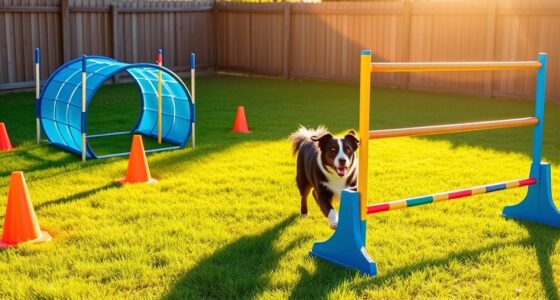
To keep your dog focused around barking dogs, start training in low-distraction environments and gradually introduce noises and barking to desensitize them. Use high-value treats and praise to reinforce calm behavior when distractions occur, and maintain consistent routines. Crate training and controlled socialization help manage overwhelming stimuli. With patience and tailored strategies, your dog can learn to stay attentive despite environmental noise. Continue exploring effective techniques to strengthen your ring-ready focus.
Key Takeaways
- Gradually expose your dog to barking dogs in controlled settings to build desensitization.
- Use high-value treats and praise to reinforce focus despite external noise.
- Create a calm, distraction-free environment during training to strengthen attention skills.
- Teach calming exercises and eye contact to help your dog remain relaxed around distractions.
- Employ sound desensitization techniques, gradually increasing noise levels while rewarding calm behavior.
Why Distractions Break Your Dog’s Focus in the Ring
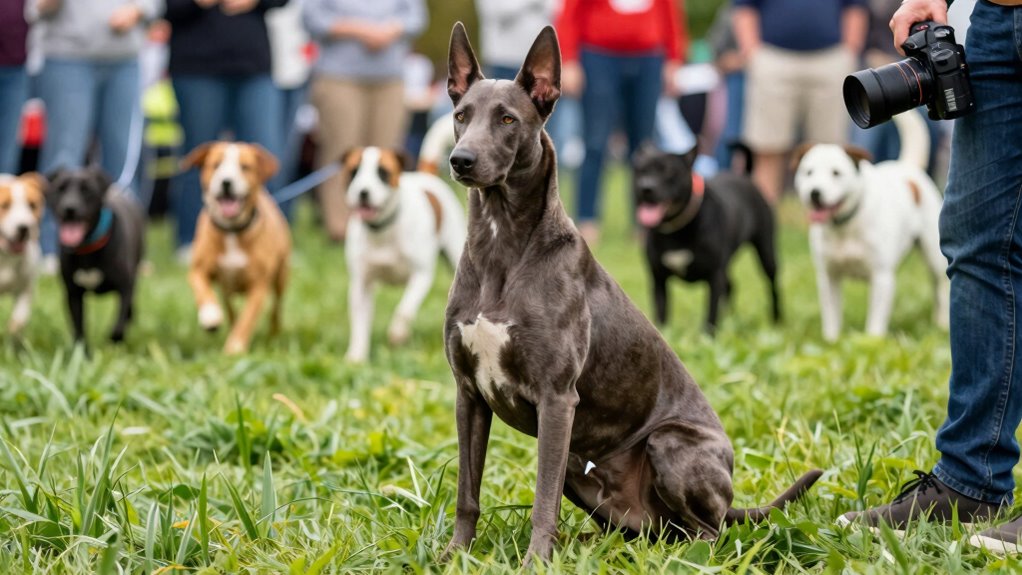
Distractions can quickly derail your dog’s focus in the ring, making it hard for them to perform at their best. When your dog encounters new sights, sounds, or smells, their attention shifts away from you. Poor dog socialization can increase their sensitivity to unfamiliar dogs or people, heightening distractions. Additionally, scent discrimination plays a role—your dog’s natural instinct to investigate interesting odors can pull their focus away. If they haven’t been exposed to varied environments and stimuli during socialization, these distractions become even more overwhelming. To keep your dog focused, you need to understand how these factors affect them. Recognizing the impact of external stimuli helps you create a training plan that minimizes their influence in the ring, ensuring your dog stays attentive and ready. Proper color accuracy in training environments can also help reduce visual distractions, keeping your dog more focused. Developing strong mental resilience through consistent exposure can further enhance your dog’s ability to maintain focus amid distractions. Incorporating desensitization techniques can gradually help your dog become more comfortable with a variety of distractions, improving their focus over time. Being aware of external stimuli and their effects allows you to tailor your training to better prepare your dog for competition conditions.
How to Build a Strong Foundation of Focus

Building a strong foundation of focus starts with training your dog to pay attention to you in a variety of environments. Begin by practicing in quiet settings, rewarding calm behavior and steady focus. Use clear cues and consistent commands to help your dog understand what’s expected. Gradually introduce distractions, but only reward when your dog remains calm and attentive. This gradual exposure helps your dog develop resilience against environmental distractions, which is essential for maintaining focus. Incorporating positive reinforcement techniques further enhances your dog’s motivation and ability to focus amid barking dogs. Additionally, understanding feature Buddies can help you develop tailored training strategies that address specific environmental challenges. Keep sessions short and positive to prevent frustration. Over time, your dog will associate calm behavior with success, making it easier to maintain focus in more challenging situations. Remember, patience and consistency are key to establishing a reliable foundation of focus.
Effective Reinforcement and Management Strategies

To stay focused, you need consistent reinforcement techniques that keep you motivated and on track. Managing distractions effectively allows you to maintain your concentration and avoid interruptions. By applying these strategies, you’ll strengthen your ability to stay ring-ready and sharp. Additionally, understanding the importance of effective storytelling can help you mentally prepare to overcome external disruptions and stay aligned with your goals. Being aware of ear wax odor and its variations can also help in recognizing subtle cues that might distract or unsettle you during training sessions. Incorporating essential oils for focus, such as peppermint or lavender, can further enhance your mental clarity and concentration during training. Recognizing the role of smart appliances can also support your training environment by creating optimal conditions for focus and consistency.
Consistent Reinforcement Techniques
Consistent reinforcement is essential for promoting desired behaviors and ensuring long-term success. By applying positive reinforcement consistently, you help your dog associate good behavior with rewarding outcomes. Environmental management also plays a vital role in reducing distractions and maintaining focus. To effectively reinforce your dog’s focus, consider these strategies:
- Use clear, immediate rewards like treats or praise whenever your dog remains attentive around barking dogs.
- Maintain a predictable routine, so your dog knows what behaviors garner positive reinforcement.
- Control the environment by minimizing distractions and creating a calm setting that supports learning.
- Incorporating sound therapy science techniques, such as calming frequencies, can help your dog stay relaxed and receptive to training.
- Additionally, understanding the low light office plants can create a more tranquil environment that helps reduce stress and enhance focus during training sessions.
- Consistent reinforcement not only strengthens good habits but also builds your dog’s confidence in handling distractions effectively. Using environmental enrichment can further improve your dog’s ability to stay focused in various settings.
These techniques reinforce good habits and help your dog stay focused, even in challenging situations. Consistent application of positive reinforcement and environmental management builds a strong foundation for long-term success.
Managing Distractions Effectively
Managing distractions effectively means proactively controlling your environment and using targeted reinforcement to keep your dog focused. Start by gradually exposing your dog to distractions through proper dog socialization, helping them learn to stay attentive amid noise. Use crate training to create a safe space, reducing overwhelm and preventing unwanted behaviors when distractions arise. Reinforce calm behavior consistently with treats or praise, especially when your dog maintains focus despite external stimuli. To organize your strategies, consider this table:
| Distraction Type | Management Strategy |
|---|---|
| Barking dogs | Use distance and positive reinforcement |
| Social distractions | Incorporate socialization exercises |
| Noise | Desensitize through controlled exposure |
| Environment | Prepare a quiet, controlled training space |
This structured approach helps your dog stay focused, even around barking dogs. Consistent reinforcement is essential for long-term success in managing distractions effectively. Additionally, understanding security zone info can help you create a safer environment for training and daily routines. Recognizing the importance of energetic alignment can further enhance your training outcomes by fostering a calm and receptive state in your dog. A thorough understanding of herbal properties can also be beneficial in supporting your dog’s overall well-being during training.
Gradually Introducing Barking Distractions During Training

To help your dog stay focused amid barking distractions, you should start with controlled exposure strategies. Gradually increasing noise levels allows your dog to build confidence without becoming overwhelmed. This approach guarantees they remain attentive and calm during busy training sessions.
Controlled Exposure Strategies
Introducing barking distractions gradually during training can help your dog learn to stay focused despite real-world noises. Controlled exposure strategies are essential for distraction avoidance and focus maintenance. To implement this effectively, consider these steps:
- Start with low-level distractions at a distance, so your dog remains calm and attentive.
- Gradually increase the noise intensity or proximity, ensuring your dog still maintains focus.
- Use high-value rewards to reinforce focus whenever your dog stays engaged despite distractions.
- Incorporate energy-efficient cloud solutions into your training tools to ensure reliable and sustainable performance during prolonged training sessions.
- Consistent feedback and visual cues can further enhance your dog’s ability to adapt to distracting environments.
Gradual Noise Desensitization
Building on controlled exposure strategies, gradually incorporating barking noises during training helps your dog become comfortable with real-world distractions. Start by introducing subtle barking sounds using sound masking devices or recordings at a low volume. As your dog remains focused, reward their calm behavior with treats and praise, reinforcing positive associations. Slowly increase the volume or duration of the barking distractions, ensuring your dog stays relaxed and attentive. This step-by-step approach prevents overwhelming your dog and builds confidence in handling noisy environments. Consistent positive reinforcement during each exposure encourages your dog to maintain focus despite the barking. Over time, your dog learns to ignore barking distractions, making them more reliable and focused during actual events or competitions.
Teaching Your Dog to Stay Calm and Attentive Amid Noise

When noise levels rise unexpectedly, your dog’s ability to stay calm and attentive depends on how well you’ve prepared them. To foster this, focus on calmness techniques and attention exercises. Start with simple steps:
- Practice short, controlled calmness techniques like deep breathing or gentle petting to help your dog relax.
- Incorporate attention exercises, such as eye contact or simple commands, in quiet environments first.
- Gradually introduce noise distractions, rewarding your dog for maintaining focus despite the chaos.
- Utilizing training techniques aligned with professional standards can enhance your dog’s resilience to noise disturbances.
- Consistent reinforcement and positive associations help your dog link noise with calmness and attentiveness.
- Remember that behavioral conditioning plays a key role in helping your dog respond calmly to unexpected sounds.
Consistent training ensures your dog associates noise with calmness and attentiveness. Keep sessions positive and brief, and always reward calm behavior. Over time, your dog learns to stay composed and attentive, even amid unexpected noise surges.
Troubleshooting Focus Challenges Around Barking Dogs

Barking dogs can easily distract your dog, making it difficult for them to maintain focus. To troubleshoot this, consider your dog’s breed considerations—some breeds are more sensitive to noise and may need extra desensitization. Grooming preparation is also key; a clean, well-groomed dog feels more comfortable and less anxious, helping them stay attentive. If barking nearby causes your dog to lose focus, try practicing in quieter environments first and gradually introduce controlled barking scenarios. Use high-value treats to reinforce focus and reward calm behavior. Consistency is essential—repeated exposure combined with positive reinforcement helps your dog learn to ignore distractions. Adjust your training based on your dog’s breed traits, making focus exercises more effective and tailored to their temperament.
Frequently Asked Questions
How Can I Tell if My Dog Is Truly Focused During Training?
You can tell your dog is truly focused during training when they maintain eye contact and stay engaged despite distractions. Use calming techniques like deep breathing or gentle praise to help them stay centered. Incorporate focus exercises, such as short attention drills, to build their concentration. When your dog consistently responds to commands without hesitation, even around barking dogs, it’s a clear sign they’ve achieved genuine focus.
What Are Common Signs of Distraction in Dogs During Ring Work?
You’ll notice your dog gets distracted when their ears perk up or they stop paying attention to your focus cues. Distraction cues like glancing away or wandering help you spot this. When your dog loses focus, their body may stiffen or they may break eye contact. To keep them on track, reinforce focus cues consistently and minimize external distraction cues, so your dog stays engaged even around barking dogs.
How Long Does It Typically Take to Improve a Dog’s Focus Around Barking?
It usually takes a few weeks to see noticeable improvement in your dog’s focus around barking dogs. Consistent distraction management and focus reinforcement are key. You’ll want to gradually expose your dog to barking environments, rewarding calm behavior, and reducing distractions over time. Patience, regular training sessions, and positive reinforcement will help your dog learn to ignore barking and stay focused, making progress steady and achievable.
Are There Specific Breeds More Prone to Distraction From Barking?
Some breeds are more prone to distraction from barking due to breed tendencies and distraction triggers. For example, herding breeds like Border Collies and Australian Shepherds are highly alert and easily distracted by noise, while terriers may bark more and get distracted quickly. Understanding these breed tendencies helps you tailor training. Consistently practicing focus exercises around common distraction triggers can improve your dog’s ability to stay focused despite barking chaos.
How Do I Maintain My Dog’s Focus During Long Competition Days?
To maintain your dog’s focus during long competition days, use positive reinforcement to reward calm, attentive behavior. Incorporate mental stimulation exercises beforehand to tire out their mind, making it easier to stay focused. Keep training sessions short and engaging, and provide plenty of breaks to prevent fatigue. By consistently reinforcing focus and offering mental challenges, you’ll help your dog stay attentive even amid distractions and lengthy schedules.
Conclusion
Staying focused around barking dogs takes patience and practice. For instance, imagine a handler gradually introducing their dog to noisy training environments, reinforcing calm behavior step by step. Over time, your dog learns to ignore distractions and stay attentive, even amidst chaos. Keep reinforcing good focus, manage distractions wisely, and celebrate small wins. With consistent effort, your dog will become ring-ready, confident, and focused, no matter the noise around them.