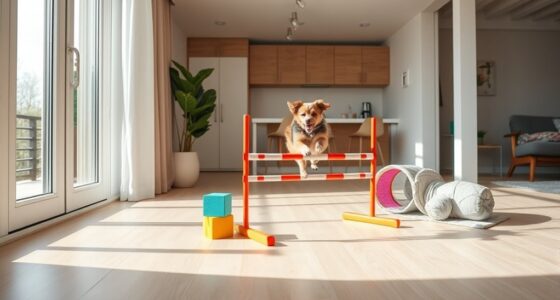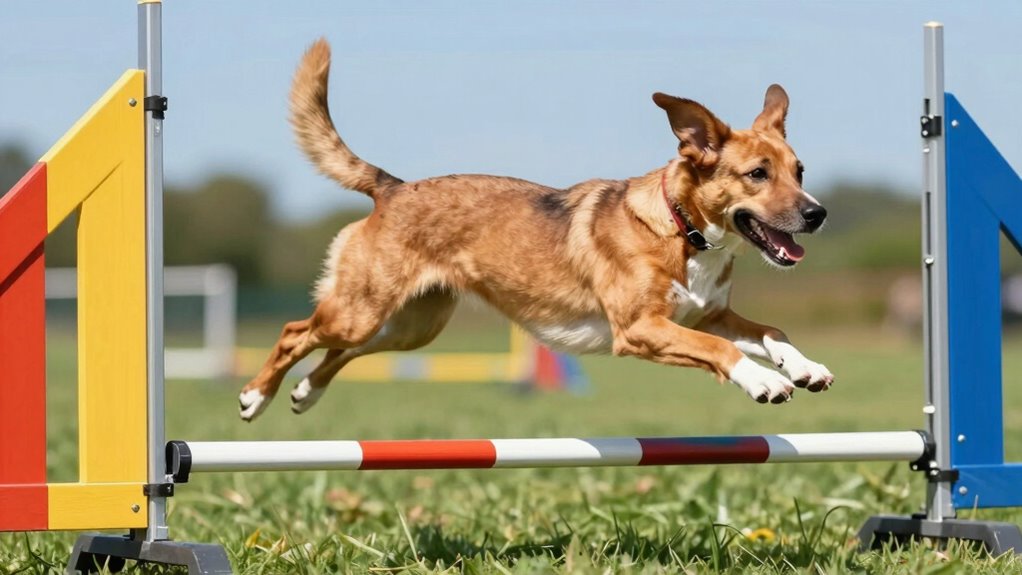

Ensuring the right jump height is vital to keep your growing dog safe during agility training. If the jumps are too high, it can cause injuries or hinder healthy development, especially for puppies and adolescents. Adjust the height based on your dog’s age, breed, and growth stage, gradually increasing as they mature. Proper planning and observation help prevent overexertion. Keep your dog’s safety in mind, and there’s more to learn on how to protect your young athlete.
Key Takeaways
- Adjust jump heights based on the dog’s age and growth stage to prevent stress and injury.
- Use breed-specific guidelines and growth plate development to determine safe jump limits.
- Gradually increase jump height as the dog matures, ensuring proper muscle and joint adaptation.
- Regularly monitor the dog’s response and stop training if signs of fatigue or discomfort appear.
- Reassess and modify jump heights periodically with vet input to align with the dog’s growth and abilities.
![CZPET Dog Bowl Stand with Adjustable Height and Width [Stand Only], Elevated Pet Water & Food Feeder for Medium & Large Dogs, Stable and Anti-Slip Raied Bowl](https://m.media-amazon.com/images/I/41qfHwamQnL._SL500_.jpg)
CZPET Dog Bowl Stand with Adjustable Height and Width [Stand Only], Elevated Pet Water & Food Feeder for Medium & Large Dogs, Stable and Anti-Slip Raied Bowl
[Breed Recommendation] It's suitable for medium to large sized dogs. Please check the measurement to make sure the...
As an affiliate, we earn on qualifying purchases.
Why Proper Jump Height Matters for Growing Dogs

Proper jump height is essential for growing dogs because it directly impacts their safety and development. When jumps are too high, it increases the risk of injury, which can hinder their growth and overall health. Ensuring the right height supports healthy muscle and joint development, especially during rapid growth phases. Puppy nutrition plays a crucial role here, providing the energy and nutrients needed for strong bones and muscles. Additionally, breed temperament influences how a dog approaches jumping; some breeds are more cautious, requiring tailored jump heights to prevent stress or overexertion. By matching jump heights to your dog’s age, breed, and temperament, you help promote safe training and long-term agility success. Properly adjusted jumps protect your dog’s physical health while encouraging confidence and enjoyment. Considering the right equipment, such as adjustable jumps, can help you maintain appropriate heights as your dog grows and develops, and understanding growth patterns can further inform your training approach. Being aware of the training methods that suit your dog’s personality will also help ensure a positive experience, and incorporating essential oils for stress relief may help your dog stay calm during training sessions. Moreover, consulting with a canine physical therapist can provide insights into preventing injuries related to jumping activities.

COMESOON Elevated Dog Bowls for Small Medium Dogs, 3 Height Adjustable Raised Stand with 2 Thick 6" Stainless Steel Food Bowls, Non-Slip Feeder Adjusts to 2.75", 6", 7.5", Black
🐕Adjustable Height Dog Bowl Stand for Small & Medium Dogs: Say goodbye to bending down! Our small elevated...
As an affiliate, we earn on qualifying purchases.
How to Determine Your Dog’s Size and Growth Stage for Safe Jumping
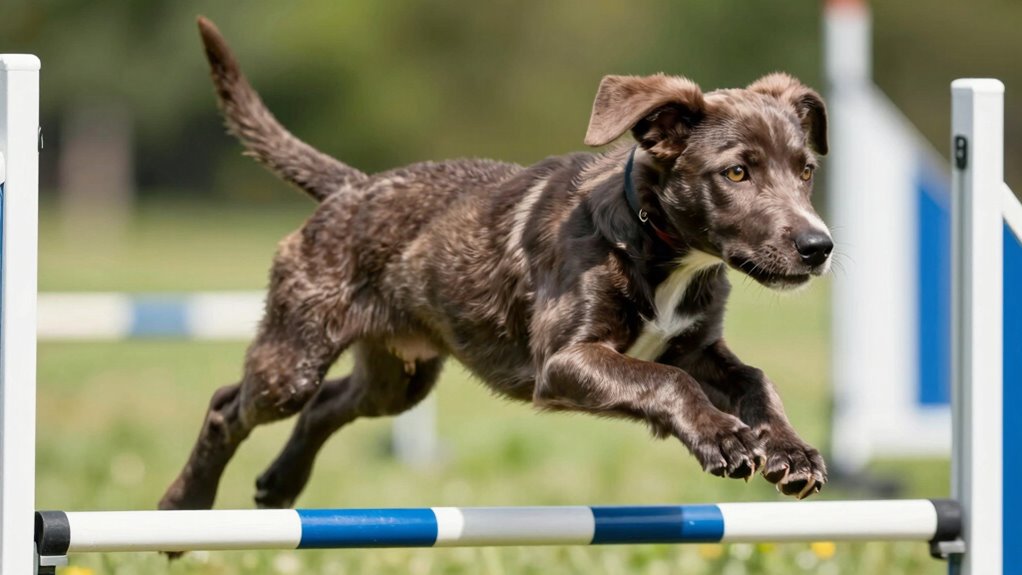
Understanding your dog’s size and growth stage is key to setting safe jump heights. To do this, consider your dog’s breed characteristics, as different breeds grow at different rates and reach full size at various ages. Monitoring growth through regular vet checkups helps you track development and adjust jump heights accordingly. Proper puppy nutrition supports healthy growth, ensuring your dog develops safely without overstressing developing bones and joints. Measure your dog’s height at the shoulder regularly and compare it to breed standards to determine current size. Remember, puppies are still growing, so their jump height should be adjusted downward to prevent injury. Being aware of growth plate development and how it impacts joint health can help you make informed decisions during agility training. Understanding growth rate variability can assist in customizing training plans suitable for each dog’s unique development. Recognizing skeletal maturity is essential for planning safe training progression and preventing injury. Additionally, paying attention to developmental milestones can guide you in timing training activities appropriately. Being aware of growth plate closure can further inform safe jumping practices during different stages of your dog’s development. By understanding these factors, you can create a safe, supportive environment that promotes healthy development during agility training.

XIAZ Elevated Dog Bowls Large Breed Raised Dogs Bowl Stand Large/Medium Sized Dog Stainless Steel Food Water Bowl Stands 5 Heights Adjustable 9/11/12/14in Black Pet Feeder Dish Station
ATTENTION: Please check the size chart before oder, make sure the stand height will fit your dog well....
As an affiliate, we earn on qualifying purchases.
What Are the Recommended Agility Jump Heights for Different Ages?

The appropriate agility jump heights vary considerably with your dog’s age and development stage. To keep your puppy safe, start with lower heights and gradually increase as they grow. Here are some guidelines:
- Puppies up to 6 months: Keep jumps at 25-30% of their height, focusing on puppy nutrition and gentle training routines.
- 6-12 months: Raise jumps to 50-60% of your dog’s adult height, monitoring their growth and comfort. Watching for signs of fatigue or discomfort during training can help prevent injuries.
- 1-2 years: Adjust jumps to 70-80%, depending on breed and strength. Regularly assessing your dog’s muscle strength and coordination is essential to keep their training appropriate and safe.
- Over 2 years: Use full-height jumps appropriate for their size, ensuring ongoing training routines support safe jumping.
- Always observe your dog’s training progression and comfort level to prevent injuries and promote healthy development. Understanding your dog’s growth phases can help you tailor training routines effectively. Being aware of developmental milestones ensures that your training aligns with your dog’s physical capabilities. Additionally, considering your dog’s age-related abilities can further refine their training program for optimal safety.
Always tailor jump heights to your dog’s individual growth, prioritizing safety and proper development.

Zarler Elevated Dog Bowls for X-Large and Large Breed, 5 Adjustable Heights from 8.2'' - 17.3'', 2 Stainless Steel Bowls, 8.2'',11.8'',13.7'',15.7'',17.3'' Raised Dogs Food Bowl Stand
Adjustable Height for Spinal Health: Our elevated dog bowls stand offer five adjustable heights: 8.2'', 11.8'', 13.7'', 15.7''...
As an affiliate, we earn on qualifying purchases.
How to Adjust Jump Heights Based on Your Dog’s Breed and Development
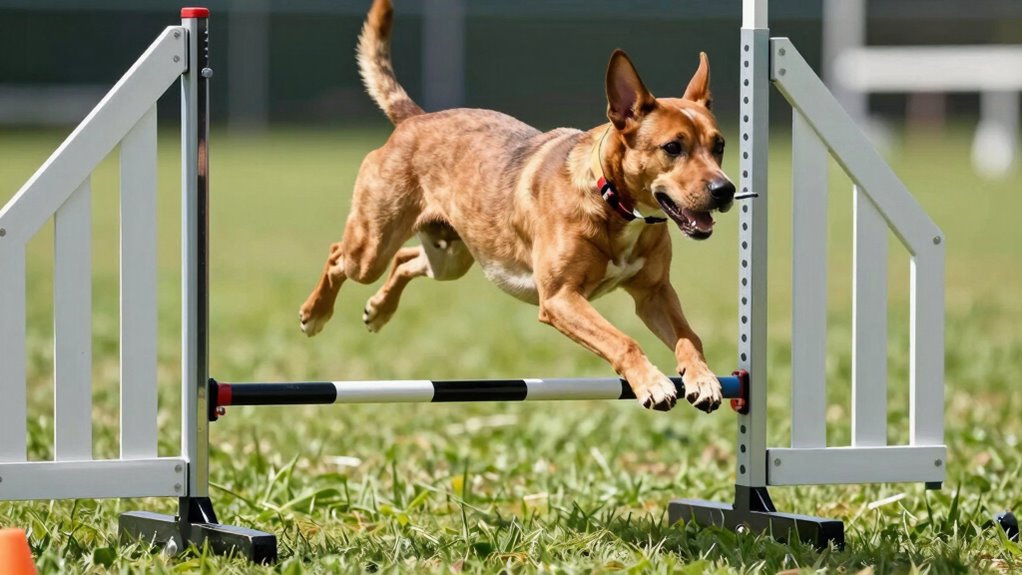
Understanding your dog’s breed-specific jump limits helps prevent injury and guarantees safe progress. Keep an eye on growth milestones to adapt the height as your dog develops. By monitoring these factors, you can tailor jump heights that match your dog’s unique needs. Incorporating safety protocols from large-scale event planning can further ensure your dog’s well-being during training. Knowing which breeds are more prone to joint issues can also help customize the training plan and prevent long-term health problems. Being aware of growth plate closure times allows for more precise adjustments to training routines as your dog matures. Additionally, considering wave and wind conditions during outdoor activities can help maintain safety and control.
Breed-Specific Jump Limits
Adjusting your dog’s jump height according to its breed and development is essential for safety and performance. Breed-specific considerations play a key role in determining appropriate jump limits. Different breeds have unique anatomy and activity levels, so standard heights might not suit all. To optimize training, consider these jump height adjustments:
- Research breed standards to identify typical height ranges.
- Adjust jump height gradually as your dog matures.
- Prioritize safety by observing your dog’s comfort and performance.
- Consult with a trainer familiar with breed-specific considerations for tailored guidelines.
- Incorporate sustainable practices into your training routine to promote long-term health and well-being.
- Monitoring growth patterns helps ensure the jump height remains appropriate as your dog develops. For example, understanding the developmental stages of your breed can aid in making informed adjustments.
- Regularly assess your dog’s progress to ensure the jump height continues to suit its evolving capabilities.
- Recognizing breed-specific health risks can prevent injuries related to inappropriate jump heights.
Monitoring Growth Milestones
As your dog grows and matures, keeping an eye on its development milestones is essential for safely adjusting jump heights. Regularly monitor physical signs like height, weight, and coordination. Be aware that diet considerations influence growth rate, so proper nutrition helps prevent overgrowth or underdevelopment. Grooming routines also reveal progress; a well-maintained coat and healthy skin indicate good health. Use this table to track milestones:
| Development Stage | Key Indicators | Adjustments Needed |
|---|---|---|
| Puppy | Rapid growth, uneven coordination | Lower jump heights, monitor weight |
| Adolescence | Steady growth, improved agility | Gradually increase height, watch diet |
| Mature | Full size, stable development | Maintain appropriate height, grooming routine |
Additionally, understanding training techniques can help in safely progressing your dog’s jumping skills. Proper monitoring of growth milestones ensures safe adjustments, preventing injury or overexertion. Adjust jump heights accordingly to keep your dog safe and healthy.
Common Mistakes When Setting Jump Heights: and How to Avoid Them
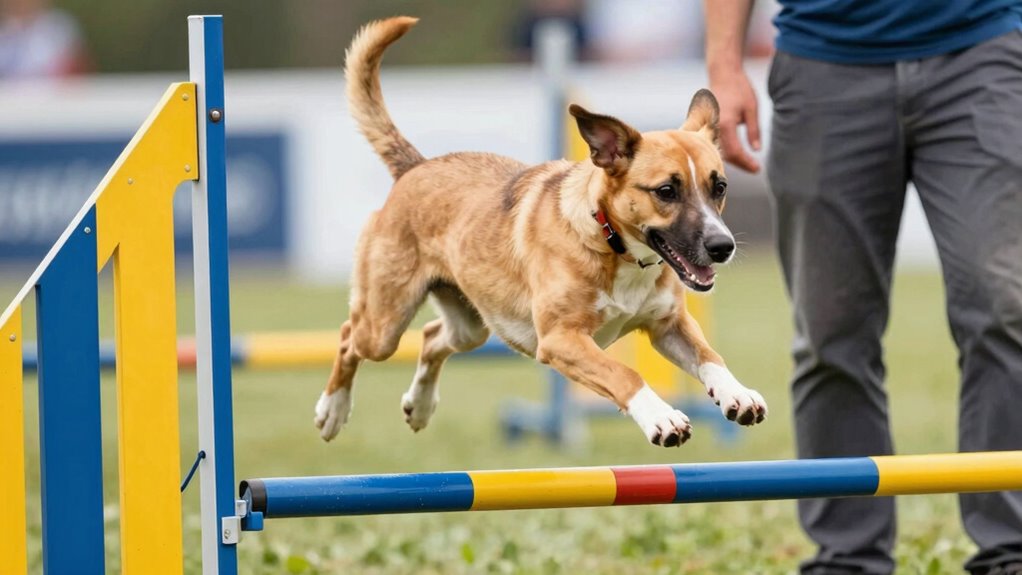
One common mistake when setting jump heights is choosing a level that’s either too high or too low for your skill and training goals. This can hinder progress and increase injury risk. To avoid this, focus on proper training techniques and equipment selection. Here are some mistakes to watch for:
Choosing the right jump height is vital for safe, effective training without risking injury or hindering progress.
- Ignoring your dog’s current ability—set jumps that challenge without overwhelming.
- Using equipment that isn’t adjustable—ensure the equipment allows for precise height adjustments.
- Relying solely on visual estimates—measure jump heights accurately for consistency.
- Not regularly reassessing your dog’s growth and skill progression—adjust jump heights as your dog matures.
Correctly setting jump heights helps your dog train safely and effectively, preventing setbacks and promoting confidence.
Signs to Watch for to Keep Your Dog Safe During Agility Training
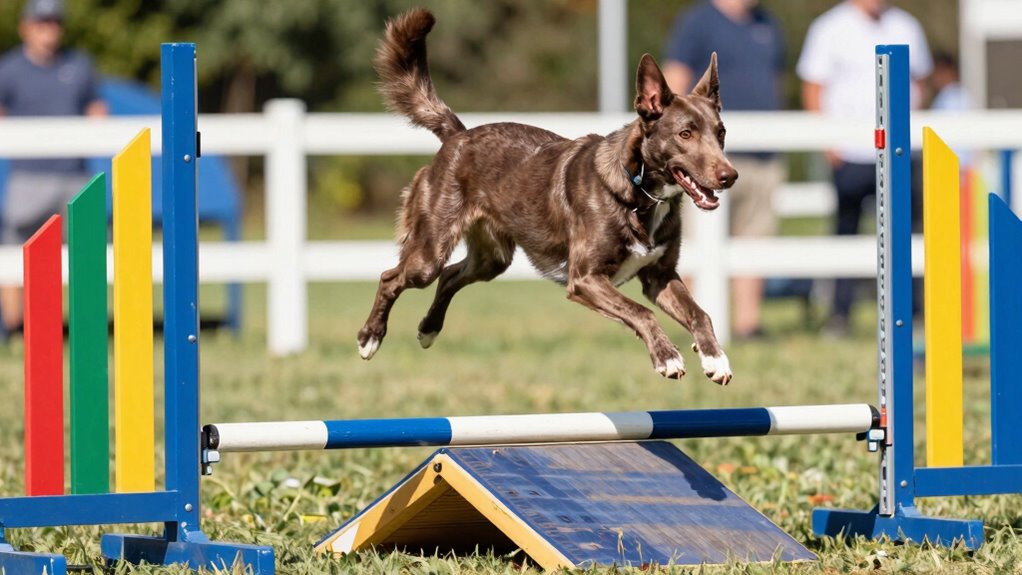
Keep a close eye on your dog during agility training to guarantee safety. Watch for signs like excessive fatigue, awkward jumping, or behavioral changes that might indicate discomfort. Being attentive helps you spot issues early and keep your dog happy and healthy.
Watch for Excessive Fatigue
Monitoring your dog for signs of excessive fatigue is crucial to guarantee their safety during agility training. Overexertion risks can lead to injuries and setbacks, making fatigue prevention essential. Watch for these signs:
- Excessive panting or heavy breathing that persists beyond rest periods
- Loss of enthusiasm or reluctance to continue training
- Limping or stiffness after activity
- Sudden disinterest in toys or treats, indicating exhaustion
If you notice any of these, stop the session immediately and allow your dog to rest. Pushing through fatigue increases the risk of injuries and prolongs recovery. Regular breaks and attentive observation help maintain your dog’s health and ensure safe, effective agility training. Always prioritize their well-being to prevent overexertion.
Observe Jumping Technique
Observing your dog’s jumping technique is essential to guarantee their safety and prevent injuries during agility training. Pay attention to their jumping posture; a proper posture involves a strong takeoff, aligned limbs, and a smooth landing. Watch how they approach each obstacle—an confident, steady approach reduces strain and risk. Signs of improper technique include a hunched back, uneven takeoff, or landing heavily on one side. Correcting these early prevents long-term issues. Use the table below to assess your dog’s technique:
| Jumping Posture | Obstacle Approach |
|---|---|
| Proper limb alignment | Confident, steady approach |
| Smooth takeoff | Controlled speed and focus |
| Even landing | No excessive twisting or stumbling |
| Balanced landing | Absence of hesitation or wobbling |
Keeping an eye on these signs ensures your dog’s safety as they grow and develop agility skills.
Monitor Behavioral Changes
Noticing behavioral changes in your dog during agility training can reveal signs of discomfort, fatigue, or potential injury. Stay alert to subtle cues that indicate your dog isn’t feeling right. Here are key signs to watch for:
- Reluctance to approach the training area or perform certain obstacles
- Sudden withdrawal, whining, or signs of stress
- Changes in grooming routines, such as excessive licking or scratching
- Decreased enthusiasm, fatigue, or difficulty maintaining focus
Monitoring these behaviors helps you identify when your dog needs rest or adjustments. Incorporate nutrition tips to support recovery and ensure a balanced diet. Regular grooming routines also reveal skin irritations or injuries early, preventing further issues. Staying attentive safeguards your dog’s health and keeps agility training safe and enjoyable.
When and How to Gradually Increase Jump Heights Safely

To increase jump heights safely, you need to do it gradually and with proper technique. Start by evaluating your dog’s growth and current skill level, ensuring their puppy nutrition supports healthy development. As your dog matures, slowly raise the jump height in small increments, allowing their muscles and joints to adapt without strain. Pay attention to your dog’s coat grooming, keeping their coat clean and free of tangles, which helps prevent discomfort during training. Monitor your dog’s response closely; if they show signs of fatigue or discomfort, revert to lower heights and consult a veterinarian if needed. Consistent, incremental increases help build strength and confidence while minimizing injury risk. Patience and attentive observation are key to progressing safely and effectively.
Tips to Make Agility Training Fun and Injury-Free for Young Dogs
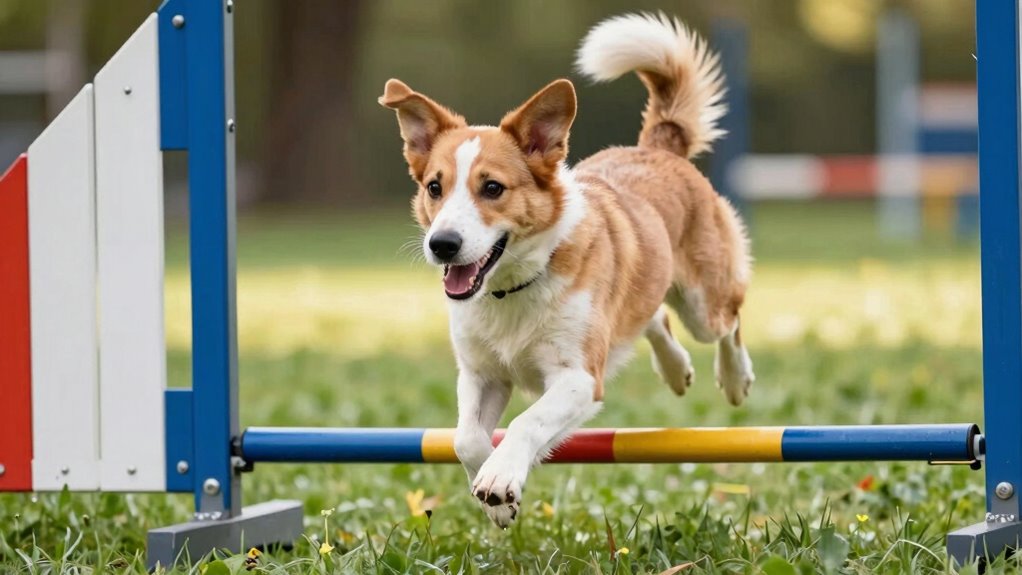
Making agility training enjoyable and safe for young dogs starts with keeping sessions short, positive, and engaging. To prevent injuries, focus on creating a fun environment and monitoring your pup’s responses. Here are four tips:
- Keep training sessions brief to avoid overexertion.
- Use grooming tips like checking paws and coat for any irritation before and after training.
- Make sure your dog’s diet adjustments include proper nutrition to support growth and energy needs.
- Incorporate plenty of praise and treats to maintain enthusiasm and build confidence.
Frequently Asked Questions
Can Adjusting Jump Height Improve My Dog’s Agility Performance?
Yes, adjusting jump height can improve your dog’s agility performance. By setting the jumps at a suitable height, you help your dog build confidence and avoid strain. Consistent training and considering environmental factors like surface and weather also play a role. When you tailor jump height to your dog’s size and skill level, you promote safe, effective training, leading to better performance and a happier, healthier dog.
How Often Should I Reassess My Dog’s Jump Height During Growth?
You should reassess your dog’s jump height every few months during growth to guarantee safe training progression. As your dog matures, their size and strength change, so adjusting the height helps prevent injury and promotes proper development. Regular evaluations allow you to tailor training, maintain safety, and support your dog’s agility performance, ensuring they stay healthy and confident as they progress through different training stages.
Are There Specific Breeds That Require Different Jump Height Considerations?
Yes, some breeds need different jump height considerations due to breed differences. For example, smaller breeds like Chihuahuas or Jack Russells require lower jump heights to prevent injury, while larger breeds like Border Collies or Australian Shepherds can handle higher jumps. You should customize your dog’s jump height based on breed, size, and individual ability, ensuring safety and ideal performance during agility training. Regular reassessment helps maintain appropriate jump heights as your dog grows.
What Equipment Can Help Me Accurately Measure My Dog’s Jumping Ability?
Imagine a magic measuring stick that instantly reveals your dog’s jumping potential! To do this, use a collapsible agility bar or a height-adjustable measuring pole during training. These tools help you gauge your pup’s real jumping limits with precision. Remember, always follow safety precautions—start low, watch for signs of fatigue, and celebrate small victories. These training tips keep your dog safe while revealing their agility greatness!
How Does Age-Related Muscle Development Affect Jump Height Safety?
As your dog ages, muscle growth influences jump height safety by strengthening muscles to better support jumps, reducing injury risk. You should monitor their muscle development and adjust jump heights accordingly to prevent overstressing their growing bodies. By focusing on muscle growth and injury prevention, you guarantee your dog builds strength gradually, minimizing the chance of strains or injuries during agility training. Properly managing jump heights keeps your dog safe and healthy as they develop.
Conclusion
Remember, setting the right jump height can reduce injury risks by up to 50%, ensuring your young dog stays safe and healthy. Keep a close eye on their growth and adjust accordingly as they develop. With patience and attention, you’ll help your pup build confidence and agility without harm. Investing in proper training now sets the stage for a lifetime of fun and safe agility adventures together. Protect your furry friend and watch them thrive!