

Choosing to adopt instead of shopping for a pet is a more ethical and compassionate decision that saves lives and fights overpopulation. Adoption involves giving a loving home to animals in shelters with diverse backgrounds and often includes vaccinations and spaying/neutering costs. Shopping from breeders or pet stores can support unethical practices like puppy mills and overbreeding, which may also lead to health issues. To learn how to make the most responsible choice, explore the details ahead.
Key Takeaways
- Adoption reduces overpopulation and provides homes for animals in shelters, aligning with ethical animal welfare practices.
- Shopping from reputable breeders can be ethical but requires diligence to avoid supporting puppy mills or unethical conditions.
- Adoption fees often include healthcare, making it a cost-effective way to give a loving home while ensuring animal well-being.
- Supporting unethical sources perpetuates overbreeding and animal suffering, making adoption a more humane choice.
- The decision depends on personal values, breed preferences, and lifestyle, but awareness of ethical implications guides responsible choices.
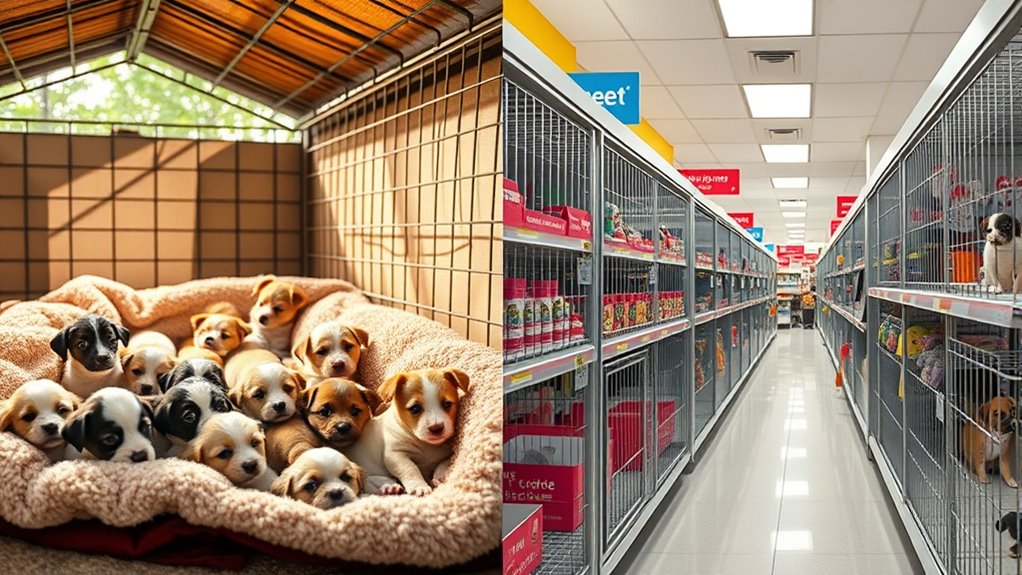
Deciding whether to adopt or shop for a pet can be a tough choice, but understanding the differences between the two options is essential. When you choose to adopt, you’re giving a loving home to an animal that may have been abandoned, surrendered, or rescued from difficult circumstances. Shelters and rescue groups are full of animals looking for a second chance, often with diverse backgrounds and personalities. By adopting, you’re not just gaining a pet; you’re saving a life and making a positive impact on the overpopulation crisis. Many shelters operate with limited resources, and each adoption helps free up space for another animal in need. Plus, adoption fees typically include vaccinations, spaying or neutering, and a health check, making it a cost-effective option for many families. Additionally, adopting a pet can be emotionally rewarding, as it fosters a deep bond based on compassion and gratitude.
On the other hand, shopping for a pet usually means going to a breeder or pet store. While it might seem straightforward, it’s important to consider where the animals come from. Many breeders operate under questionable conditions, breeding animals in overcrowded kennels with little regard for their health or well-being. Some pet stores source their animals from puppy mills—large-scale breeding operations focused on profit rather than the animals’ welfare. When you buy from these sources, you’re often supporting unethical practices and perpetuating a cycle of overbreeding. Additionally, purebred animals may come with inherited health problems or genetic issues, which can lead to expensive vet bills down the line.
Making an ethical choice involves weighing these factors carefully. If you’re passionate about giving a deserving animal a second chance, adoption is the compassionate route. It’s a way to combat animal homelessness and reduce demand for animals bred under questionable conditions. However, if you have specific preferences or require a certain breed for health or compatibility reasons, research is key. Responsible breeders who prioritize animal health, socialization, and ethical practices are an alternative, but they often come with higher costs and longer wait times. Being informed about animal welfare practices can help guide responsible decisions.
Ultimately, your decision should align with your values and lifestyle. Consider the impact of your choice on animals, the community, and your own responsibilities. Adoption offers an immediate way to save a life and help reduce pet overpopulation. Shopping, if done responsibly through reputable breeders, can also be ethical, but it requires diligence to ensure you’re not supporting harmful practices. Whichever route you choose, the goal is to provide a loving, caring home and to make a choice that reflects your commitment to animal welfare.
Frequently Asked Questions
How Can I Identify Reputable Shelters and Rescue Organizations?
You can identify reputable shelters and rescue organizations by checking their credentials and reviews online. Look for transparency about their operations, volunteer involvement, and success stories. Visit their facilities if possible, ask about their adoption procedures, and confirm they prioritize animal welfare. Reputable organizations are registered, have positive community feedback, and willingly answer your questions, showing they genuinely care about the animals’ well-being.
What Are the Long-Term Costs of Adopting Versus Buying?
Adopting often costs less upfront but can have higher long-term expenses, like vet bills for health issues, while buying might have a hefty initial price but fewer surprises later. Think of it as planting a tree—adoption is like nurturing a sapling, requiring patience and care over time. On average, adopting saves you thousands over a pet’s lifetime, making it a financially and emotionally rewarding decision.
How Do Breed-Specific Regulations Impact Adoption Choices?
Breed-specific regulations can limit your options, making it harder to adopt certain breeds in your area. You might face restrictions or bans on breeds perceived as aggressive, which could lead you to shop for a specific breed elsewhere or choose a different pet altogether. These laws encourage you to research local regulations thoroughly, ensuring your chosen pet complies with legal requirements and aligns with your ethical values.
Are There Differences in Health Care Needs Between Adopted and Purchased Pets?
Adopted pets often have varied health histories, which can require extra veterinary attention initially, but they tend to be healthier long-term with proper care. Purchased pets, especially from breeders, might come with specific genetic health issues linked to their breeds, requiring ongoing medical attention. You need to be prepared for potential medical needs regardless of their origin, and regular checkups are essential for both adopted and purchased animals.
How Can I Support Ethical Pet Sourcing Beyond Adoption or Purchase?
You can support ethical pet sourcing by researching breeders and stores thoroughly, ensuring they prioritize animal welfare. Visualize clean, spacious kennels and happy, well-cared-for animals—this means they’re ethically raised. Volunteer at shelters, donate to rescue organizations, or foster pets to give them a second chance. Spread awareness about responsible sourcing, and always ask questions about a pet’s origin, making sure every animal’s story is a positive one.
Conclusion
When choosing between adopting and shopping for a pet, remember that over 6 million animals enter shelters each year, many waiting for loving homes. By adopting, you give a deserving animal a second chance and help reduce overpopulation. Every decision counts, so consider the impact of your choice. Making an ethical decision isn’t just about finding a pet; it’s about saving a life and giving hope. Choose adoption, and make a difference today.