
TL;DR
Interactive dog toys invite your dog to search, solve, chase, or play with you, adding variety to meals and everyday activity. Choose for your dog’s size, chewing style, mobility, and interests; start with an easy, supervised activity, count food rewards as part of the daily diet, and replace damaged toys. Toys can enrich a dog’s routine, but they do not replace walks, training, rest, or company.
A dog can empty a food bowl in seconds, then stare at you as if dinner never happened. A treat puzzle or sniffing game can turn some of that meal into a small job: nose down, paws busy, reward found. That change can make an ordinary part of the day more engaging.

Get pet supplies delivered free with Prime
- Fast, free delivery on millions of items
- Prime Video, Amazon Music and more included
- Member-only deals all year
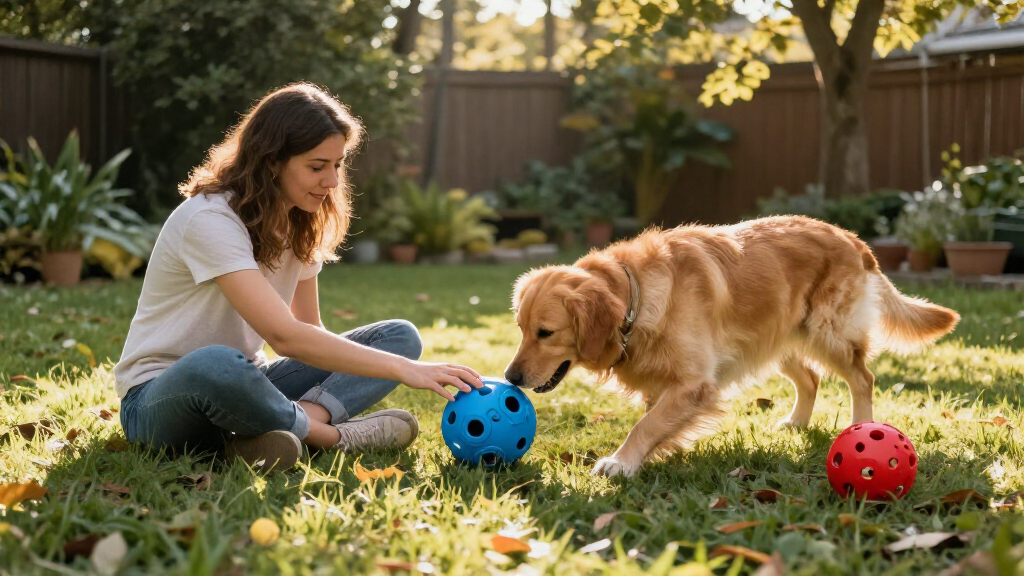
Interactive dog toys invite your dog to do something, such as solve a puzzle, search for food, chase a moving object, or play tug with you. In this guide, you’ll learn what the main types offer, how to choose one for your dog, and how to introduce it without turning playtime into a frustrating or unsafe challenge.
There’s no magic toy that suits every dog. Your curious puppy, cautious senior, and enthusiastic chewer may need different options. Think of a toy as one useful tool in a larger routine that also includes walks, training, rest, and social contact.
Interactive toys involve your dog in searching, solving, chasing, or playing with a person.
Choose toys by your dog’s size, chewing style, mobility, experience, and interests.
Introduce puzzles with visible food and an easy first success, then add difficulty gradually.
Count treats and kibble used in toys as part of your dog’s daily intake; ask your veterinarian about diet or health concerns.
Supervise unfamiliar toys, remove damaged ones, and clean food residue according to the manufacturer’s care instructions.
What interactive dog toys invite your dog to do
Interactive dog toys invite your dog to take part in an activity, such as finding hidden food, moving a puzzle piece, chasing a ball, or playing with a person. The dog has a role to play; the toy is more than something to carry or chew. That difference matters because the activity determines what your dog has to do and what kind of attention you’ll need to give. A search game uses the nose and patience; fetch involves movement and often your participation; a puzzle asks the dog to manipulate an object. Calling them all “interactive” doesn’t mean they offer the same experience.
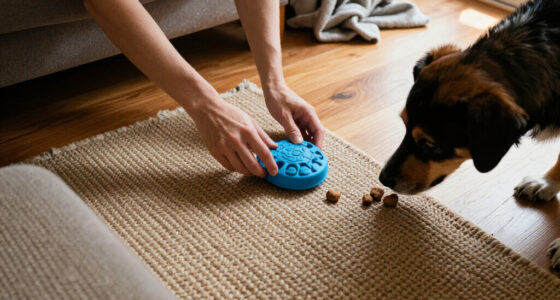
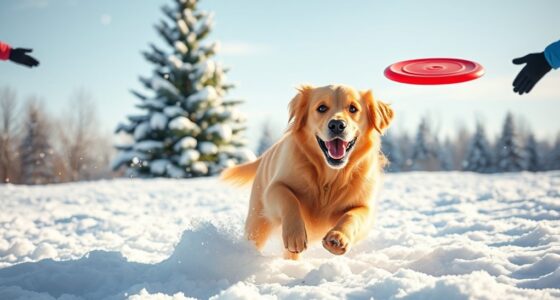
Food puzzles and treat dispensers make a dog work out how to release a reward. A snuffle mat hides kibble among soft folds, while a scent game might use treats tucked into safe cardboard boxes. Fetch and chase toys add movement, tug toys make play social, and electronic toys move or make sounds in response to the dog or an owner. These differences involve tradeoffs: a food game can make feeding more engaging but needs food cleanup and supervision, while a chase toy offers movement but may be unsuitable if your dog becomes too excited or tries to bite the mechanism.
For example, if your dog finishes breakfast quickly, you might scatter some of their regular kibble in a snuffle mat and watch them search. If your dog would rather chase a ball than nose around, a short game of fetch may suit them better. The point is not to slow every meal or keep a dog busy at any cost. Notice whether your dog engages calmly and seems satisfied; if the activity brings frantic effort or little interest, it may not be the right fit.
Think of the toy as a doorway into an activity, not a replacement for the whole routine. A food puzzle can add interest to feeding, but it doesn’t provide a walk, companionship, or a chance to rest. Using toys this way helps set realistic expectations: they can offer variety and opportunities to use familiar skills, but they don’t meet every physical or social need. The best match is the activity your own dog chooses to enjoy.
Products Worth Considering

Dyson V16 Piston Animal Cordless Vacuum

Shark Pet Cordless Stick Vacuum, Up to 40-Minute Runtime, Lightweight, Ocean Blue, IX141

Roborock Qrevo S Pro Robot Vacuum and Mop, 18,500 Pa Suction
As an affiliate, we earn on qualifying purchases.
Match the toy to the way your dog plays
The right interactive dog toy fits your dog’s size, chewing style, abilities, and interests. Start with the manufacturer’s size and use guidance, then think about what your dog does when a new object appears. These details affect both safety and whether the dog can participate: a toy that is too small may be easier to swallow, while a puzzle that requires more strength or coordination than your dog has can turn curiosity into frustration. A gentle nose-first explorer and a powerful chewer need different designs, even if both love treats.
Imagine a small dog nudging a puzzle across the kitchen floor. A heavy toy that barely moves may leave them confused, while a lightweight, appropriately sized option might click quickly. A strong chewer could enjoy working for food too, but a toy with parts that loosen under force would be a bad match. That illustrates a common tradeoff: a toy needs to be manageable enough to use, yet sturdy enough for the way this particular dog handles it. No toy is indestructible, so a tough-looking label does not replace checking the toy itself.
Age and mobility can shape the choice as much as size. A senior dog with stiff joints may find a puzzle easier on a nonslip surface and at a comfortable height; a puppy may benefit from an easy activity and close supervision while learning what is safe to chew. Some dogs love sniffing and searching; others would rather chase a ball or tug with you. The dog’s reaction tells you more than a product description claiming that every dog will be mentally stimulated. If a dog repeatedly walks away, the toy may be too difficult, uncomfortable, or simply uninteresting.
Before you buy, check whether you can wash the toy and whether replacement parts are available for designs that use them. Easy cleaning matters especially when food gets into seams or small compartments, since residue can make regular use unpleasant and harder to maintain. A complicated electronic toy may sound fun, but it could be a poor choice if your dog loses interest in moving objects or becomes overly excited by them. Weigh the practical costs against likely use: safe size, useful challenge, easy care, and real interest.
Introduce a puzzle toy without frustrating your dog
Start an unfamiliar puzzle toy with visible food and a task your dog can solve easily. An early success helps your dog connect exploring the toy with finding a reward. That connection matters because puzzles are learned activities: if the first setup hides every reward behind steps the dog doesn’t understand, they may stop trying or resort to chewing. Begin with a version that shows what the toy is for, then let the dog’s response guide the next step.
- Set up the easiest version. Put a few pieces of kibble where your dog can see or smell them, with little or nothing covered.
- Let your dog explore. Stay nearby while they sniff, nudge, or paw at the toy. Give them a moment to work it out before you offer a gentle hint.
- Watch their response. Calm interest and successful searching suggest the activity fits. Frantic pawing, hard chewing, or walking away are signs to simplify or switch toys.
- Add challenge gradually. Once your dog succeeds comfortably, hide food more carefully or use another level of the puzzle if its instructions support that.
Say a dog named Mabel has never used a treat dispenser. You put two pieces of her usual kibble in a toy that releases food when nudged. If she rolls it once and finds breakfast, she gets an immediate win. That first little rattle can teach her that moving the toy makes food appear; adding more steps before she understands that link could make the same toy seem pointless.
Keep early sessions short enough that your dog still seems interested. A puzzle’s challenge should encourage exploration without requiring repeated failure, so change one thing at a time: reveal more food, reduce how many pieces are covered, or return to an easier level. If the activity turns into chewing, frustration, or tiredness, end the session or make the next attempt easier. Watch the dog, adjust the difficulty, and let success set the pace.
Use food puzzles safely and keep meals balanced
Food puzzles can make a dog work longer to find food, but the right setup depends on the dog. Treats and kibble given through toys still count toward the daily amount your dog eats. This is easy to overlook when rewards are scattered through several small games; over time, those extras can add up. Using part of your dog’s normal meal can make a search game more engaging without casually adding a pile of extra treats.
Picture a dog that gulps breakfast from a bowl. A slow-moving dispenser might stretch out the meal, but a toy that releases food only after forceful chewing may not be a safe or comfortable choice. The goal is a calmer way to access food, not simply a longer meal. Watch how your dog gets each piece. If they gulp, swallow toy pieces, guard the food, or become distressed, stop the activity and try a different approach.
Use foods that fit your dog’s diet and health needs. If you’re thinking about changing your dog’s food, using treats around a health condition, or trying a feeding setup to address a persistent problem, ask your veterinarian for advice. A toy cannot provide a feeding plan or diagnose why a dog eats quickly. Keep your dog’s food appropriate for dogs; avoid sharing foods known to be toxic to them, including chocolate, grapes, raisins, onions, and foods containing xylitol.
A food toy should make eating more engaging without changing what is safe for your dog to eat.
Supervise food toys, especially while your dog is learning. Supervision lets you notice if the dog is chewing the toy instead of working the puzzle or accessing food in a way that seems uncomfortable. A toy that is simple to clean and free of small, detachable parts may be easier to use regularly. Afterward, remove food residue and let the toy dry according to its care instructions. Count the food, watch the chewing, and ask your vet about health-specific questions.
Know when a toy needs your supervision
Supervise a dog with an unfamiliar toy and take it away if it cracks, loosens, or exposes parts that could be swallowed. Check the toy before and after use for damage, including sharp edges, loose pieces, and exposed batteries. This check matters because wear can change a toy’s risk from one session to the next: a seam that was intact yesterday may now release stuffing or small parts. Follow the manufacturer’s guidance about size and intended use; a toy’s appearance alone can’t show how safely it will hold up.
For instance, a remote-controlled toy might keep one dog happily chasing across a room while another tries to bite the moving mechanism. The second dog needs a person right there to interrupt the chewing and remove the toy. Electronic and app-connected toys can offer a way to play together from a distance, but their usefulness varies. Some dogs ignore the movement; others get overstimulated or need help using the toy. The same feature that invites one dog to chase can tempt another to chew, so observe your dog’s actual behavior instead of assuming a product is suitable for every play style.
Don’t assume a toy is safe to leave out just because your dog used it successfully once. A dog that handles a sturdy ball gently may still dismantle a new puzzle when left alone. Only leave a toy with your dog if the product is designed for that use and you have already seen your dog use it safely under supervision. Toys with detachable pieces or food that needs active supervision aren’t good unattended choices; without you there, a dog may keep chewing after the toy is damaged or stop using it safely.
If your dog struggles to be alone, becomes destructive, or shows persistent distress, a toy may occupy them briefly but cannot explain or resolve every cause. A brief distraction does not tell you whether the dog is comfortable alone or simply focused on the toy for a while. Talk with your veterinarian or a qualified behavior professional about ongoing concerns. Inspect, supervise, and respond to the dog in front of you.
Keep toys interesting with a simple rotation
A small, suitable selection of interactive toys can be more useful than a large collection your dog ignores. Rotating a few safe options gives familiar activities a little freshness without turning your home into a toy shop. Interest matters more than how many products sit in the basket: a toy only adds value when your dog is willing and able to use it.
You might keep a snuffle mat, a treat dispenser, and a fetch toy available across the week, then put away the rest for a while. On a rainy morning, you could hide some of your dog’s breakfast in the mat. Later, when you have time to play together, bring out the fetch toy. This changes the kind of effort your dog gets to use—searching in one session, movement and shared play in another—without expecting one toy to meet every need. A dog who loves searching has a different kind of fun from one who wants to sprint after a ball.
After each play session, remove leftover food and wash the toy as its instructions recommend. Let it dry fully before storing it, and check for cracks or damaged seams as you clean. A toy that smells sour or still has wet food trapped inside is ready for cleaning, not another round of play. Cleaning makes the toy more pleasant to use, while inspection can catch wear before a loose piece becomes a hazard. Care also helps you notice when a once-safe toy has started to break.
New trends include adjustable puzzle difficulty, modular parts, scent-based games, and app-connected products. Marketing may promise a lot, but pay attention to whether the toy is easy to clean, durable enough for your dog, repairable, and actually enjoyable to use. Each feature has a practical cost: modular parts may offer more ways to play but also create pieces to track and inspect, while app features are of little use if your dog doesn’t enjoy the activity. Models and availability change, so check current manufacturer information and independent safety reviews before relying on product-specific claims. Rotate for variety; inspect and clean for continued use.
Frequently Asked Questions
Are interactive toys good for dogs?
They can add variety and enrichment when the toy suits your dog and you use it safely. A puzzle may occupy a food-loving dog for a while, while a game of fetch may better suit a dog who loves to chase. Toys don’t replace exercise, training, company, or rest.
Can an interactive toy help my dog when they are alone?
A suitable toy may keep some dogs busy briefly, but it does not resolve every cause of distress or destructive behavior. Only leave a toy out if it’s designed for unattended use and you’ve watched your dog use it safely. For persistent difficulty being alone, consult your veterinarian or a qualified behavior professional.
How should I introduce a puzzle toy?
Start with an easy setup and visible rewards. Let your dog find food without needing to master several steps at once, then make the task harder only when they are succeeding calmly. If they chew frantically or give up, simplify the activity or try another kind of toy.
Do treat-dispensing toys help dogs eat more slowly?
They can make food take longer to obtain, but results depend on both the dog and the design. Watch to see whether your dog searches calmly or starts gulping, chewing forcefully, or swallowing toy pieces. Ask your veterinarian about feeding concerns or a diet suited to your dog’s health needs.
Which interactive toy is best for a puppy, senior dog, or strong chewer?
There is no single best toy for every age or chewing style. Follow the manufacturer’s age, size, and use guidance, then choose a challenge suited to your dog’s physical abilities and experience. Supervise unfamiliar toys and remove any that break or develop loose parts.
How often should I clean an interactive dog toy?
Clean a toy when food or saliva builds up, following its care instructions, and let it dry fully. Check it regularly for cracks, worn seams, and loose pieces. Remove damaged toys from play.
Conclusion
Choose one activity your dog enjoys, make its first attempt easy, and stay close enough to see how it goes. That could mean scattering familiar kibble through a snuffle mat, rolling a simple dispenser, or playing a short game of tug together. Keep meals balanced and check the toy regularly.
A good toy doesn’t need to be clever enough to replace your attention. It only needs to give your dog one more safe, satisfying thing to sniff, nudge, chase, or share with you.