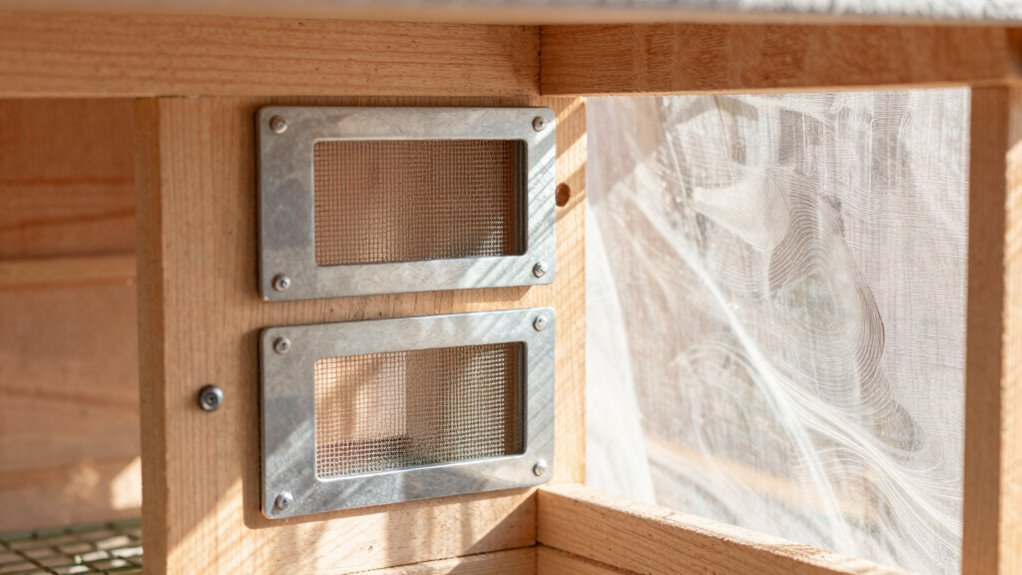

To keep air moving without drafts, position your rabbit hutch where natural airflow is gentle and avoid low-lying spots that trap cold air. Use open sides, mesh panels, or adjustable vents to promote ventilation while shielding rabbits from direct drafts. Regularly check bedding for dampness, and use absorbent materials. Carefully control airflow based on weather conditions to prevent chills. Want to learn more effective ways to balance ventilation and comfort? Keep exploring!
Open a free Amazon Business account
Business pricing, bulk buying and tax-exempt orders.
As an affiliate, we earn on qualifying purchases.
Key Takeaways
- Position the hutch in a location with natural airflow but shielded from direct, cold drafts.
- Install adjustable vents or windows to control airflow and prevent strong gusts.
- Use mesh panels or open sides to promote gentle air circulation while providing shelter.
- Avoid placing the hutch in low-lying or densely foliaged areas that trap cold air and moisture.
- Regularly monitor environmental conditions and adjust ventilation features accordingly for comfort.
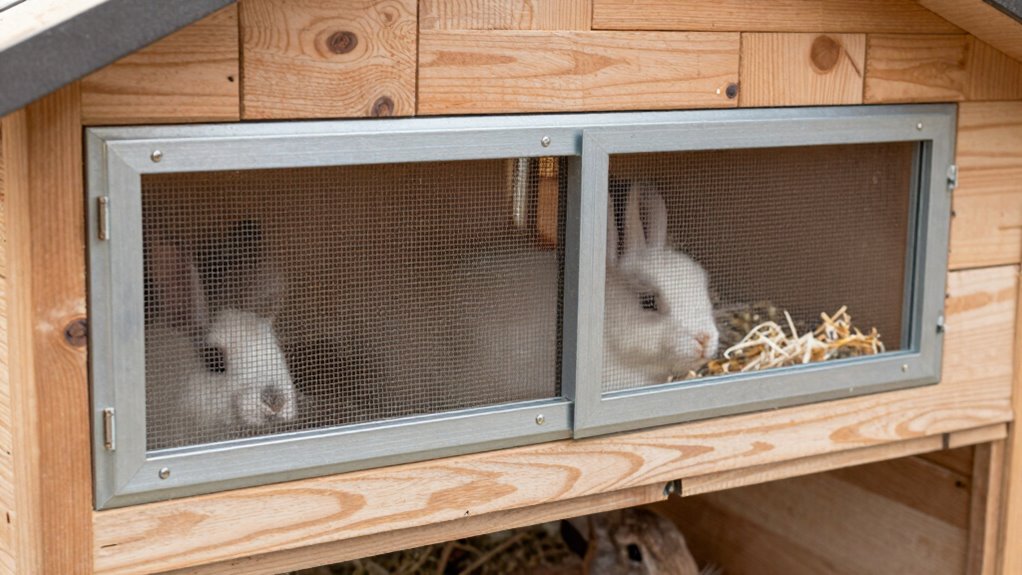
Are you guaranteeing your rabbit’s hutch has proper ventilation? Good airflow is essential to keep your rabbit healthy and comfortable. A well-ventilated outdoor enclosure prevents the buildup of heat, humidity, and harmful odors, all of which can lead to respiratory issues or infections. When setting up your rabbit’s housing, consider the design carefully. You want enough air circulation to keep fresh air flowing, but not so much that it creates drafts that could chill your rabbit or cause stress. Proper ventilation helps keep bedding moisture down, reducing the risk of mold or soggy bedding that can cause skin infections or respiratory problems.
To achieve this balance, think about the placement and structure of the hutch. It should be positioned in a spot that allows for natural airflow without exposing your rabbit to direct, chilly drafts. An outdoor enclosure with open sides or mesh panels can facilitate air movement while still offering shelter from rain and wind. Avoid placing the hutch in low-lying areas where cold air tends to settle or next to dense foliage that traps moisture, which can increase bedding moisture and promote dampness. Regularly inspecting the bedding is vital—if it’s damp or soiled, it indicates poor ventilation or excess bedding moisture buildup, which can compromise your rabbit’s health. Additionally, understanding the importance of indoor air quality can help you manage moisture and odors more effectively.
Ensuring proper ventilation design can significantly improve airflow and help prevent issues caused by stagnant air. You also want to make certain you’re not over-ventilating or creating drafts that are too strong. Gentle, consistent airflow is ideal; it helps remove stale air and humidity without making your rabbit uncomfortable. You can achieve this by installing adjustable vents or windows that open and close easily. When you do, keep an eye on the weather—on windy days, you might want to partially close vents to avoid chilling your rabbit. It’s also a good idea to confirm the bedding area is kept dry and clean, as moisture from bedding can accumulate quickly if ventilation isn’t adequate. Using bedding materials that absorb moisture well, like hay or specialized bedding, and changing them regularly to prevent dampness are essential practices. Additionally, incorporating proper ventilation techniques can help ensure your rabbit’s environment remains healthy and comfortable.
As an affiliate, we earn on qualifying purchases.
Frequently Asked Questions
How Do I Measure Proper Ventilation for My Rabbit Hutch?
You measure proper ventilation in your rabbit hutch by observing airflow patterns and ensuring fresh air circulates without creating drafts. Use a piece of lightweight paper or a smoke stick near vents or openings—if it moves gently, airflow is adequate. Design your ventilation thoughtfully, balancing airflow and shelter. Regularly check for stagnant spots, and adjust vents or openings to optimize circulation while avoiding direct drafts that could stress your rabbit.
Can Ventilation Affect My Rabbit’s Health Long-Term?
Did you know poor ventilation can lead to respiratory issues in rabbits? Yes, long-term health can suffer if airflow safety isn’t maintained. You should guarantee proper ventilation frequency, allowing fresh air without creating drafts. Consistent airflow helps prevent ammonia buildup and keeps your rabbit healthy. Ignoring ventilation can cause chronic respiratory problems, so monitor and adjust it regularly to support your rabbit’s well-being over time.
Are There Specific Materials Best for Ventilation in Outdoor Hutches?
You should choose durable materials like galvanized metal or weather-resistant wood for outdoor hutch ventilation, as they withstand the elements and last longer. Consider incorporating adjustable vents to control airflow and prevent drafts, maintaining good ventilation aesthetics. These materials guarantee proper air circulation, keeping your rabbit comfortable and healthy, while also blending well with your hutch’s overall look. Proper choice of materials enhances both function and appearance.
How Often Should I Clean Ventilation Openings?
You should clean ventilation openings at least once a month to guarantee proper airflow optimization. Think of it like keeping a filter clear so fresh air can flow in smoothly, preventing stale air buildup. Regular ventilation maintenance prevents blockages caused by dust or debris, helping your rabbits breathe easily without drafts. Staying consistent with cleaning keeps the hutch well-ventilated, promoting a healthy, comfortable environment for your pets.
What Signs Indicate Poor Airflow in a Rabbit Hutch?
If you notice increased ventilation noise or drafts around your rabbit hutch, these are signs of poor airflow. You might see uneven temperature zones or your rabbits seem uncomfortable, sneezing, or showing signs of stress. Draft prevention is key, so check for blocked vents or gaps. Proper ventilation ensures fresh air circulation without creating drafts, keeping your rabbits healthy and comfortable. Regularly monitor and adjust to maintain ideal airflow.
Conclusion
To keep your rabbit happy and healthy, ensuring proper ventilation without drafts is key. Think of your hutch as a snug castle where fresh air flows like a gentle breeze through stained glass windows, not a gusty tempest. By balancing airflow and draft protection, you’ll create a cozy haven that keeps your furry friend content. Remember, even a wise old owl would agree—good air circulation is the secret to a happy, thriving bunny!
Fall Picks
fall essentials
As an affiliate, we earn on qualifying purchases.