
When you rush through agility training, your dog can get overwhelmed and lose focus on the contact zones. Moving too quickly interrupts their ability to develop muscle memory and understand the importance of accuracy. This haste can also cause confusion and stress, making your dog miss critical contacts. Patience and controlled pacing help your dog perform reliably, so taking your time is key. Keep going, and you’ll discover more ways to improve your training approach.
Key Takeaways
- Rushing overwhelms dogs, reducing their focus and increasing chances of missing contact zones.
- Speed without proper training hampers a dog’s ability to develop accurate muscle memory.
- Excessive haste causes handlers to miss critical communication cues, leading to confusion.
- Rushing diminishes the dog’s opportunity to learn and reinforce correct contact behaviors.
- Lack of patience prevents dogs from establishing consistent, reliable contact zone performance.
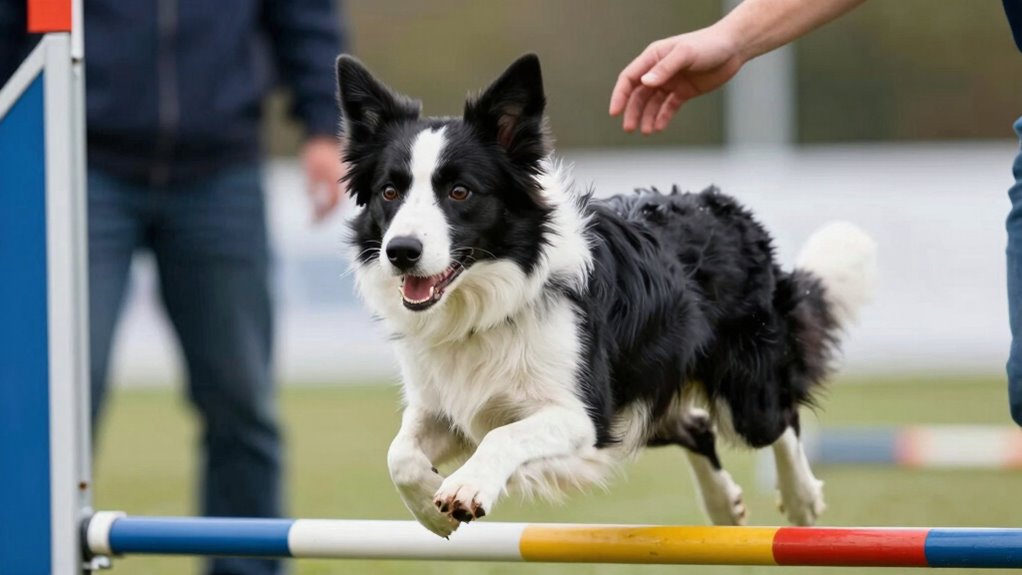
When handlers rush through agility courses, dogs often miss their contact points, and understanding why can improve training and performance. One key reason for this is that rushing creates confusion and stress for your dog. Agility training relies heavily on precise timing and clear communication, and when you push too hard or move too quickly, your dog may become overwhelmed. This can cause them to miss critical contact zones, which are essential for safety and successful completion of the course. To prevent this, it’s important to focus on the right training techniques that promote both speed and accuracy. Slow, deliberate repetitions help your dog understand where they’re supposed to be, and gradually increasing speed builds confidence without sacrificing precision.
Dog patience plays a crucial role here. Dogs need time to process commands and develop muscle memory for contact zones. When you rush, you risk skipping over these learning moments, leading to missed contacts. Patience in training helps your dog learn to control their movements, so they can perform accurately even when they’re moving fast. You should reward your dog for hitting contacts, not just for completing the obstacle. This positive reinforcement encourages them to focus on their form, rather than rushing through for a quick finish. Over time, with consistent training, your dog will understand that maintaining contact is more rewarding than rushing past it.
Patience teaches your dog control and accuracy, making contact zones rewarding and preventing rushing during agility courses.
Using training techniques that emphasize calm, controlled movement will help your dog develop a better understanding of contact zones. Break down the course into smaller sections, focusing on one obstacle at a time. Use a marker or clicker to signal when they hit the contact point correctly, then reward generously. This builds dog patience, as they learn to wait for your cue before moving forward. Incorporating pauses or controlled pace exercises in your training also helps your dog internalize the importance of contact zones, reinforcing the idea that accuracy is more valuable than speed initially. As your dog gains confidence, you can gradually increase the pace, but never at the expense of their understanding or patience. Additionally, understanding the importance of clear communication and consistent cues can significantly reduce confusion during training. Establishing a consistent training routine also creates a predictable environment that helps your dog feel secure and focused. Recognizing the role of positive reinforcement in shaping desired behaviors is crucial for long-term success. Being aware of your dog’s body language can also alert you to signs of stress or confusion, allowing for timely adjustments in training methods. Moreover, fostering a calm and focused mindset during training sessions helps your dog stay attentive and reduces the likelihood of errors.
Ultimately, rushing through agility courses isn’t just about speed; it’s about precision and communication. By employing effective training techniques that foster dog patience, you help your dog develop the skills necessary to hit contact points reliably, even when moving quickly. Remember, training is a process that requires consistency and patience. When you give your dog the time to learn and reinforce proper contact behavior, they’ll perform more confidently and accurately—making both of you happier and safer on the course.
dog agility contact zone training clicker
As an affiliate, we earn on qualifying purchases.
As an affiliate, we earn on qualifying purchases.
Frequently Asked Questions
How Can Handlers Improve Their Timing During Contacts?
You can improve your timing during contacts by focusing on reward timing and focus enhancement. Make sure you reward your dog immediately when they complete the contact correctly, reinforcing the behavior. Practice with precise cues and reduce distractions to help your dog stay focused. By maintaining consistent timing for rewards and building focus, you’ll help your dog better anticipate contacts, leading to smoother, more accurate performance even when you’re in a rush.
Do Breed Differences Affect Contact Performance Under Pressure?
Breed traits and contact sensitivity can influence your dog’s performance under pressure. Some breeds naturally excel at contact performance due to their focus and agility, while others may be more sensitive to stress. If your dog has high contact sensitivity, rushing might cause hesitation or missed contacts. To improve, tailor your training to your breed’s traits, gradually build confidence, and make sure your dog feels secure, especially during high-pressure moments.
What Role Does Training Consistency Play in Contact Accuracy?
You might notice that training routines and consistency importance directly influence your dog’s contact accuracy. When your training sessions are regular and structured, your dog learns to trust the process and respond reliably, even when you rush. Conversely, inconsistent routines can cause confusion, leading to missed contacts. The coincidence lies in how your commitment to consistent training subtly shapes your dog’s ability to perform contacts accurately, regardless of pressure or pace.
Can Nervousness Influence a Dog’s Contact Performance?
Nervousness can definitely influence your dog’s contact performance. When you appear anxious, your dog picks up on your body language, which can make them hesitant or distracted. Your handler confidence helps your dog stay focused and calm, improving their contact accuracy. Pay attention to your dog’s body language and maintain a steady, confident demeanor, so they feel secure and motivated to complete the contact safely and consistently.
How Should Handlers Adjust for High-Stress Competition Situations?
In high-stress competitions, you should stay calm and maintain confident handler body language to reassure your dog. Keep your movements smooth and predictable, avoiding sudden gestures that could distract your dog from environmental distractions. Focus on steady communication, using clear cues and positive reinforcement. By managing your own stress and minimizing environmental interruptions, you help your dog stay focused on contacts, reducing missed opportunities despite the pressure.
Conclusion
When you rush, your dog misses contacts, just like a painter hurriedly strokes a canvas, missing essential details. The calm, deliberate pace creates a clear path for your dog to follow, turning the obstacle course into a dance, not a race. Patience and steadiness transform chaos into harmony, making every contact count. Remember, rushing can blur the picture; slowing down helps your dog see the finish line clearly, building confidence with each step.