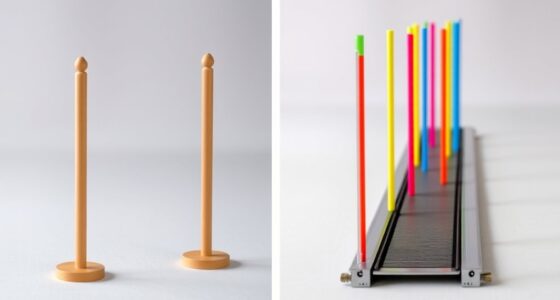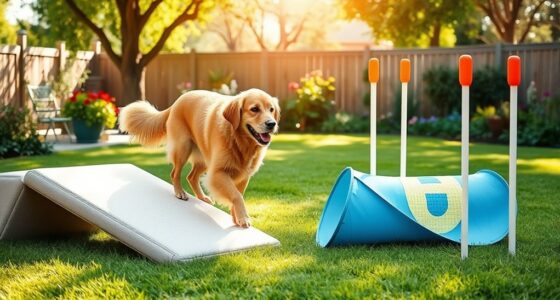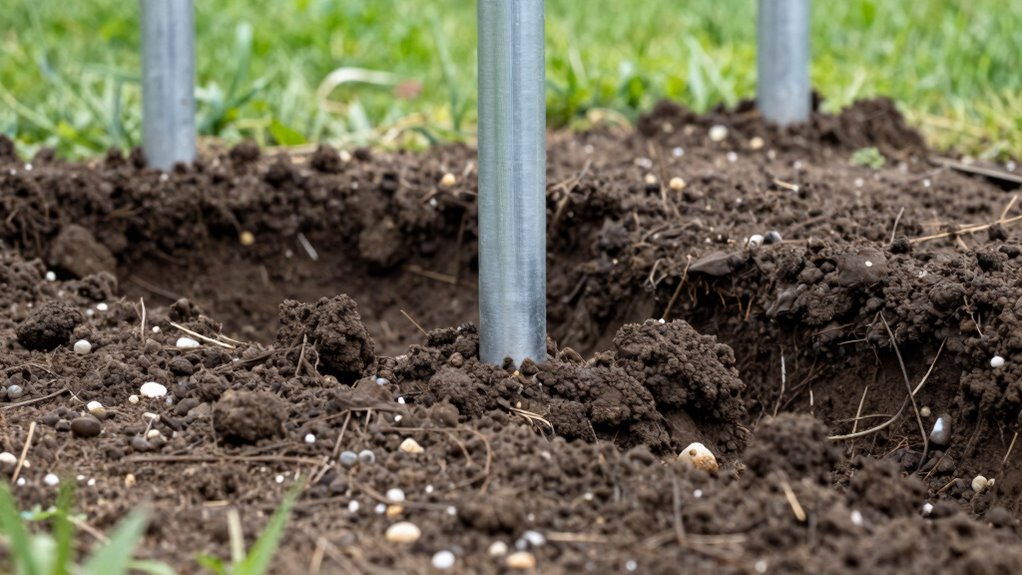

Before starting speed work, you should build a strong foundation in weave pole techniques. Focus on teaching your dog to approach the poles confidently, maintain calm and controlled movements, and develop precise timing. Practice simple exercises to reinforce consistent weaving behavior and avoid rushing the process. By establishing these basics first, your dog will be more efficient and safe at higher speeds. Keep following along to discover key tips for a smooth shift to fast weaving.
Key Takeaways
- Establish confident, consistent jumping technique to ensure precise entry and exit from weave poles.
- Reinforce controlled, accurate jumps before progressing to faster weaving exercises.
- Develop a solid foundation with short, focused sessions emphasizing quality over speed.
- Use targeted exercises to improve control, accuracy, and confidence before increasing speed.
- Focus on proper technique and muscle memory to facilitate safe, efficient weaving at higher speeds.
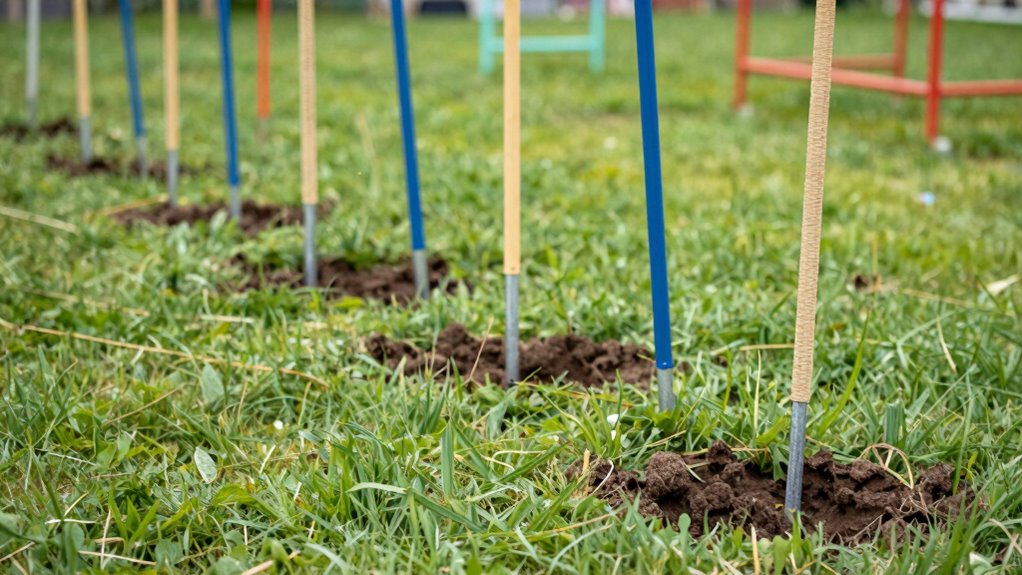
If you’re training your dog to navigate weave poles, ensuring a solid foundation is essential for success. The first step is to focus on proper jumping technique and consistent training practices. Your dog needs to approach the weave poles with confidence and precision, which begins with mastering the right jumping form. You want your dog to jump smoothly and land in a balanced, controlled manner, avoiding any awkward or excessive movements that could hinder their progress later. Pay close attention to how your dog launches into the jump and lands, encouraging a natural, efficient motion that sets the tone for accurate weaving.
Training consistency is key here. You should establish a clear, repeatable routine that your dog can rely on every session. Use the same commands, cues, and hand signals to create a predictable environment, which helps your dog understand what’s expected. Consistency also involves practicing in the same location and maintaining a steady pace, so your dog doesn’t get confused or distracted. As you build your training sessions, gradually increase the difficulty, but always reinforce the basics. Reinforce good jumping technique by rewarding correct form and calm, focused behavior. This steady approach helps your dog develop muscle memory, making the transition to weaving smoother and more natural. Reinforcing these fundamental skills early on can lead to more efficient learning later.
Maintain consistent routines and cues to build confidence and muscle memory for smooth, natural weaving.
Before diving into speed work, it’s crucial to ensure your dog is comfortable with the basics. Play training games that promote accuracy and confidence in jumping, emphasizing controlled and precise movements. Use treats and praise to reinforce proper technique, and keep sessions short but frequent to prevent fatigue and frustration. Remember, a well-established foundation leads to faster progress and fewer setbacks. If your dog jumps unevenly or hesitates, pause and work on those specific issues before moving forward. You want every jump to be confident and consistent, setting a strong precedent for weaving later on. Developing proper jumping techniques early on can significantly improve overall agility performance. Additionally, focusing on training progressions helps your dog build confidence gradually and safely. Incorporating targeted exercises can further enhance your dog’s ability to execute precise and controlled movements, laying the groundwork for successful weaving. Building this foundation now ensures that when speed work does come into play, your dog will have the skills and confidence needed to navigate the weave poles efficiently and safely.
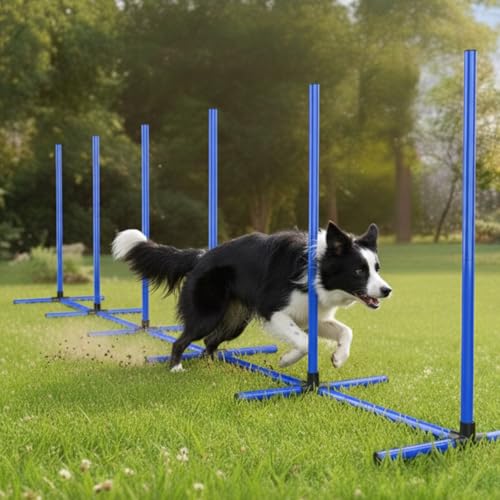
MAICOBI 6 Weave Poles or 2 Hurdle Dog Agility Set, Indoor & Outdoor
- Versatile Training Modes: Transforms from weave poles to hurdles
- Indoor & Outdoor Use: Supports grass, turf, and hard floors
- Stable Support Feet: Ensures stability without ground stakes
As an affiliate, we earn on qualifying purchases.
As an affiliate, we earn on qualifying purchases.
Frequently Asked Questions
When Is the Best Time to Start Weaving Pole Training?
You should start weaving pole training once your dog shows good weave consistency at a slow pace. Focus on building a solid foundation before progressing to speed changes, as this guarantees accuracy and confidence. When your dog reliably weaves through the poles at a controlled pace, gradually introduce speed work. This approach helps prevent mistakes, reinforces skills, and creates a smooth shift from foundation to faster, more dynamic weaving sequences.
How Do I Choose the Right Weave Pole Foundation Material?
Choosing the right weave pole foundation material is like building a sturdy bridge for your dog’s agility journey. You want something that offers excellent pole stability and material durability, ensuring the poles stay secure during training. Consider options like PVC, which is lightweight and durable, or metal for added stability. Pick a material that withstands weather and regular use, so your dog can confidently weave through without wobbling or slipping.
Can Foundation Work Prevent Weave Pole Refusals?
Yes, foundation work can prevent weave pole refusals. Building a strong foundation is vital because it helps your dog understand the correct weaving motion and builds confidence. When you focus on foundation importance first, you teach your dog proper technique, reducing the chances of weave refusal during competitions. Consistent, patient foundation training ensures your dog masters the skill, leading to smoother, more reliable weaving and fewer refusals over time.
How Long Should I Focus on Foundation Exercises Before Speed Work?
You should focus on foundation exercises for about 4 to 6 weeks before starting speed work. During this time, prioritize building your dog’s pole grip and confidence with controlled, low-speed drills. Consistent training duration helps solidify proper technique, reducing refusals later. Don’t rush; make sure your dog masters each step before increasing speed. Patience now leads to smoother, faster runs in the future, creating a strong foundation for successful weave pole performance.
Are There Specific Signals to Reward During Foundation Training?
During foundation training, look for clear signals like your dog maintaining focus or completing a task correctly—these are ideal moments for rewards. For example, if your dog successfully weaves through poles without hesitation, promptly reward to reinforce signal timing. Consistent rewards help your dog understand what behaviors earn praise, building confidence. Focus on reward consistency, so your dog quickly associates the right signals with positive outcomes, setting a strong base for future speed work.
Conclusion
By mastering the weave pole foundations before diving into speed work, you’re setting your dog up for unstoppable success. Think of it as laying a rock-solid, unbreakable bridge that can handle any challenge. When you build a strong base, your dog will navigate those poles with the elegance of a ballet dancer and the speed of a racecar. Don’t skip this essential step — your future agility superstar is counting on you to start right!