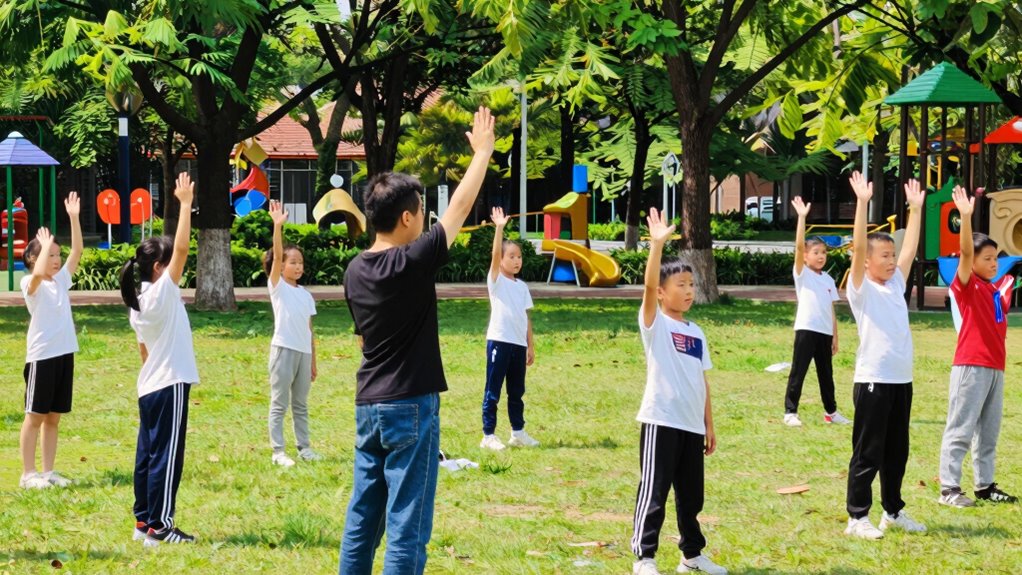

To generalize hand signals across rooms and parks, focus on using simple, universal gestures like waving or raising your hand that are easily recognizable. Adjust the size and speed of your signals depending on your environment—smaller indoors, larger outdoors—while keeping the core meaning intact. Practice observing how others interpret your signals in different settings and tweak them for clarity. If you keep exploring, you’ll discover more ways to make your signals effective everywhere.
Key Takeaways
- Use simple, universal gestures like waves or thumbs-up that are easily recognizable in any environment.
- Adjust gesture size and speed based on space, making signals larger outdoors and more subtle indoors.
- Practice gestures in different settings to ensure clarity and consistency across rooms and parks.
- Observe how others interpret signals and tweak gestures to improve understanding universally.
- Maintain core gesture meaning while subtly adapting to environmental conditions for effective communication.

Have you ever wondered how to make hand signals more versatile across different contexts? When you’re moving between rooms or shifting from a park to an indoor space, maintaining effective communication with hand signals can seem challenging. Achieving gesture consistency is essential because it guarantees that your signals are easily recognizable, no matter where you are. To do this, focus on keeping your gestures simple, clear, and standardized. For example, if a thumbs-up means “okay” indoors, stick with that same gesture outdoors. Such consistency helps others interpret your signals accurately, reducing confusion. Cross environment adaptation involves tweaking your gestures slightly to fit different settings without losing their core meaning. Inside, you might use more subtle movements to avoid disturbing others, while outside, larger, more deliberate gestures can be more effective due to distance and background noise.
Practicing how your gestures look under different conditions can boost your confidence and help you adapt seamlessly. When you’re in a quiet room, you might use small, precise signals, but in a lively park, you should exaggerate your movements so they’re visible from afar. This approach ensures your signals remain effective regardless of the environment. It’s helpful to observe how others interpret your gestures in various settings and adjust accordingly. For instance, if someone doesn’t respond to a certain hand signal outside, try increasing its visibility or clarity. Over time, you’ll develop an intuitive sense of which gestures work best in each context, allowing you to switch smoothly between environments without losing clarity.
Another key to generalizing hand signals is developing a consistent set of gestures that can be universally understood, yet flexible enough to adapt when needed. This means choosing universally recognized signals—like waving for hello or raising a hand to stop—and then modifying their size or speed based on the environment. Consistency helps your communication remain reliable, while adaptability makes sure your signals work in every situation. Remember, the goal is to be understood quickly and accurately, whether you’re in a quiet library or a bustling park. By practicing gesture clarity and adjusting your signals to fit each setting, you’ll become more effective at communicating across diverse environments. Over time, this skill will become second nature, making your hand signals a universal tool for clear, efficient communication wherever you go. Emphasizing the importance of gesture recognition and environmental awareness can significantly enhance your ability to communicate effectively across different settings.

TOYANDONA 4Pcs Hand Signal Flags for Traffic and Racing Ergonomic Pole Lightweight Referee Warning Flags for Sports and Festival Events
- Multi-purpose Use: Suitable for traffic, racing, and sports
- Bright, Durable Colors: Long-lasting, vivid red signal flags
- Versatile Warning Flags: Ideal for cheering and safety signals
As an affiliate, we earn on qualifying purchases.
As an affiliate, we earn on qualifying purchases.
Frequently Asked Questions
How Can I Adapt Signals for Different Dog Breeds?
You can adapt signals for different dog breeds by focusing on breed-specific cues and customizing your signals to suit each dog’s preferences and physical traits. Observe how each breed responds best to certain gestures or signals, then modify your hand signs accordingly. Consistent training helps your dog understand and follow these customized signals, making communication clearer across various environments. Tailoring your approach guarantees effective, breed-specific communication.
What if My Dog Doesn’T Respond to Signals Consistently?
If your dog doesn’t respond consistently, focus on improving dog training consistency and signal clarity. For example, a dog might ignore a sit signal if it’s unclear or inconsistent. Spend more time reinforcing signals in different environments, praising your dog when it responds correctly. Keep cues simple, use the same gestures, and practice regularly. This steady approach helps your dog understand expectations, making responses more reliable over time.
Are There Universal Hand Signals for Emergency Commands?
Yes, there are universal hand signals for emergency commands, but you should prioritize visual cue consistency to guarantee your dog understands quickly. Keep signals simple and clear, like a raised hand for “stop” or a flat palm for “wait.” Also, consider cultural considerations, as some gestures might have different meanings worldwide. Regular practice helps your dog associate these signals with urgent commands, regardless of the environment.
How Do I Teach Hand Signals to a Deaf or Hard-Of-Hearing Dog?
To teach a deaf or hard-of-hearing dog hand signals, start with simple, consistent visual cues. Use clear, distinct signals and maintain visual cue consistency to prevent confusion. Practice regularly in calm environments, rewarding your dog with treats or praise for correctly responding. Keep signals straightforward and steady, ensuring your dog recognizes and understands each command. Patience and persistence help your dog learn effectively, strengthening your silent communication.
Can Hand Signals Replace Verbal Commands Entirely?
Hand signals can replace verbal commands, but full reliance depends on your dog’s understanding of hand signal symbolism and your consistency. Keep in mind cultural differences in gestures, which might cause confusion in diverse environments. You should always reinforce signals with verbal cues initially, then gradually phase out words. This way, your dog learns to respond confidently to hand signals alone, regardless of surroundings or potential cultural variations.
Conclusion
As you master hand signals, think of them as keys to a universal language, opening doors across rooms and parks alike. Each gesture becomes a symbol, uniting different spaces under a shared understanding. When you adapt your signals, you’re not just communicating—you’re building bridges, fostering trust, and creating connections that transcend individual environments. Embrace this symbolism, and your signals will resonate like a common heartbeat, guiding others seamlessly through any setting.