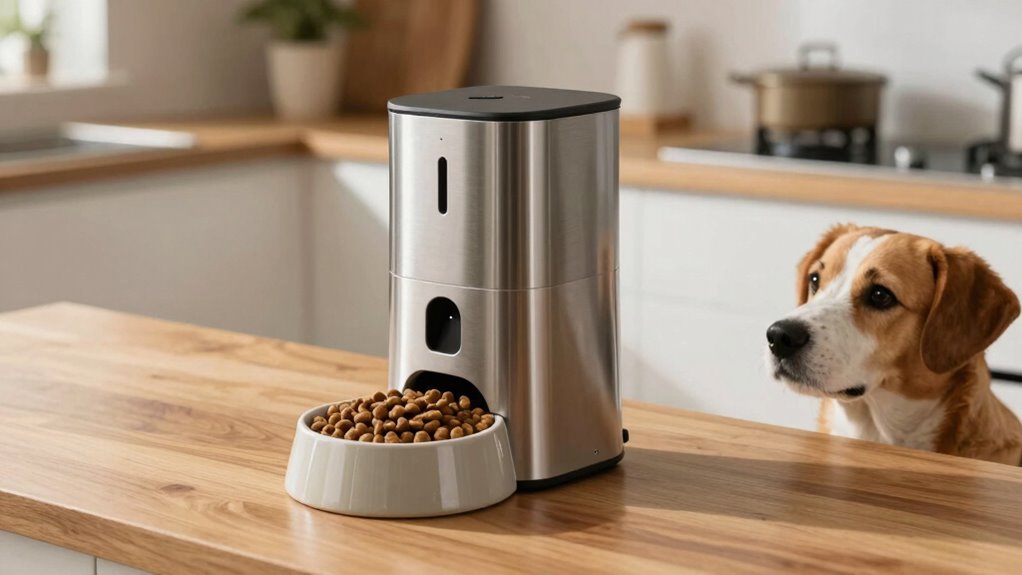

Automatic feeders can improve your pet’s behavior by providing consistent routines and helping control portions, reducing anxiety and overeating. They’re most effective if your pet is comfortable with a routine and independent eating. However, they may not help if your pet relies on social interaction or struggles with separation anxiety, which could lead to stress. To guarantee proper use, understand your pet’s needs and consider combining automation with reassurance. Keep exploring for more tips to make automatic feeders work well for your pet.

Get pet supplies delivered free — and shop member deals
- Fast, free delivery on millions of items
- Access to Prime Big Deal Days deals on October 6–7
- Prime Video, Amazon Music and more included
Key Takeaways
- Automatic feeders support consistent routines, reducing anxiety and overeating in pets accustomed to set schedules.
- They are most effective for independent eaters and pets needing routine stability.
- They may increase stress or feelings of isolation in pets that require social interaction or reassurance.
- Proper introduction and emotional support are essential to prevent stress related to the device.
- Combining automatic feeders with behavioral training and professional guidance enhances their effectiveness.
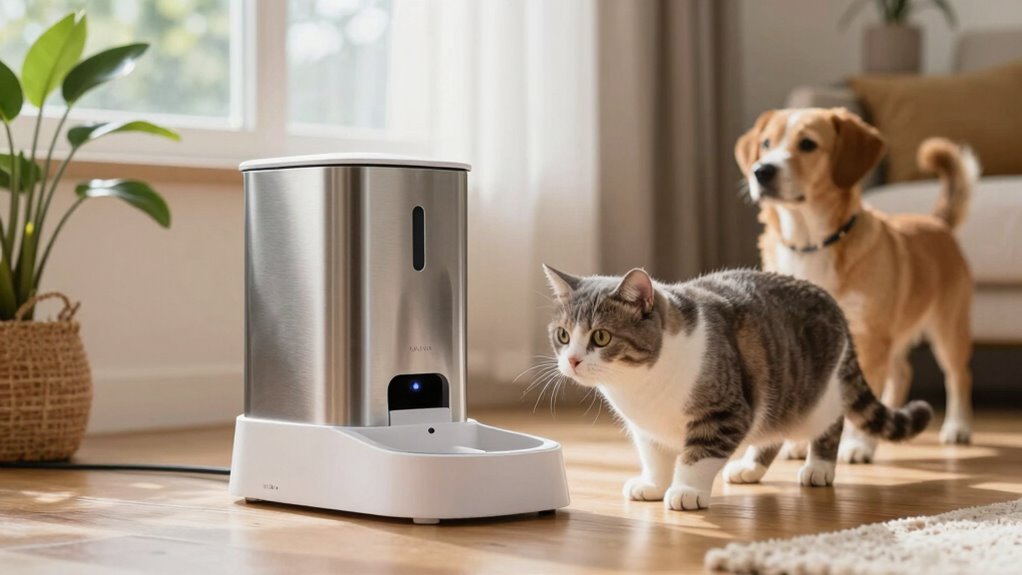
Automatic feeders are a popular solution, especially if you want to maintain reliable feeding schedules. They can be a real game-changer for busy pet owners, helping ensure your furry friends get their meals on time without your constant oversight. However, while they’re convenient, they don’t always address every behavioral issue. Automatic feeders can actually help reduce pet anxiety related to meal times by creating predictable routines. When your pet knows exactly when to expect food, it can ease their worries and help them settle down between feedings. This consistency can be especially beneficial for anxious animals or those with a history of overeating or begging. Additionally, feeding schedules that are consistent and predictable can contribute to overall health and well-being.
But it’s not a one-size-fits-all solution. Automatic feeders work best when your pet is accustomed to a set feeding schedule and can eat independently from a bowl. If your pet is highly food-motivated or prone to overeating, these devices can help regulate portion control and prevent overfeeding. Conversely, in some cases, automatic feeders might not improve behavior and could even cause new issues. For pets that need social interaction or reassurance during mealtime, a machine might make them feel more isolated, increasing pet anxiety instead of reducing it. Some animals become stressed if they’re left alone with just a mechanical device, especially if they’re used to being fed by a person. Properly introducing the device and providing emotional support can help mitigate these issues, as pet reassurance plays a crucial role in reducing stress. Understanding animal behavior can help owners better interpret their pet’s reactions and adapt accordingly.
Furthermore, automatic feeders aren’t a cure-all for behavioral problems. They can’t replace the emotional comfort your presence provides during feeding times. If your pet has separation anxiety or is sensitive to changes in routine, introducing an automatic feeder might not resolve these issues and could potentially exacerbate their stress. It’s important to observe how your pet reacts to the device. For some, it’s a helpful tool that fosters independence and routine, but others may need additional behavioral support to feel secure. Recognizing the limitations of automation can help set realistic expectations for your pet’s response. Incorporating behavioral training alongside the use of automatic feeders can further enhance their effectiveness.
In the end, automatic feeders are a valuable asset for maintaining feeding schedules and managing pet anxiety, but they aren’t magic. They work best when you consider your pet’s unique needs, personality, and behavioral tendencies. Use them as part of a broader approach that includes reassurance, routine, and, if necessary, consultation with a veterinarian or behaviorist. When used thoughtfully, automatic feeders can be an effective way to support your pet’s well-being and ensure they’re fed consistently, even during your busiest days.
automatic pet feeder with portion control
As an affiliate, we earn on qualifying purchases.
As an affiliate, we earn on qualifying purchases.
Frequently Asked Questions
Can Automatic Feeders Replace Daily Human Interaction With Pets?
Automatic feeders can’t fully replace daily human interaction with your pet. While they promote feeding independence and can reduce behavioral boredom, pets still crave social contact and emotional bonds. Relying solely on feeders might lead to loneliness or anxiety. You should use automatic feeders as a supplement, not a substitute, for engaging with your pet daily. Balance feeding independence with quality time to keep your pet happy and healthy.
Are Automatic Feeders Suitable for All Types of Pets?
Every pet is different, and you know what they say: “One size doesn’t fit all.” Automatic feeders aren’t suitable for every pet, especially those requiring special diets or frequent, unpredictable feedings. For pet safety and consistent feeding schedules, consider your pet’s specific needs. While they work well for some, others may need more human interaction or tailored care. Always assess your pet’s unique requirements before choosing an automatic feeder.
How Do Automatic Feeders Handle Pets With Special Dietary Needs?
Automatic feeders can handle pets with special dietary needs if they offer dietary customization and feeding flexibility. You should choose a model that allows precise portion control and custom feeding schedules tailored to your pet’s unique requirements. By doing so, you guarantee your pet gets the right nutrition at the right times, reducing health risks. Always consult your vet to select and properly program an automatic feeder that meets your pet’s specific dietary needs.
What Maintenance Do Automatic Feeders Require?
Did you know that nearly 60% of automatic feeder users report fewer feeding issues? To keep yours working smoothly, you need to follow simple maintenance routines. Regularly clean the feeding tray, check the motor and sensor functions, and refill the food reservoir. Also, make sure the feeding schedule settings stay accurate. By performing these tasks, you’ll guarantee your pet’s automatic feeder remains reliable and your pet stays healthy and well-fed.
Do Automatic Feeders Help With Pet Obesity?
Automatic feeders can help with pet obesity by promoting nutritional control and encouraging feeding independence. They allow you to set precise portions, preventing overeating, and guarantee your pet eats at regular times. However, they don’t automatically address underlying health issues or behavioral problems. You need to monitor your pet’s weight and adjust portions as needed, making sure the feeder supports a balanced diet and healthy habits.
Conclusion
Automatic feeders can be a game-changer for your pet’s routine, often improving behavior and reducing stress. But they’re not a magic fix—your pet’s unique needs matter. Are you ready to trust technology to feed your furry friend, or will you miss those special moments of connection during mealtime? Remember, a well-chosen feeder can be a helpful tool, but nothing replaces your love and attention. After all, isn’t that what truly keeps your pet happy?
Fall Picks
fall essentials
As an affiliate, we earn on qualifying purchases.