
Many believe that puppies have very short attention spans, but that’s a common misconception. Puppies are capable of focusing and learning with the right training, patience, and positive reinforcement. Their attention can be nurtured through short, engaging sessions and a calm environment. Factors like age, breed, and temperament influence focus, but it’s important to remember that their attention span develops over time. Keep going, and you’ll discover how to help your puppy build strong, lasting focus skills.
Key Takeaways
- Puppies can focus longer than a few seconds; attention span varies with training and development.
- Short, engaging training sessions help build and extend a puppy’s attention over time.
- Proper environment management and gradual distraction exposure improve focus in puppies.
- Consistent positive reinforcement encourages sustained attention and learning interest.
- Attention span is a developmental trait that can be cultivated through patience and appropriate techniques.
Many people believe that puppies have very short attention spans, but this isn’t entirely true. The idea that young dogs can’t focus for more than a few seconds is a common misconception. In reality, puppies are capable of learning and concentrating, but it depends on how you approach training techniques and understand puppy development. Recognizing their natural learning process helps you tailor your methods, making training more effective and less frustrating for both of you.
During puppy development, their attention span varies based on age, breed, and individual temperament. Young puppies may seem easily distracted, but that’s simply part of their developmental stage. It’s important to remember that their focus can be nurtured with patience and proper techniques. Short, engaging training sessions—about five to ten minutes—are ideal during this period. This prevents them from becoming overwhelmed or bored, allowing them to absorb new commands and behaviors more efficiently. Using positive reinforcement, like treats and praise, keeps them motivated and enthusiastic to learn.
Puppy attention spans vary; short, positive sessions help them learn without feeling overwhelmed.
When you work on training techniques, you’re not just teaching commands; you’re also shaping their ability to concentrate. Consistency is key. Repeating exercises regularly helps them associate cues with actions, gradually increasing their attention span over time. As they grow, you can extend training sessions, but always be mindful of signs that they’re losing focus, such as wandering off or zoning out. Recognizing those cues helps you adjust your approach, ensuring the training remains productive and enjoyable. Understanding attention span development is essential for creating effective training routines that match your puppy’s capabilities. Additionally, understanding environmental factors can help you tailor training settings to better suit their needs and reduce distractions.
It’s also essential to contemplate the environment during training. Puppies are naturally curious, so distractions are common. Creating a quiet, familiar space minimizes interruptions and helps your puppy stay engaged. As they progress, you can gradually introduce more distractions to strengthen their focus in different settings. This process is a crucial part of puppy development, preparing them for real-world situations where they’ll need to stay attentive despite outside influences. Recognizing that distraction management plays a vital role in training success can help you design more effective sessions. Additionally, understanding individual temperament can guide you in customizing training methods to better suit your puppy’s unique personality and learning style. Developing a training plan that considers their temperament and attention span can further optimize their learning experience.
Ultimately, debunking the puppy attention span myth means understanding that with the right training techniques, puppies can develop strong focus over time. Their attention may be shorter initially, but it’s not a fixed trait. Patience, consistency, and positive reinforcement are your best tools. Instead of giving up when they seem distracted, recognize that every puppy learns at their own pace. With proper guidance, you’ll see their attention span grow, and so will their confidence and willingness to learn.

Buddy Biscuits Trainers Training Bites Soft & Chewy Dog Treats, Bacon, 10 oz. Pouch
Highly Palatable with natural pork liver base
As an affiliate, we earn on qualifying purchases.
As an affiliate, we earn on qualifying purchases.
Frequently Asked Questions
How Can I Improve My Puppy’s Attention Span Effectively?
To improve your puppy’s attention span, use short, engaging training sessions with clicker training to reinforce focus. Incorporate frequent, fun play sessions to keep your puppy interested and mentally stimulated. Gradually increase session lengths as your puppy’s attention improves, and always end on a positive note. Consistent routines and patience will help your puppy learn to stay attentive longer, making training more effective and enjoyable for both of you.
Does Age Significantly Affect a Puppy’s Attention Span?
You notice your puppy’s attention span varies as they grow, much like a young tree stretching towards the sun. Age does influence puppy development and their ability to focus, but it’s not a strict rule—attention span myths often exaggerate this. As your puppy matures, their capacity to stay engaged improves naturally. Keep training sessions short and positive, and you’ll see their focus blossom, regardless of their age.
Are There Breed Differences in Attention Span Among Puppies?
Yes, breed differences influence attention span among puppies. Some breeds, known for high energy and focus like Border Collies, tend to have longer attention spans, while others, like Beagles, often show more attention variability. Your puppy’s breed behaviors shape how easily they stay engaged during training or play. Understanding these differences helps you tailor your approach, making training more effective and enjoyable for both of you.
What Signs Indicate My Puppy Is Losing Focus During Training?
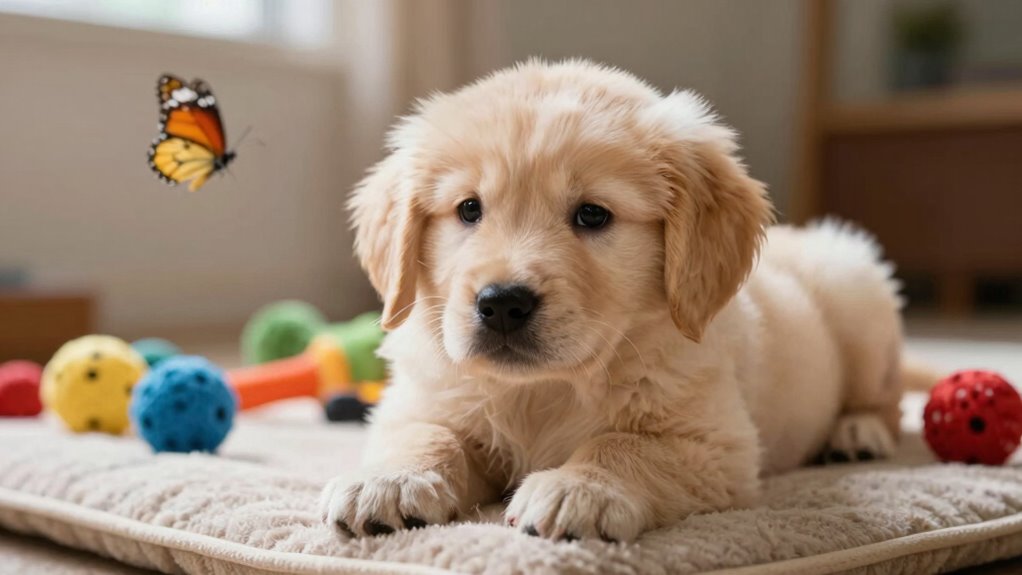
You’ll notice your puppy loses focus during training when they start daydreaming, gazing away, or getting easily distracted by noises or movements—like a butterfly fluttering past. Signs include wandering eyes, yawning, or attempting to chew on your shoes. These are common puppy distractions. To improve attention training, keep sessions short and engaging, gradually increasing focus time to help your puppy stay attentive longer without frustration.
How Long Should Training Sessions Ideally Last for Puppies?
You should keep training sessions with your puppy around 5 to 10 minutes, focusing on socialization techniques and consistent routines. Short, engaging sessions help maintain your puppy’s interest and build positive habits. Remember, nutritional impacts influence their energy levels and attention span, so make sure they’re well-fed with balanced diets. By keeping sessions brief and positive, you avoid overloading your puppy and foster effective learning and socialization.

DR CATCH Dog Puzzle,Dogs Food Toys for IQ Training & Mental Enrichment,Dog Treat Puzzle(Blue)
【Size】: L9.44" * W9.44"* H1.14" suitable for cats, puppies and small dogs.
As an affiliate, we earn on qualifying purchases.
As an affiliate, we earn on qualifying purchases.
Conclusion
Don’t let the myth of a puppy’s short attention span dim your hopes. Think of your pup’s focus like a flickering flame—bright and lively, but needing gentle tending. With patience and creativity, you can keep that flame burning steadily, guiding your puppy’s curiosity into a steady blaze of learning. Remember, every moment you invest is like watering a seed—eventually, it blossoms into a bond as strong as a mighty oak.

Clicker Training for Dogs: Positive reinforcement that works!
comprehensive and helpful information
As an affiliate, we earn on qualifying purchases.
As an affiliate, we earn on qualifying purchases.

ChengFu Interactive Dog Toys, Crate Training Aids for Puppies, Reduce Stress Anxiety Peanut Butter Dog Food Treat Dispenser Toys
Food Dispenser Toy:Spread peanut butter on the ball, stuff the dog food inside the ball, then tie the…
As an affiliate, we earn on qualifying purchases.
As an affiliate, we earn on qualifying purchases.