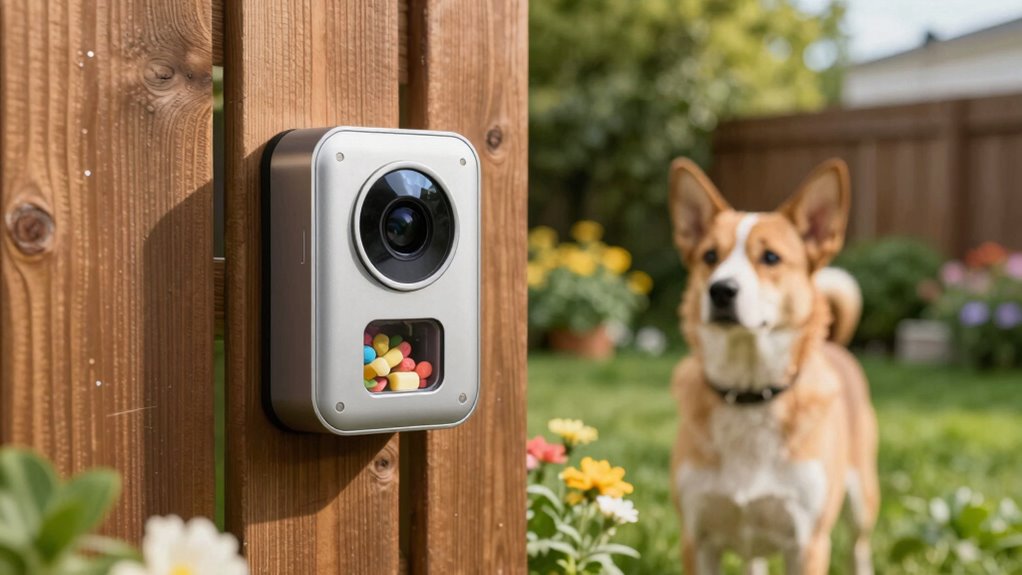

To prevent demand barking with treat-dispensing cameras, set clear boundaries and only reward your dog when they remain calm and quiet. Position the camera to avoid triggering barking, and focus on reinforcing peaceful behaviors instead of rewarding noise. Use enrichment activities and interactive toys to keep your dog engaged, and avoid giving treats during barking episodes. Consistency is key—continue exploring proven strategies, and you’ll find effective ways to keep demand barking at bay.
Key Takeaways
- Position the camera to minimize triggers and reinforce calm behavior with treats only when the dog is quiet.
- Avoid rewarding barking; respond with calm, consistent commands and ignore demand behaviors.
- Use enrichment activities like puzzle toys and scent games to divert attention from demand barking triggers.
- Reinforce silence and calm responses with treats from the camera, and establish predictable routines.
- Seek professional advice if demand barking persists despite consistent training and management strategies.

TKENPRO 2K Pet Camera Treat Dispenser, 360°View Dog Camera with Phone App, 5G&2.4G WiFi 2-Way Talk Pet Cam Indoor for Cats Remote Treat Tossing, Motion Alerts, Auto Tracking
- Pet Camera with Treat Dispenser: Remotely toss treats to pets
- Cloud-Enabled Video Highlights: Auto-create and save pet videos
- 2K Ultra HD & Night Vision: Clear footage day and night
As an affiliate, we earn on qualifying purchases.
As an affiliate, we earn on qualifying purchases.
Why Do Dogs Demand Bark at Treat Cameras?

Dogs often bark at treat cameras because they quickly learn that barking can get them rewards. When your dog notices the camera dispensing treats after a bark, they start to associate barking with positive outcomes. Their dog body language, like wagging tails or alert ears, signals excitement or anticipation, encouraging more barking. The barking frequency increases as your dog repeatedly tries to trigger the treat mechanism. Over time, they may even bark just in response to the camera’s presence, expecting a reward. Understanding these cues helps you see that demand barking stems from learned behavior and their desire for treats. Recognizing your dog’s body language and monitoring their barking frequency can help you address this behavior effectively. Behavioral cues play a crucial role in how dogs communicate their needs and responses. Additionally, understanding learning behavior can help in developing training strategies to modify this barking habit, especially by incorporating positive reinforcement techniques to encourage quieter responses. Being aware of sound sensitivity can also guide you in creating a calmer environment that reduces unnecessary barking.
How Can I Tell If My Dog Is Demand Barking?

You can spot demand barking by paying attention to specific signs like persistent whining or frantic pawing at the camera. Common triggers include hunger, attention, or excitement, which often lead to predictable behavioral patterns. Recognizing these cues helps you understand when your dog is communicating a need or desire. Monitoring your dog’s behavioral responses and understanding their cultural expressions, such as specific vocalizations or gestures, can also provide insight into their emotional state. Additionally, being aware of professional email etiquette practices can help ensure clear communication with pet caregivers or trainers if you seek advice. Observing your dog’s energy shifts can further indicate underlying needs or feelings that prompt demand barking. Understanding your dog’s behavioral evolution over time can also assist in managing demand barking effectively, especially when considering the factors influencing canine communication.
Signs of Demand Barking
Demand barking often manifests through specific behaviors that signal your dog’s desire for attention or something they need. Look for calming signals, such as yawning, lip licking, or turning away, which indicate your dog is feeling anxious or seeking reassurance. Barking cues are clear: persistent, high-pitched barking directed at you or the treat dispenser, often accompanied by pawing or nudging. Your dog may also stare intently or pace near the camera, signaling impatience. These behaviors are distinct from alert barking, as demand barking tends to be more focused on gaining attention or access rather than warning of danger. Recognizing these signs helps you address the behavior early and prevent it from becoming habitual. Additionally, understanding the behavioral cues associated with demand barking can aid in developing effective training strategies.
Common Triggers Identified
How can you tell if your dog’s barking is driven by demand rather than alertness or excitement? Look for specific triggers, like pawing at the treat dispenser or persistent barking when they want something. Demand barking often occurs in response to cues such as your approaching or the camera’s activity. To address this, use calming techniques like gentle commands or providing a designated quiet space to help your dog learn patience. Socialization strategies can also reduce demand barking by exposing your dog to various situations and reducing anxiety. If your dog consistently barks when they anticipate treats or attention, it’s a clear sign of demand-driven barking. Recognizing these triggers helps you implement effective training and prevent demand barking from becoming a persistent issue. Additionally, understanding the performance and reliability of your dog’s behavior can guide you in selecting appropriate training tools and techniques. Incorporating consistent training methods can further reinforce patience and reduce demand barking over time.
Behavioral Patterns Noted
Recognizing demand barking involves observing specific behavioral patterns that distinguish it from other types of noise. You’ll notice your dog often approaches the treat-dispensing camera, vocalizes persistently, or nudges the device for attention. Their barking is usually accompanied by enthusiastic body language, like wagging tails or leaning toward the camera. These behaviors often occur when they expect treats, linking demand barking to their desire for positive reinforcement. Pay attention to their treat selection; if your dog’s barking intensifies around certain treats, it indicates a learned association. Understanding these patterns helps you identify demand barking early. By monitoring these cues, you can better manage your dog’s expectations and adjust their treat routine to promote healthier dog nutrition and reduce unnecessary barking. Additionally, recognizing the connection between demand barking and behavioral patterns can help you implement effective training strategies.
How to Set Boundaries That Stop Demand Barking

Setting clear boundaries is essential to stopping demand barking in its tracks. Effective boundary setting helps your dog understand what’s acceptable and prevents constant demands for treats. To do this, use calm communication—speak gently and consistently. When your dog begins barking or pawing at the camera, calmly but firmly tell them “no” or redirect their attention elsewhere. Avoid giving treats or attention during demand barking, as this reinforces the behavior. Instead, establish a routine where treats are only dispensed when your dog is calm and quiet. Consistency is key—stick to your boundaries daily, so your dog learns expectations. Over time, your dog will understand that barking or demanding doesn’t lead to treats, helping to curb demand barking effectively.
Training Tips to Reduce Demand Barking Without Punishment

To effectively reduce demand barking without resorting to punishment, focus on positive reinforcement and redirection techniques. Use calming techniques like gentle voice commands and creating a quiet environment to help your dog feel secure. Incorporate scent enrichment, such as diffusing calming scents or hiding treats, to engage their senses and reduce anxiety-driven barking. Consistently reward calm behavior with treats from your treat camera to reinforce desired actions. Here’s a simple visual to guide you:
| Calm Behavior | Redirection Technique | Enrichment Activity |
|---|---|---|
| Sitting quietly | Use a treat camera to reward | Introduce calming scents |
| Lying down calmly | Redirect to a toy | Hide treats for scent games |
| Relaxed posture | Offer gentle petting | Use scent enrichment accessories |
Additionally, ensuring your dog has a consistent routine can help reduce their overall stress levels and demand barking. This approach encourages your dog to stay relaxed and reduces demand barking naturally. Implementing training consistency can also improve your dog’s understanding of acceptable behavior and further minimize demand barking. To support these efforts, consider providing mental stimulation activities that keep your dog engaged and reduce anxiety-induced behaviors. Engaging your dog in structured activities such as puzzle toys or training sessions can further promote calmness and reduce demand barking. As part of a comprehensive approach, integrating smart home fitness technology can help monitor and reinforce your training efforts effectively.
How to Use Treat Cameras Without Reinforcing Barking

Using treat cameras effectively requires careful timing and awareness to prevent reinforcing barking. Proper treat camera placement is key—you want to position it where your dog can see it but isn’t triggered by every bark. When your dog remains calm, immediately reward this behavior by dispensing a treat. Avoid rewarding barking by giving treats during noisy moments; instead, wait for silence or a calm response. Consistent reinforcement of calm behavior helps your dog associate quietness with rewards. Remember, rewarding calm keeps your dog focused on peaceful behavior rather than barking. By controlling when treats are dispensed and positioning the camera thoughtfully, you reduce the chance of reinforcing demand barking and promote a calmer, more focused response to triggers. Proper treat camera placement is essential for supporting your dog’s understanding of when calm behavior is rewarded.
Enrichment Ideas to Keep Your Dog Calm and Less Barky
You can keep your dog calm and reduce barking by engaging them in interactive play sessions that challenge their mind. Puzzle meal challenges also provide mental stimulation, making them less likely to bark out of boredom. Try incorporating these enrichment ideas into your routine to help your dog stay relaxed and happy. Additionally, providing distractions such as pinball-inspired toys can help simulate the excitement of game environments and divert their attention from barking triggers. Incorporating evidence-based recovery tools like massage guns can also promote muscle relaxation and reduce overall stress, further helping to calm anxious dogs. Understanding behavioral enrichment strategies can optimize your dog’s mental well-being and decrease unwanted behaviors. Incorporating calming aids based on scientific research can enhance these efforts and support your dog’s emotional well-being.
Interactive Play Sessions
Engaging your dog in interactive play sessions can considerably reduce their anxiety and barking. Use interactive toys to keep their mind active and prevent boredom, which often triggers demand barking. Incorporate scent enrichment by hiding treats or favorite objects for your dog to find, stimulating their natural instincts and providing mental stimulation. These activities create positive engagement, redirecting their focus away from seeking attention through barking. Play sessions also strengthen your bond and help your dog feel secure in their environment. Keep sessions dynamic and varied to maintain their interest. By investing time in interactive play, you’re providing valuable enrichment that calms your dog and reduces the likelihood of demand barking. Consistent engagement is key to a calmer, happier pet. Understanding training techniques can further enhance your efforts to curb demand barking effectively. Additionally, using positive reinforcement helps reinforce desirable behaviors and builds trust between you and your dog.
Puzzle Meal Challenges
Puzzle meal challenges provide a stimulating way to keep your dog mentally engaged while they eat, reducing boredom and associated barking. Using a puzzle meal transforms mealtime into an enriching activity that challenges your dog’s problem-solving skills. Incorporate enrichment toys designed for puzzle meals, ensuring they are appropriately sized and safe. These toys encourage your dog to work for their food, slowing down eating and providing mental stimulation. As your dog figures out how to access their meal, they stay occupied and less likely to bark out of frustration or boredom. Regularly changing the puzzle meal setup prevents your dog from losing interest, making mealtime both fun and calming. Puzzle meal challenges are an effective tool to help reduce demand barking by keeping your dog engaged in constructive activities.
Common Mistakes That Worsen Demand Barking: and How to Avoid Them

One common mistake that worsens demand barking is failing to understand its triggers, which leads to ineffective or counterproductive responses. If you react without correct timing, you risk reinforcing the behavior instead of reducing it. Here are four mistakes to avoid:
- Ignoring early signs of barking, missing the chance for positive reinforcement.
- Responding with impatience or scolding, which can escalate demand barking.
- Giving treats or attention at the wrong moment, reinforcing demand instead of discouraging it.
- Using inconsistent responses, confusing your dog about what’s expected.
To prevent this, observe your dog closely and respond with correct timing, rewarding quiet behavior. Consistent, positive reinforcement helps your dog learn when demand barking is unwelcome.
When to Get Help for Persistent Demand Barking

Persistent demand barking that continues despite your consistent efforts indicates it’s time to seek professional help. When your dog’s behavior doesn’t improve with training adjustments, a professional intervention can identify underlying issues. A behavioral assessment conducted by a qualified trainer or veterinary behaviorist helps determine if medical, environmental, or psychological factors contribute to the barking. Recognizing when to get help ensures you don’t inadvertently reinforce the behavior or cause frustration for your dog. If demand barking persists for weeks or worsens, despite implementing strategies, consulting an expert is essential. They can develop a tailored plan, address root causes, and recommend appropriate interventions. Getting professional help at the right time can profoundly improve your dog’s well-being and restore harmony at home.
Frequently Asked Questions
Can Demand Barking Lead to Behavioral Issues Beyond Barking?
Demand barking can lead to behavioral escalation beyond just barking, as it may cause your dog to develop stress-related behaviors. When they constantly expect treats or attention, they might become anxious, frustrated, or overly dependent. This can increase their overall stress levels, making them more prone to other issues like destructive chewing or excessive whining. Managing demand barking helps prevent these stress-related behaviors and promotes a balanced, calm demeanor in your dog.
Are There Specific Breeds More Prone to Demand Barking at Cameras?
Certain breeds are more prone to demand barking at cameras, largely due to breed predispositions and genetic factors. For example, herding and terrier breeds often exhibit higher alertness and vocal tendencies, making them more likely to bark when they see the camera. While individual temperament varies, understanding these genetic influences helps you anticipate behavior. By training consistently and providing mental stimulation, you can reduce demand barking regardless of breed.
How Long Does It Typically Take to See Improvements in Demand Barking?
You can usually see improvements in demand barking within a few weeks of consistent behavior modification and environmental enrichment. Stay patient and committed, as it takes time for your dog to learn new habits. Focus on rewarding calm behavior and providing stimulating activities to reduce boredom. Over time, these strategies help your dog feel more secure and less likely to bark excessively at the camera.
What Are Alternative Methods to Treat Demand Barking Besides Training?
You can try using calming aids like pheromone diffusers or calming sprays to reduce demand barking. Environmental modifications, such as providing a quiet, cozy space and keeping your dog engaged with toys or puzzle feeders, also help. These strategies lower your dog’s anxiety and distract them from barking. Consistent use alongside training can improve behavior over time, making your pup calmer and less demanding without solely relying on training techniques.
Is Professional Help Necessary for Severe Demand Barking Problems?
Yes, professional help can be essential for severe demand barking. You should consider a behavioral assessment to identify underlying causes and explore medication options if necessary. A veterinarian or animal behaviorist can develop a tailored plan, combining training and medical interventions, to effectively manage your dog’s behavior. Addressing severe demand barking early with expert guidance helps improve your dog’s well-being and your peace of mind.
Conclusion
By understanding why your dog demands treats and setting clear boundaries, you can turn the barking symphony into a calm melody. Think of treat cameras as gentle guides, not triggers of chaos. With patience, training, and enrichment, you’ll help your furry friend find peace amidst the noise. Remember, each step you take is like carving a peaceful path through a bustling forest—leading to a calmer, happier bond that blossoms with trust and understanding.