
To create a polite doorbell routine, train your dog to ‘go to place’ using a designated, calm spot. Choose a quiet, comfortable area and use positive reinforcement to reward your dog for staying there when visitors arrive. Practice gradually, incorporating doorbell ringing and visitor arrivals, while rewarding calm behavior. Consistency and patience are key. Keep reinforcing this routine, and you’ll help your dog remain composed—if you want more tips, continue exploring this approach.

Get pet supplies delivered free with Prime
- Fast, free delivery on millions of items
- Prime Video, Amazon Music and more included
- Member-only deals all year
Key Takeaways
- Choose a consistent, comfortable spot for your dog to go to when the doorbell rings.
- Practice the ‘Go to Place’ command in calm settings before adding doorbell scenarios.
- Use positive reinforcement to reward calm behavior and staying on the spot during doorbell ringing.
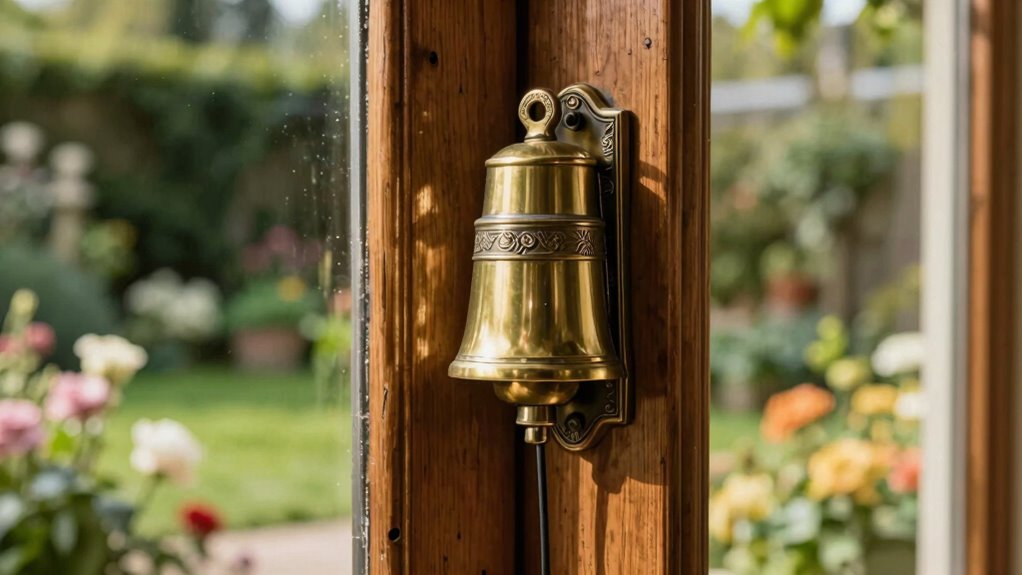
- Incorporate desensitization by ringing the doorbell without visitors, gradually increasing exposure.
- Maintain routine consistency and manage the environment to reinforce polite, calm door manners long-term.
As an affiliate, we earn on qualifying purchases.
Why Teaching Your Dog to ‘Go to Place’ Eases Doorbell Chaos
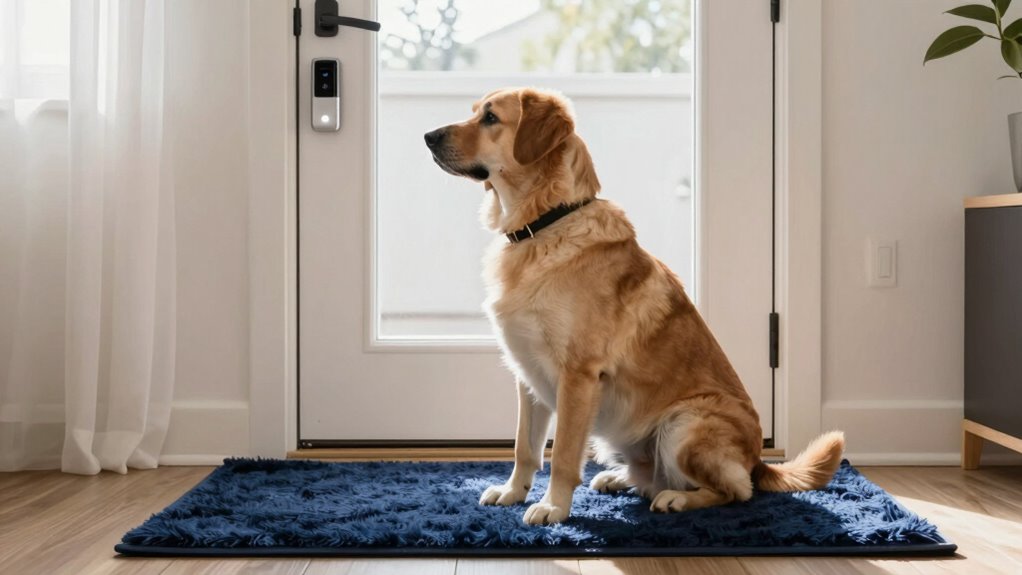
Teaching your dog to ‘go to place’ can considerably reduce doorbell chaos because it gives your pet a clear command to stay calm and stationary when someone arrives. This helps establish good doorbell manners by preventing your dog from jumping, barking, or rushing the door. When your dog knows to go to their designated spot, they learn to display calm behavior instead of reacting impulsively. As a result, your home feels more controlled, and visitors are greeted more politely. Consistently practicing this command reinforces calmness during doorbell rings, making your dog less reactive and more obedient. Over time, your pet associates the ‘place’ command with staying composed, which creates a more peaceful environment and makes visits less stressful for everyone. Incorporating a dedicated comfort zone like a cozy bed or mat can further aid in establishing a reliable ‘go to place’ system. Additionally, understanding training techniques can help reinforce this behavior more effectively. Using positive reinforcement and consistent routines can also accelerate your dog’s understanding and reliability of the command.
How to Pick the Best Spot for Your Dog to ‘Go to Place
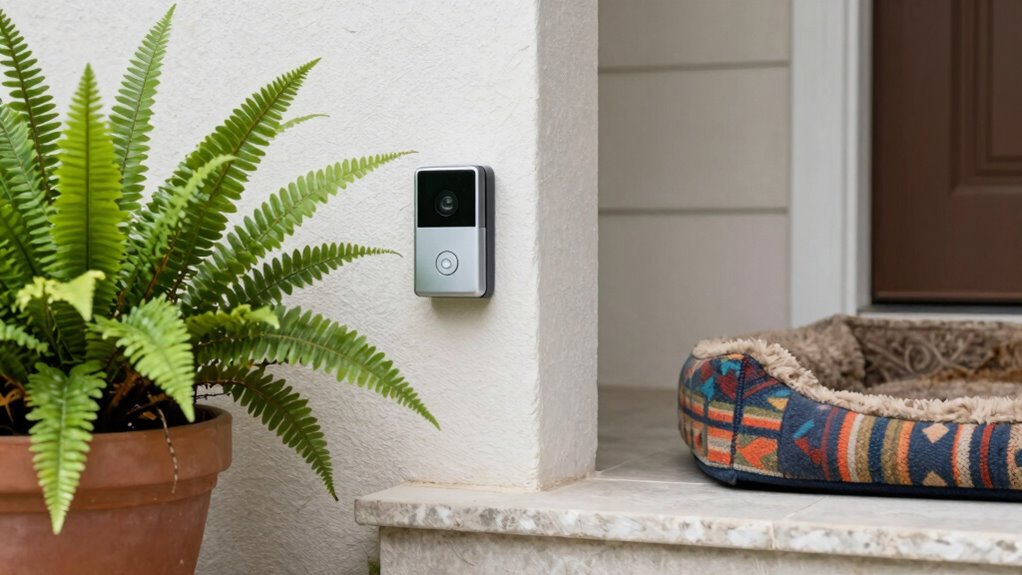
Choosing the right spot for your dog to ‘go to place’ is essential for effective training and calming doorbell reactions. Look for a quiet, consistently accessible area where your dog can settle without distractions. The spot should promote a calm greeting environment, helping your dog associate the location with relaxation rather than excitement. Make sure it’s comfortable and easy for your dog to reach, so they can quickly settle into the routine. Avoid high-traffic areas that might cause over-stimulation or frustration. By selecting a consistent, calming spot, you reinforce doorbell patience and create a reliable ‘go to place’ command. This foundation makes training smoother and reduces anxiety when visitors arrive, setting your dog up for success. Additionally, understanding the importance of calming spaces can help optimize your training environment for better results. Creating a designated calming space allows your dog to feel secure and can significantly improve their response to doorbell triggers, especially when combined with a vetted training routine. Incorporating a structured routine can further enhance your dog’s ability to remain calm and focused in these designated areas.
Step-by-Step: Training Your Dog to ‘Go to Place’ When Visitors Arrive
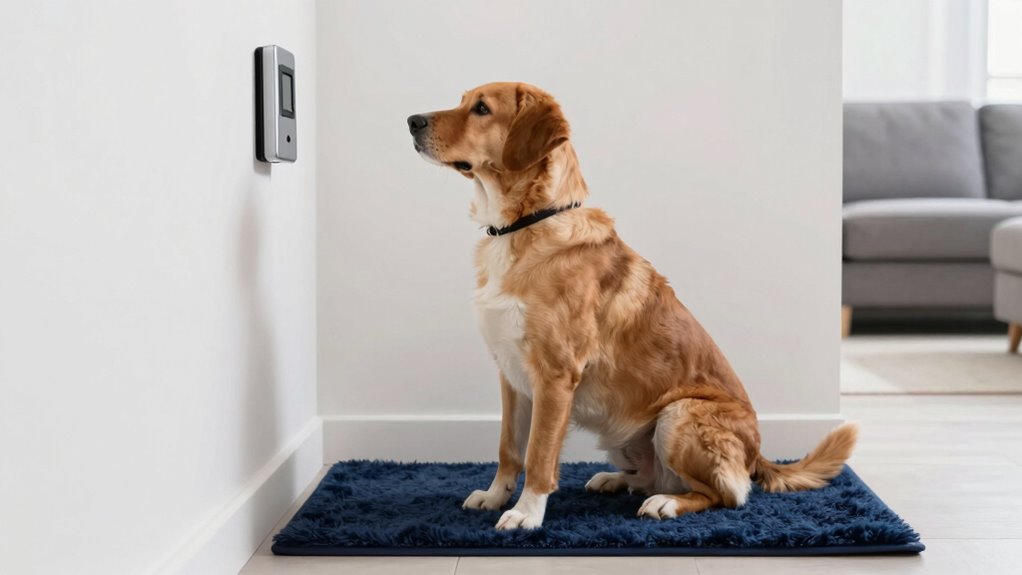
When visitors arrive, you can help your dog stay calm by guiding them to their designated ‘go to place’ quickly and smoothly. Watch your dog’s body language—relaxed posture, wagging tail, soft eyes—to recognize signs of readiness. Use training equipment like a leash, cue word, and a mat or bed to establish a clear space. Start by asking your dog to ‘go to place’ in a calm environment, then gradually introduce visitors. When the doorbell rings, give the cue and reward your dog for staying on their spot. Keep training sessions short and positive. Consistency and patience help your dog associate the ‘go to place’ with calm behavior, making the arrival of visitors a stress-free experience for everyone. Incorporating supportive breakfast options like high-protein treats can also motivate your dog during training sessions. Additionally, practicing positive reinforcement techniques can enhance your dog’s learning and confidence in the new routine. Remember, training consistency is key to reinforcing good habits and ensuring your dog remains relaxed during visitors. Incorporating behavioral science principles can further optimize your training outcomes.
Troubleshoot Common Problems in Doorbell Routine Training
Despite careful training, some dogs may still struggle with the doorbell routine, leading to behaviors like barking, jumping, or ignoring commands. Doorbell anxiety often causes these training setbacks, making your dog overly excited or fearful when visitors arrive. To troubleshoot, identify triggers that escalate anxiety, such as loud noises or sudden movements. Practice desensitization by ringing the doorbell without visitors, rewarding calm behavior. Make certain your dog understands the “go to place” command through consistent reinforcement, even during stressful moments. If your dog barks excessively or jumps, calmly redirect their attention and avoid punishment, which can worsen anxiety. Incorporating positive reinforcement techniques can also help reinforce desirable behaviors during training sessions. Patience is key; setbacks are normal. Reinforce positive associations with the doorbell to gradually reduce doorbell anxiety and improve the routine’s success. Incorporating connected training tools can also help monitor and reinforce your dog’s progress remotely. Understanding dog behavior patterns can further assist in tailoring your training approach for better results. Additionally, recognizing anxiety cues can help you intervene early and prevent escalation.
Tips to Reinforce and Maintain a Calm Doorbell Routine
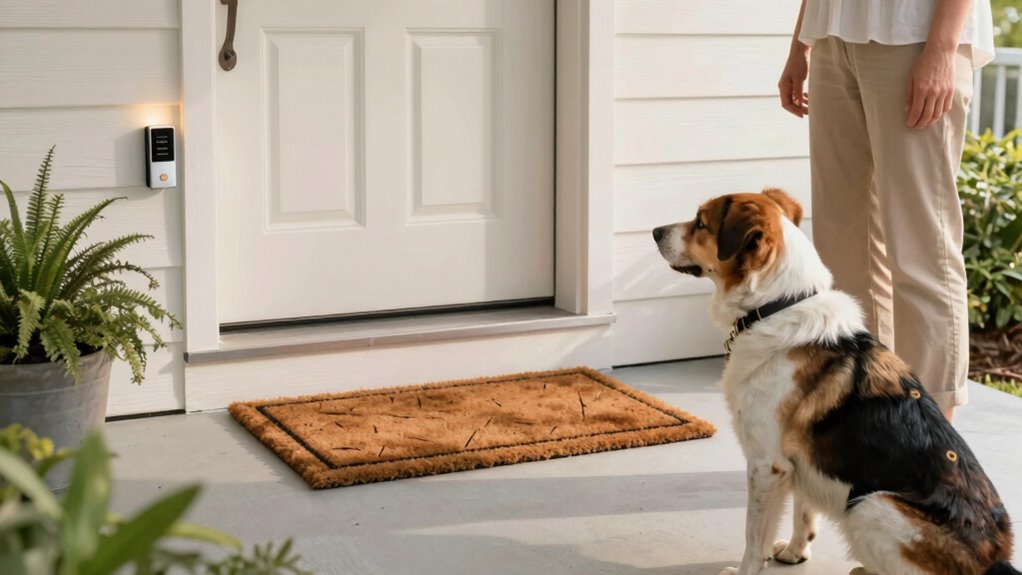
Maintaining a calm doorbell routine requires consistent reinforcement of desired behaviors every time the doorbell rings. To do this, use retraining techniques and appropriate reinforcement schedules. Consistency helps your dog associate the routine with calmness. Vary reinforcement schedules—sometimes rewarding immediately, other times after a pause—to keep your dog engaged and responsive. Remember, patience is key; reinforcement should be given only when your dog remains calm at the door. Use the table below to guide your reinforcement approach:
| Behavior | Reinforcement Schedule | Timing |
|---|---|---|
| Calm response | Variable | Immediately or delayed |
| Going to place | Fixed | Upon doorbell ring |
| Ignoring doorbell | Intermittent | After calm behavior |
| Relaxed posture | Continuous | During routine |
| Attention on you | Random | When calm |
Consistent reinforcement sharpens your dog’s understanding of expected behaviors, making the routine more effective over time. Incorporating positive reinforcement techniques that reward calm behavior can further enhance your dog’s response during doorbell rings. Additionally, understanding the importance of reinforcement can help you develop a more effective training plan and maintain progress over the long term. This structured approach helps sustain your dog’s calmness over time.
Extra Strategies to Keep Your Dog Calm and Polite at the Door
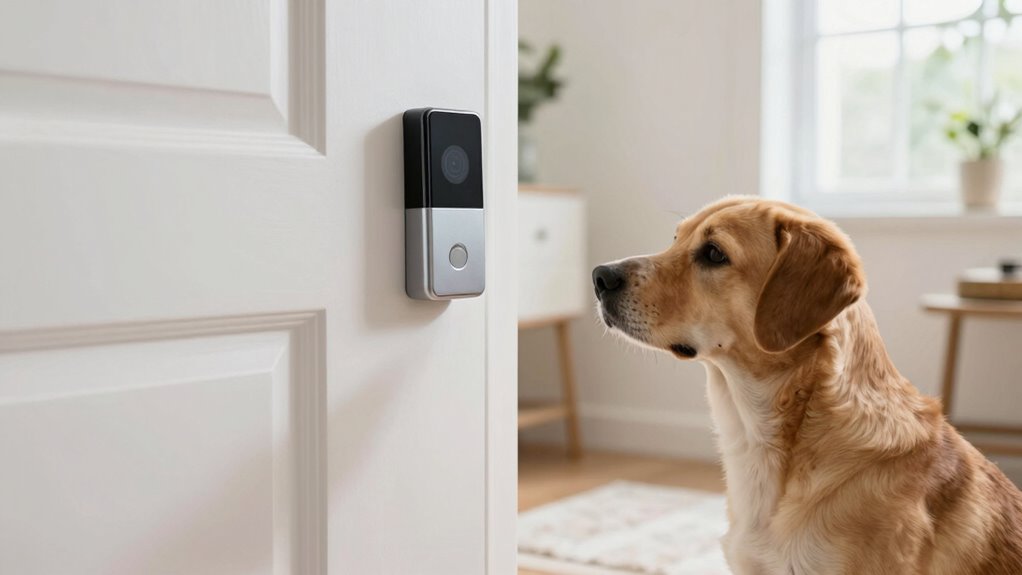
To enhance your dog’s calm and polite behavior at the door, incorporating additional strategies can make a significant difference. Pay attention to your dog’s body language; notice signs of excitement or stress such as wagging, jumping, or stiff posture. Using clear signals, like a “place” command, helps manage visitor interactions and keeps your dog focused. Before guests arrive, practice calming routines and have your dog in a designated spot to prevent jumping or barking. When visitors arrive, calmly greet them and reinforce your dog’s polite behavior with treats or praise. Managing your dog’s body language and controlling visitor management creates a more peaceful environment, reducing anxiety and promoting polite door manners. Consistency and proactive training are key to long-term success. Additionally, understanding your dog’s security zone and incorporating it into your training can improve their response to visitors. Recognizing and respecting this personal space can help your dog feel more secure during these interactions. Creating a calm environment during visitor arrivals can also help ease your dog’s nerves and reinforce positive behavior. Incorporating positive reinforcement techniques when your dog displays calm behavior can further strengthen their understanding of polite door manners.
Frequently Asked Questions
How Long Does It Typically Take to Train a Dog for This Routine?
Training your dog for this routine typically takes about 2 to 4 weeks, depending on your consistency and the dog’s age. The duration estimate varies, but you’ll see progress through key training milestones, such as responding reliably to the cue and staying in place. Make sure to practice daily, reinforce positive behavior, and be patient—your dog will learn faster with regular, positive reinforcement.
Can This Training Be Effective for Dogs of All Ages?
Age adaptability makes training effective regardless of your dog’s age. You can start young puppies or older dogs, but consistent training is key. With patience and persistence, you’ll see progress, as older dogs often catch on quickly when you stay steady. Remember, your consistency creates clarity, helping dogs of all ages understand and master the ‘go to place’ routine. Keep it kind, clear, and consistent for best results.
What if My Dog Ignores the ‘Go to Place’ Command?
If your dog ignores the ‘go to place’ command, stay patient and consistent with training. Doorbell anxiety can cause distraction, so practice in a calm environment first. Reinforce the behavior daily, rewarding even small successes. Use clear cues and avoid punishment. Over time, your dog will learn to respond despite distractions. Consistent training helps build reliability, ensuring your dog stays calm and in place when the doorbell rings.
How Should I Handle Guests Who Ignore My Training Instructions?
Did you know that inconsistent training can reduce a dog’s response by up to 50%? When guests ignore your training instructions, stay calm and politely remind them of your dog’s routine. Explain the importance of consistent training and kindly guide guests on how to interact with your dog. By setting clear expectations and maintaining patience, you reinforce your training efforts and help your dog understand proper behavior around visitors.
Is This Routine Suitable for Multi-Dog Households?
Yes, this routine can work for multi-dog households, but you’ll face multi-dog challenges. You need to adapt your approach to each dog’s temperament and learning style, applying individual training approaches. Consistency is key, and guarantee each dog understands their designated place. With patience and tailored strategies, you’ll help all your dogs respond reliably to your doorbell routine, creating a harmonious environment for everyone involved.
Conclusion
Think of your doorbell routine as planting a sturdy tree. With patience, your dog’s ‘go to place’ becomes the shelter that shields chaos from calm. Each training session nurtures trust and clarity, turning the doorbell into a gentle breeze instead of a storm. Over time, this routine blossoms into a symbol of peace—an unwavering refuge where your dog feels safe, respectful, and serene whenever visitors arrive.
Columbus Day / Indigenous Peoples' Day Picks
long weekend sales
As an affiliate, we earn on qualifying purchases.