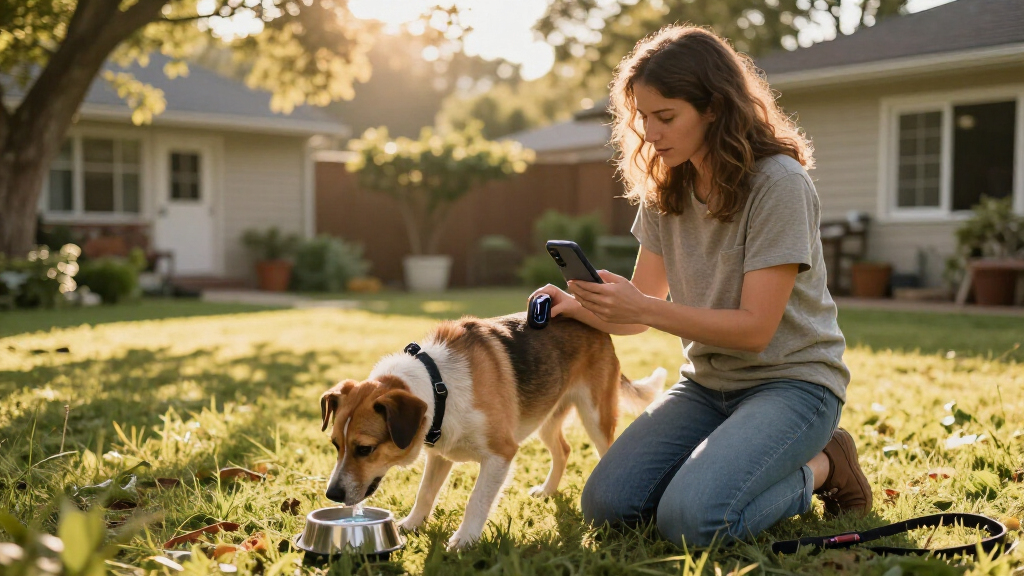

The best connected pet care devices solve a specific problem, whether that means checking in at home, keeping meals on schedule, or finding a dog outdoors. I’d name the Frienhund Automatic Pet Feeder my best overall pick for combining scheduled feeding with a camera, while the Tractive Smart Dog GPS Tracker stands out for location and activity monitoring, and the Petcube Cam is a focused choice for remote home check-ins. The main tradeoffs are whether you need a camera, a wearable tracker, or a feeder, and whether ongoing connectivity or app features suit your routine. No single device covers every kind of pet care equally well. Read on for the full breakdown of all 12 options and how I’d match them to different needs.

Get pet supplies delivered free with Prime
- Fast, free delivery on millions of items
- Prime Video, Amazon Music and more included
- Member-only deals all year
Complete the kit


Key Takeaways
- Connected care is not one product category: this lineup spans cameras, feeders, GPS trackers, health-monitoring collars, and a QR identification tag, so the right pick depends on the problem you want to solve.
- The Frienhund feeder combines two daily tasks: its 7L capacity and 2K camera appeal to owners who want food scheduling and a visual check-in from one device.
- Tractive’s two GPS trackers serve a different purpose from indoor cameras: their location, virtual-fence, and monitoring features suit outdoor safety, while a camera cannot help locate a pet away from home.
- Camera features call for tradeoffs: the TKENPRO adds treat dispensing, the ZUMIMALL adds a laser toy, and the CIAJIE includes a screen, but added interaction features may matter less than reliable viewing for some households.
- A simple ID tag can complement, rather than replace, GPS: Life360’s QR tag offers an identification option, while its GPS tracker and the Tractive models are meant for location tracking.
- Specialized health data is not a substitute for veterinary care: the Clvior collar’s heart, respiratory, activity, and HRV tracking may appeal to data-minded owners, but readings should be treated as context rather than diagnosis.
| ZUMIMALL Pet Camera with Laser Toy |  | Best for Interactive Play | Resolution: 3MP | Pan and tilt: 355° pan, 120° tilt | Wi-Fi: 2.4GHz and 5GHz listed | VIEW LATEST PRICE | See Our Full Breakdown |
| Tractive XL Smart Dog GPS Tracker with Vital Signs and Bark Monitoring, Virtual Fence, Up to 6 Weeks Battery Life, Black |  | Best for Large-Dog Location and Health Monitoring | Model: TG6XLC | Intended dog weight: Over 44 lbs | Connectivity: Cellular | VIEW LATEST PRICE | See Our Full Breakdown |
| Frienhund Automatic Pet Feeder with 2K Camera, 7L Capacity, and Dual-Band Wi-Fi |  | Best for Scheduled Feeding and Remote Checks | Capacity: 7L (29 cups) | Camera: 3-megapixel with infrared night vision | Wi-Fi: 2.4GHz and 5GHz | VIEW LATEST PRICE | See Our Full Breakdown |
| CIAJIE Indoor Two-Way Video Camera with 4.3-Inch Screen |  | Best for Family Video Check-Ins | Screen size: 4.3 inches | Wi-Fi: Dual-band 2.4GHz and 5GHz | Communication: Two-way video and audio calling | VIEW LATEST PRICE | See Our Full Breakdown |
| Petcube Cam Indoor Wi-Fi Pet and Security Camera |  | Best for Straightforward Indoor Monitoring | Video resolution: 1080p HD | Viewing angle: 110° | Zoom: 8x digital | VIEW LATEST PRICE | See Our Full Breakdown |
| Clvior Smart Dog Health Monitor Collar with Heart Rate, Respiratory Rate, Activity, and HRV Tracking |  | Best for At-Home Wellness Tracking | Connectivity: Bluetooth | Supported app: Clvior app | Battery life: Approximately 54 hours | VIEW LATEST PRICE | See Our Full Breakdown |
| Life360 Smart QR Code Pet ID Tag for Dogs and Cats, Stainless Steel, 1 Pack |  | Best Battery-Free Pet ID | Compatible pets: Dogs and cats | Material: Stainless steel | Pack size: 1 | VIEW LATEST PRICE | See Our Full Breakdown |
| 4MP Indoor Security Camera with Dual Lens, Pan/Tilt Tracking, and Phone App |  | Best for Wide-Room Pet Monitoring | Resolution: 4MP | Lenses: Wide-angle and pan/tilt | Storage: Free cloud storage; supports SD cards up to 256GB (sold separately) | VIEW LATEST PRICE | See Our Full Breakdown |
| Life360 Pet GPS Tracker for Dogs, Black, 1-Pack |  | Best for Safe-Zone Alerts | Connectivity: GPS, LTE, and Bluetooth | Battery life: Up to 14 days of continuous tracking | Reserve mode: Up to 6 months of findability after primary battery depletion | VIEW LATEST PRICE | See Our Full Breakdown |
| Tractive Smart Dog GPS Tracker with Health, Barking, and Virtual Fence Monitoring (Mint) |  | Best for Frequent GPS and Health Updates | GPS update frequency: Every 2–3 seconds | Range: Unlimited, worldwide | Health monitoring: Heart and respiratory rates | VIEW LATEST PRICE | See Our Full Breakdown |
| TKENPRO 2K Pet Camera with Treat Dispenser |  | Best for Interactive Treat Rewards | Camera resolution: 2K | Pan rotation: 355° | Treat dispenser capacity: 0.5 L | VIEW LATEST PRICE | See Our Full Breakdown |
| Furbo Mini Pet Camera |  | Best for Subscription-Based Activity Insights | App compatibility: iOS and Android | Connectivity: 2.4 GHz Wi-Fi; 5 GHz not supported | Audio: Two-way audio | VIEW LATEST PRICE | See Our Full Breakdown |
| connected pet care device | Connectivity |
|---|---|
| ZUMIMALL Pet Camera with Laser | — |
| Tractive XL Smart Dog GPS Trac | Cellular |
| Frienhund Automatic Pet Feeder | — |
| CIAJIE Indoor Two-Way Video Ca | — |
| Petcube Cam Indoor Wi-Fi Pet a | Wi-Fi |
| Clvior Smart Dog Health Monito | Bluetooth |
| Life360 Smart QR Code Pet ID T | QR code scan |
| 4MP Indoor Security Camera wit | — |
| Life360 Pet GPS Tracker for Do | GPS, LTE, and Bluetooth |
| Tractive Smart Dog GPS Tracker | — |
| TKENPRO 2K Pet Camera with Tre | — |
| Furbo Mini Pet Camera | 2.4 GHz Wi-Fi; 5 GHz not supported |
More Details on Our Top Picks
ZUMIMALL Pet Camera with Laser Toy
The ZUMIMALL stands out among these connected devices because it pairs room monitoring with an app-controlled laser toy. Its 355° pan, 120° tilt, and auto-tracking help keep a moving pet in view, while motion alerts and two-way audio add useful check-ins. Compared with the Petcube Cam, which focuses on a wide-angle security view and basic remote communication, ZUMIMALL gives owners a way to initiate play; it also has a rotating privacy cover for times when the camera should be concealed. The tradeoff is that it is an indoor-only camera, not a location or health tracker like the Tractive XL. The product information also describes connectivity as wired while listing Wi-Fi and Bluetooth, so buyers should verify the connection setup before choosing it.
Pros:- App-controlled laser toy offers a way to prompt interactive play remotely.
- Pan, tilt, and auto-tracking help follow pets across a room.
- Two-way audio and motion alerts support remote check-ins.
- Rotating privacy cover can conceal the lens when the camera is not in use.
Cons:- Indoor-only design cannot monitor pets outside the home.
- The listing is unclear about wired versus Wi-Fi and Bluetooth connectivity.
- Laser play does not replace physical activity or direct supervision.
Best for: Indoor cat or dog owners who want to combine remote room checks with app-directed play and camera privacy.
Not ideal for: Owners who need outdoor monitoring, pet location tracking, or a clearly documented connection setup.
- Resolution:3MP
- Pan and tilt:355° pan, 120° tilt
- Wi-Fi:2.4GHz and 5GHz listed
- Audio:Two-way audio
- Night vision range:33 feet
- Storage:Up to 128GB
- Mount and use:Tabletop; indoor use
- Compatibility:Amazon Alexa, Google Assistant, Android, CloudEdge, ZUMIMALL
Our verdict“Choose ZUMIMALL if remote play matters as much as viewing your pet, but skip it if you need a tracker or unambiguous connectivity details.”
Tractive XL Smart Dog GPS Tracker with Vital Signs and Bark Monitoring, Virtual Fence, Up to 6 Weeks Battery Life, Black
For owners whose main concern is knowing where a large dog goes, the Tractive XL offers a different kind of connection than the cameras and feeder in this group. Live location updates every 2–3 seconds, virtual fencing, and location history support follow-up when a dog wanders, while heart and respiratory rates, activity, sleep, and barking add health and behavior context. Its stated battery life of up to six weeks means fewer charging interruptions than a camera-based setup, though actual use can affect runtime. Compared with the Tractive Smart Dog GPS Tracker listed elsewhere in this roundup, this XL model is specified for dogs over 44 pounds. That size restriction is a real fit limitation, and cellular tracking requires a subscription; it is not a substitute for an indoor camera like the Petcube Cam.
Pros:- Live location updates every 2–3 seconds support timely tracking.
- Virtual fencing and location history help owners monitor roaming and review routes.
- Tracks heart rate, respiratory rate, activity, sleep, and barking.
- Battery life is listed at up to six weeks.
Cons:- Cellular data requires a subscription.
- Designed for dogs over 44 pounds, limiting fit for smaller pets.
- Location tracking does not provide the live room view offered by cameras such as the Petcube Cam.
Best for: Owners of dogs over 44 pounds who want off-home location tracking alongside activity, sleep, and vital-sign monitoring.
Not ideal for: Owners of smaller dogs or buyers unwilling to pay for a cellular-data subscription.
- Model:TG6XLC
- Intended dog weight:Over 44 lbs
- Connectivity:Cellular
- Live location updates:Every 2–3 seconds
- Battery life:Up to 6 weeks
- Dimensions:2.8 x 1.14 x 0.67 inches
- Weight:70 g
- Additional features:Geo-fence, location history, real-time tracking, water resistance
- Warranty:2 years
Our verdict“Pick the Tractive XL for a large dog that needs cellular location and health monitoring, provided you accept a subscription and the size requirement.”
Frienhund Automatic Pet Feeder with 2K Camera, 7L Capacity, and Dual-Band Wi-Fi
The Frienhund is the most feeding-focused option here: it connects a scheduled dispenser with a camera, so owners can check whether a meal was delivered without relying on a separate device. The app supports up to 15 meals a day, and the 7L container suits households that want fewer refills than a small-capacity setup. A removable tank and stainless steel bowl make cleaning more practical, while backup battery operation can keep scheduled feeding going during a power interruption, though the batteries are not included. Compared with the CIAJIE camera, this model automates a daily care task rather than enabling direct video calls. It also offers more feeding-specific utility than the Petcube Cam, but buyers should check cloud-storage terms and remember that a camera cannot confirm how much food a pet actually eats.
Pros:- Schedules up to 15 meals per day through the app.
- 7L capacity reduces the frequency of refills.
- Camera includes night vision, motion alerts, and two-way audio.
- Removable tank, stainless steel bowl, and battery backup support day-to-day care.
Cons:- Backup D-cell batteries are not included.
- Cloud-storage terms are not specified in the product information.
- A camera view cannot verify how much dispensed food the pet eats.
Best for: Busy cat or small-dog households that want app-scheduled meals, remote visual checks, and backup power for feeding.
Not ideal for: Owners who need precise confirmation of food intake, or who do not want to manage separate backup batteries or unclear cloud-storage terms.
- Capacity:7L (29 cups)
- Camera:3-megapixel with infrared night vision
- Wi-Fi:2.4GHz and 5GHz
- Feeding schedule:Up to 15 meals per day, up to 20 portions per meal
- Storage:TF card up to 128GB and cloud storage
- Bowl:Removable stainless steel
- Power:5V DC adapter or 3 D-cell batteries
- Material:BPA-free
Our verdict“Choose Frienhund when remote meal scheduling is your priority and you are comfortable managing battery backup and checking storage terms.”
CIAJIE Indoor Two-Way Video Camera with 4.3-Inch Screen
The CIAJIE takes a more conversational approach to pet monitoring than the other cameras here. Its 4.3-inch screen and call button let a child or older adult initiate a two-way video and audio call to a smartphone, giving family members a direct way to check in rather than simply watch a feed. The 360° view, motion detection, and night vision also support routine room monitoring, while shared access for up to 10 family members can help a household divide care. Compared with the Petcube Cam, it adds an on-device screen and call initiation, but it does not list Petcube’s wide-angle 1080p video and digital zoom. The main setup caveat is Wi-Fi: the listing notes that connection may require a reset or moving the camera near the router. It is a camera, not a feeder or GPS tracker.
Pros:- On-device button lets children or older adults initiate a call.
- Two-way video and audio support more direct family check-ins.
- 360° viewing, motion detection, and night vision aid room monitoring.
- Shared access supports up to 10 family members.
Cons:- Wi-Fi setup may require resetting the device or positioning it near the router.
- The listing does not specify video resolution.
- Provides communication and monitoring but no feeding or location-tracking functions.
Best for: Multigenerational households that want children or older adults to start video calls and share pet check-ins with several family members.
Not ideal for: Buyers seeking automated feeding, location tracking, or a camera with setup that does not involve possible Wi-Fi troubleshooting.
- Screen size:4.3 inches
- Wi-Fi:Dual-band 2.4GHz and 5GHz
- Communication:Two-way video and audio calling
- View angle:360°
- Night vision:Yes
- Motion detection:Yes
- Shared access:Up to 10 family members
Our verdict“Choose CIAJIE for a shared family camera with an easy call button, but look elsewhere if image-resolution details or automated pet care matter most.”
Petcube Cam Indoor Wi-Fi Pet and Security Camera
The Petcube Cam is the straightforward choice for owners who want a connected view of a pet and their home, without adding feeding or play hardware. Its 1080p video, 110° field of view, and 8x digital zoom make it easier to scan a room and check a detail from a distance; night vision and two-way audio extend those checks after dark or when a pet needs reassurance. Compared with the ZUMIMALL Pet Camera with Laser Toy, Petcube has a simpler monitoring focus rather than an interactive laser and pan-and-tilt tracking. Basic camera features work without a subscription, but video history, smart alerts, and activity features require an optional Petcube plan. Its corded, indoor-only design also means it cannot follow a pet outdoors or operate as a portable tracker.
Pros:- 1080p HD video with night vision supports day and low-light checks.
- 110° viewing angle and 8x digital zoom help scan and inspect a room.
- Two-way audio lets owners speak to a pet remotely.
- Basic camera features work without a subscription.
Cons:- Video history, smart alerts, and activity features require a subscription.
- Indoor-only design cannot monitor pets outside.
- Corded power limits placement compared with a battery-powered tracker.
Best for: Owners who want a compact, corded indoor camera for live viewing, two-way audio, and basic monitoring without a subscription.
Not ideal for: People who need outdoor coverage, remote play, automated feeding, or video history and smart alerts without a subscription.
- Video resolution:1080p HD
- Viewing angle:110°
- Zoom:8x digital
- Night vision range:Up to 30 ft
- Audio:Two-way
- Connectivity:Wi-Fi
- Power:Corded electric, 5 volts, 6 watts
- Dimensions and weight:2.13 x 2.39 x 3.22 inches; 8.4 ounces
- Mount and use:Wall mount; indoor use
Our verdict“Pick Petcube Cam for simple, subscription-free live indoor monitoring, but choose another device if you want interactive play, feeding, or location tracking.”
Clvior Smart Dog Health Monitor Collar with Heart Rate, Respiratory Rate, Activity, and HRV Tracking
The Clvior stands out among these connected pet care devices for tracking physiological wellness, not location or room activity. It records heart rate, breathing, movement, activity, and HRV in the Clvior app, while about seven days of offline storage can preserve readings when your phone is not nearby. Unlike the Life360 Pet GPS Tracker or Tractive Smart Dog GPS Tracker, it is not a way to find a dog that has wandered off: live viewing depends on nearby Bluetooth, and the app must keep running in the background for a continuous connection. Its compact, 20-gram build and IP67 water resistance suit routine wear, but roughly 54 hours of battery life means regular charging. I’d choose it for owners who want health and activity trends without a required monthly subscription, not remote monitoring.
Pros:- Tracks heart rate, respiratory rate, HRV, activity, and movement
- Stores around seven days of data offline
- No required monthly subscription
- Compact 20 g design with IP67 water resistance
Cons:- Live viewing requires a nearby Bluetooth connection
- Continuous connection requires the app to run in the background
- Approximately 54 hours of battery life calls for frequent charging
Best for: Dog owners who want heart, breathing, HRV, and activity trends while their pet is nearby, without a required monthly subscription.
Not ideal for: Owners who need remote location tracking, live monitoring away from Bluetooth range, or a device that can run for many days between charges.
- Connectivity:Bluetooth
- Supported app:Clvior app
- Battery life:Approximately 54 hours
- Battery capacity:500 mAh
- Offline storage:About 7 days
- Water resistance:IP67
- Dimensions:2.36 x 1.38 x 0.31 inches (60 x 34 x 8 mm)
- Weight:20 g
Our verdict“Choose the Clvior for nearby wellness tracking and stored health trends, but pick Life360 or Tractive if finding your dog remotely matters more.”
Life360 Smart QR Code Pet ID Tag for Dogs and Cats, Stainless Steel, 1 Pack
This Life360 tag is the simplest connected option here: a finder scans its QR code to contact the owner or share their location, with no finder app or tag battery required. That makes it a low-maintenance complement to a camera or tracker, rather than a substitute for live GPS. Compared with the Life360 Pet GPS Tracker, the tag cannot send escape alerts or show a pet’s location on its own; it relies on someone finding the animal and scanning the code. Owners can update contact details digitally and use the Life360 app for shared household care reminders, but setting those features up requires an account and app. The water-resistant stainless steel construction suits everyday collar use, while access to QR features depends on the finder having a smartphone and internet connection.
Pros:- Finders can contact the owner or share their location with a QR scan
- Owner contact details can be updated digitally
- No tag battery or subscription fees
- Supports shared household care reminders
Cons:- Owners need a Life360 account and app
- QR features require a smartphone and internet access
- Does not provide automatic GPS location tracking or escape alerts
Best for: Dog and cat owners who want a durable, battery-free ID tag with editable contact details and a quick way for finders to reach them.
Not ideal for: Owners who need automatic location updates or alerts, or who want a system that works when finders lack smartphone or internet access.
- Compatible pets:Dogs and cats
- Material:Stainless steel
- Pack size:1
- Connectivity:QR code scan
- Finder app required:No
- Owner app:Life360 app for iOS and Android
- Battery:None required
- Construction:Water-resistant
Our verdict“Pick this tag for easy, battery-free identification, but choose the Life360 Pet GPS Tracker if you need proactive location alerts.”
4MP Indoor Security Camera with Dual Lens, Pan/Tilt Tracking, and Phone App
For watching a room rather than a pet’s collar, this camera’s dual-lens layout is its main advantage: the wide-angle lens covers the space while the pan-and-tilt lens follows movement. That gives it a broader monitoring role than the Petcube Cam Indoor Wi-Fi Pet and Security Camera, while two-way audio lets owners speak through the Eseecloud app and color night vision helps after dark. It also supports Alexa, dual-band Wi-Fi 6, and remote viewing on mobile or PC. The tradeoff is that useful detection is not all included: AI people and pet detection requires a subscription, and the SD card slot needs a separately purchased card. Free cloud storage is available, though activation may take up to 24 hours. I’d favor it for room coverage, not for feeding or dispensing treats like the TKENPRO camera.
Pros:- Wide-angle and pan/tilt lenses combine room coverage with movement tracking
- Two-way audio and color night vision support monitoring at different times
- Free cloud storage and optional SD card storage up to 256GB
- Supports Alexa, dual-band Wi-Fi 6, and remote mobile or PC viewing
Cons:- AI people and pet detection requires a subscription
- SD card for local storage is sold separately
- Free cloud plan activation may take up to 24 hours
Best for: Owners who want to monitor a large or active room remotely, speak to their pet, and have both cloud and optional local recording.
Not ideal for: Buyers seeking pet-specific treat dispensing or subscription-free AI detection, or anyone who expects local recording without buying an SD card.
- Resolution:4MP
- Lenses:Wide-angle and pan/tilt
- Storage:Free cloud storage; supports SD cards up to 256GB (sold separately)
- Wi-Fi:Wi-Fi 6; 2.4GHz and 5GHz
- Night vision:Color
- Audio:Two-way audio
- Smart home compatibility:Amazon Alexa
- AI detection:People and pet detection; subscription required
Our verdict“Choose this camera for broad room coverage and motion-following video, but look to a treat-dispenser model if interaction and feeding are priorities.”
Life360 Pet GPS Tracker for Dogs, Black, 1-Pack
The Life360 tracker makes sense for owners who want GPS, LTE, and Bluetooth location updates paired with customizable safe zones and escape alerts. It offers up to 14 days of continuous tracking and an IP68 water-resistant design, adding practical protection for dogs that spend time outdoors. Unlike the Life360 Smart QR Code Pet ID Tag, this device can report location without waiting for someone to scan a tag; unlike the Clvior health monitor, its central job is location and safe-zone awareness rather than detailed heart and breathing trends. The included 12-month Silver subscription gives new and free members a starting period, but ongoing use requires an active subscription, an account, the app, and cellular coverage. I’d pick it for straightforward escape alerts, while the Tractive tracker offers more frequent GPS updates and broader health and behavior monitoring.
Pros:- GPS, LTE, and Bluetooth location updates with customizable safe zones
- Escape alerts help owners respond when a dog leaves a set area
- Up to 14 days of continuous tracking per charge
- IP68 water resistance and shared care reminders
Cons:- Active subscription required after the included 12-month period
- Requires cellular coverage, a Life360 account, and the app
- Does not offer the Tractive tracker’s stated 2–3-second GPS update frequency
Best for: Dog owners who want safe-zone escape alerts and location sharing through Life360, especially households already using its app.
Not ideal for: Owners unwilling to pay for a subscription after the included year, or those whose usual routes have unreliable cellular coverage.
- Connectivity:GPS, LTE, and Bluetooth
- Battery life:Up to 14 days of continuous tracking
- Reserve mode:Up to 6 months of findability after primary battery depletion
- Water resistance:IP68
- Included subscription:12-month Life360 Silver for new and free members
- Subscription renewal:Auto-renews after 12 months
- App compatibility:iOS and Android
- Pack size and color:1 pack; black
Our verdict“Choose Life360 for app-based safe zones and escape alerts, but compare Tractive if faster updates and richer health monitoring are priorities.”
Tractive Smart Dog GPS Tracker with Health, Barking, and Virtual Fence Monitoring (Mint)
Tractive combines frequent live GPS updates—every 2–3 seconds—with health and behavior tracking, making it the most feature-rich choice here for owners who want location and wellness information from one device. It tracks heart and respiratory rates alongside sleep, activity, barking patterns, location history, and virtual-fence escape alerts. Compared with the Life360 Pet GPS Tracker, its stated update interval and broader behavior tracking make it a better fit for following movement closely; compared with the Clvior health monitor, it adds worldwide GPS rather than depending on nearby Bluetooth. The tradeoffs are fit and upkeep: it is intended for dogs weighing over 8 pounds, and the supplied product details do not specify subscription terms, so buyers should check those before choosing a GPS service. Battery life is up to 14 days, and the device is waterproof.
Pros:- GPS updates every 2–3 seconds with worldwide coverage
- Tracks heart and respiratory rates as well as sleep, activity, and barking
- Virtual fences, escape alerts, and location history support follow-up
- Waterproof design with up to 14 days of battery life
Cons:- Not suitable for dogs weighing 8 pounds or less
- The supplied product details do not state subscription terms
- Combines many monitoring features in one device, which may be more than owners seeking only basic location need
Best for: Owners of dogs over 8 pounds who want frequent worldwide location updates alongside vital-sign, sleep, activity, and barking trends.
Not ideal for: Owners of dogs weighing 8 pounds or less, or buyers who need a clearly stated subscription plan before selecting a tracker.
- GPS update frequency:Every 2–3 seconds
- Range:Unlimited, worldwide
- Health monitoring:Heart and respiratory rates
- Behavior monitoring:Sleep, activity, and barking patterns
- Virtual fence:Custom boundaries with escape alerts
- Battery life:Up to 14 days
- Water resistance:Waterproof
- Minimum dog weight:Over 8 pounds
Our verdict“Choose Tractive for frequent worldwide GPS updates plus health and behavior tracking, provided your dog is over 8 pounds and you have checked service terms.”
TKENPRO 2K Pet Camera with Treat Dispenser
The TKENPRO makes the most sense for owners who want a camera to do more than show a live feed. Its remote treat dispenser and two-way audio let you reward or speak to your dog while away, while 2K video, infrared night vision, and 355° pan rotation help cover a room throughout the day. Motion and bark alerts with AI tracking add activity monitoring, and dual-band Wi-Fi gives it a connection option the Furbo Mini lacks, since that camera supports only 2.4 GHz.
The tradeoff is that the TKENPRO’s richer interaction also means more setup choices: treats need to fit the 7–15 mm recommendation, and local storage requires a separate memory card. Its Time Album feature also requires a cloud subscription. Choose it over a simpler camera if treat-based interaction matters; skip it if you only need basic live viewing.
Pros:- Remote treat tossing and two-way audio support interaction while away.
- 2K video and infrared night vision help monitor pets in bright and dark rooms.
- 355° pan rotation with motion and bark alerts and AI tracking supports broader room coverage.
- Supports 2.4 GHz and 5 GHz Wi-Fi, plus cloud or memory-card storage.
Cons:- Memory card is not included, adding a separate purchase for local recording.
- Time Album requires a cloud subscription.
- Treats must fit the recommended 7–15 mm size range.
Best for: Dog owners who want remote treat rewards, room-wide camera movement, and alerts in one connected device.
Not ideal for: Owners seeking a simple live-view camera without treat-size constraints, separate storage purchases, or subscription-dependent features.
- Camera resolution:2K
- Pan rotation:355°
- Treat dispenser capacity:0.5 L
- Recommended treat size:7–15 mm
- Wi-Fi:2.4 GHz and 5 GHz
- Memory card support:Up to 128 GB; card not included
- Target species:Dogs
- Included components:Camera with treat dispenser, power adapter, USB-C cable, cleaning brush, and user manual
Our verdict“Choose the TKENPRO if you want a dog camera that combines remote treat rewards and broad monitoring, and skip it if you only need a basic video feed.”
Furbo Mini Pet Camera
The Furbo Mini is a fit for owners who want remote viewing paired with ongoing activity alerts and video history. Its app provides live view and two-way audio, while a paid Furbo Nanny plan adds AI alerts for barking, meowing, unusual activity, and emergencies, along with 3–7 days of video history. That subscription requirement is more central here than on the TKENPRO, which offers treat dispensing and supports memory-card storage without requiring a plan for those functions.
The Furbo’s clearest drawback is that an active plan is required to activate the camera, so it is a poor match for buyers avoiding recurring service costs. It also works only on 2.4 GHz Wi-Fi, and the box lacks a power adapter. Pick it for subscription-backed alerts and activity insights; choose another camera if you want more independent operation or dual-band connectivity.
Pros:- Remote live viewing and two-way audio are available through the iOS and Android app.
- Furbo Nanny provides AI alerts for barking, meowing, unusual activity, and emergencies.
- Subscription includes 3–7 days of video history and activity insights.
Cons:- A paid Furbo Nanny plan is required to activate the camera and access core features.
- Supports 2.4 GHz Wi-Fi only; 5 GHz networks are not supported.
- USB power adapter is not included.
Best for: Pet owners comfortable with an ongoing subscription who want AI activity alerts and several days of video history through an app.
Not ideal for: Buyers who want a camera to work without a paid plan, use 5 GHz Wi-Fi, or arrive with a power adapter included.
- App compatibility:iOS and Android
- Connectivity:2.4 GHz Wi-Fi; 5 GHz not supported
- Audio:Two-way audio
- Video history:3–7 days with an active Furbo Nanny subscription
- AI alerts:Barking, meowing, unusual activity, and emergencies with subscription
- Subscription:Paid Furbo Nanny plan required to activate
- Power:USB cable included; power adapter not included
Our verdict“Choose the Furbo Mini if subscription-based alerts and video history are your priority, but select the TKENPRO if you want treat rewards or dual-band Wi-Fi.”

How We Picked
I ranked these devices by the care task they handle, how clearly their features translate into a useful daily routine, and how much extra setup or maintenance they may ask of an owner. I compared monitoring and connection features, practical details such as feeder capacity and tracker battery claims, and whether a device offers a distinct benefit beyond basic app access. I also weighed versatility against specialization: a camera-feeder can serve more than one purpose, while a GPS tracker is a stronger match for outdoor location needs.
The order reflects how broadly useful each device appears for connected pet care, not a claim that one kind of product is right for every home. Options with a clear role and a useful mix of functions rank ahead of devices with a narrower use; specialized picks remain valuable when they match a specific need. I also account for tradeoffs such as wearable fit, subscription or connectivity requirements, data interpretation, and the limits of remote monitoring. Product-specific claims should be checked against current manufacturer details before purchase.
Factors to Consider When Choosing Best Connected Pet Care Devices
Before choosing a device, start with the care gap you want it to fill. A connected gadget is most useful when its alerts, data, or remote controls fit a routine you can sustain; extra features alone do not guarantee better care.
Choose the care task before comparing features
Decide whether your main concern is being away from home, outdoor location, feeding routines, or health trends. These needs call for different hardware, and a camera cannot replace a GPS tracker when a dog is off the property. Likewise, a feeder’s camera may show a missed meal but does not automatically tell you why it happened. Avoid buying a multi-feature device just because it appears to cover everything; check that its primary function addresses your real concern. If two needs matter, list which one is non-negotiable and choose around it. Add a second device only if the first leaves a meaningful gap.
Check connectivity, subscriptions, and app access
Connected devices rely on more than the hardware: Wi-Fi coverage, phone access, app compatibility, and sometimes a paid service can shape what works day to day. Read the current service terms for GPS tracking, cloud video, history, and alert features before buying. A device that depends on a subscription may still suit you, but its full ongoing cost and included functions should be clear first. Check whether it uses the Wi-Fi bands supported by your home and whether setup requires a particular phone or account. If your internet drops often, ask which functions remain available offline. Avoid assuming that a camera feed or location history is always accessible just because an app is included.
Match a wearable to your pet’s size and routine
A tracker or monitoring collar has to stay comfortable enough for regular wear. Compare the device’s dimensions and attachment method with your pet’s collar, neck size, coat, and activity level rather than relying on a general label such as dog tracker. Consider whether your pet tolerates accessories and whether the device could catch or shift during play. Battery claims are most useful when read alongside charging habits, coverage, and how often location updates are requested. Frequent tracking can place different demands on a battery than occasional checks. For a pet that dislikes wearables, an indoor camera or identification tag may be a more practical first step.
Treat health readings as trends, not diagnoses
Activity, heart-rate, respiratory, or HRV readings can offer context, but consumer monitoring does not replace a veterinary exam. Before relying on a metric, learn how the device collects it, when readings are available, and whether movement or fit can affect results. A useful health device should help you notice a sustained change or prepare clearer notes for a vet, not encourage self-diagnosis from a single alert. Ask whether the information is easy to export or share if you plan to discuss it at an appointment. If a symptom appears suddenly or your pet seems unwell, contact a veterinary professional rather than waiting for an app to confirm it.
Account for feeding capacity and cleaning
For an automatic feeder, size the food compartment around your pet’s portion, feeding schedule, and how often you can refill it. A larger capacity can reduce refill frequency, but it does not guarantee that food stays fresh or that the dispenser suits every kibble shape. Check the manufacturer’s cleaning instructions and whether food-contact parts can be removed easily. Think through what happens during a power or network outage, including whether scheduled portions continue and how you will notice a jam. A camera helps you observe feeding, but it cannot correct a mechanical problem on its own. Keep a backup feeding plan for travel or device failure.
Pay for interaction only when your pet benefits from it
Treat dispensers, laser toys, two-way audio, and remote screens can make a camera more engaging, but each adds a different kind of interaction. Some pets respond to voices or movement, while others may ignore them or become unsettled when they hear an owner without seeing them. A laser feature is not a substitute for hands-on play, and remote treats should fit your pet’s diet and feeding plan. If your priority is simply checking whether your pet is safe, a straightforward camera may be easier to operate. Consider who will use the device and how often before paying for features that might sit idle. A clear view and dependable access may matter more than novelty.
Frequently Asked Questions
Should I choose a GPS tracker or a pet camera first?
Choose based on where your main uncertainty occurs. A GPS tracker is the more relevant tool if your dog may leave home or you need location and virtual-fence features outdoors. A camera is better for checking activity, feeding, or behavior inside the home while you are away. Neither device covers the other’s core job, so avoid expecting a camera to locate a missing pet or a GPS tracker to show what happened indoors. If both risks matter, start with the one that affects your pet’s safety most often.
Do I need a separate camera if my automatic feeder already has one?
Not always. A feeder camera can combine meal scheduling with a visual check, which may be enough if your main goal is confirming that your pet approaches the food. A standalone camera may offer a better fit if you want to monitor a wider area, watch behavior away from the feeding spot, or use interaction features. Check camera placement and viewing coverage before treating a feeder camera as a whole-room monitor. If you already have a reliable feeding routine, buying another camera may add little value.
Are connected health monitors reliable enough to guide treatment?
Use their readings as supporting information, not as a diagnosis or treatment plan. Wearable fit, movement, and the device’s measurement method can affect what the app reports, so a change should be interpreted in context. A record of ongoing trends may help you explain concerns to a veterinarian, especially when paired with notes about behavior and symptoms. Do not delay care because a device reports a reassuring result. Ask your vet how to use any specific metric for your pet’s health history.
What should I check before buying a pet GPS tracker?
Confirm the tracker’s fit, supported coverage, app requirements, battery expectations, and any ongoing service terms. A claimed battery duration may depend on how often the tracker updates, so compare the manufacturer’s conditions with your usual walks and outdoor habits. Make sure the collar attachment suits your pet and that you can keep the device charged. Check how virtual-fence alerts work and what happens if your phone or the tracker loses connection. A tracker is a useful layer of protection, but it does not replace identification or supervision.
Can a QR pet ID tag replace a GPS tracker?
No: a QR identification tag and a GPS tracker solve different problems. A tag can give someone who finds your pet a way to access identification details, while GPS hardware is intended to report location through its connected service. The QR tag depends on a person noticing and scanning it, so it cannot provide live location by itself. If your pet is prone to wandering, a tracker may better address that risk, with an ID tag as a complementary measure. Keep contact information current whichever option you choose.
Conclusion
For the broadest mix of everyday functions, I’d choose the Frienhund Automatic Pet Feeder as best overall, particularly for owners who want scheduled meals and a camera in one device. The Life360 Pet GPS Tracker is my best value-style pick for buyers whose priority is connected location tracking, while the feature-rich Tractive Smart Dog GPS Tracker is the best premium-style choice for owners who want health, barking, and virtual-fence monitoring alongside GPS. For beginners, the Petcube Cam offers a more focused starting point than a device built around several care tasks. Choose the Clvior collar for health-trend monitoring, the TKENPRO for camera-based treat interaction, or the Life360 QR tag for simple identification rather than live tracking. Match the device to the problem you need to solve, then verify service terms, fit, and setup requirements before committing.
Halloween Picks
halloween
As an affiliate, we earn on qualifying purchases.