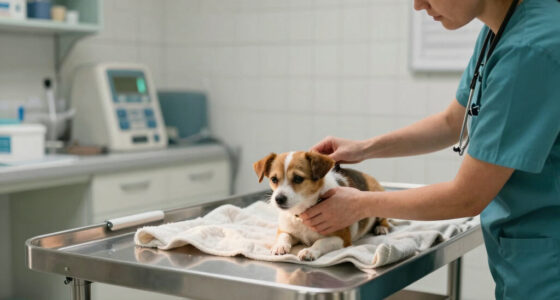
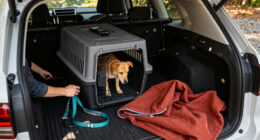
Every season, you should review your home’s safety by checking for hazards like toxic plants in spring, antifreeze in winter, and pests in summer. Inspect fences, gates, windows, and loose structures to prevent escapes or injuries. Store harmful substances securely, and remove small or sharp objects that pets could swallow or injure themselves on. Don’t forget to update your emergency contacts and verify your pet’s ID tags are current. Keep your pet’s environment safe all year by staying vigilant and aware of seasonal risks.

Get pet supplies delivered free with Prime
- Fast, free delivery on millions of items
- Prime Video, Amazon Music and more included
- Member-only deals all year
Key Takeaways
- Regularly inspect for seasonal hazards like antifreeze in winter and pests in summer, updating safety measures accordingly.
- Check and secure electrical cords, holiday decorations, and seasonal items to prevent chewing or injuries.
- Review outdoor areas for toxic plants, standing water, or trapping hazards that vary with the season.
- Ensure pet-proofing measures are current, including safe bedding, play zones, and removal of seasonal small objects.
- Keep emergency supplies and contact info up-to-date, considering seasonal risks and environmental changes.
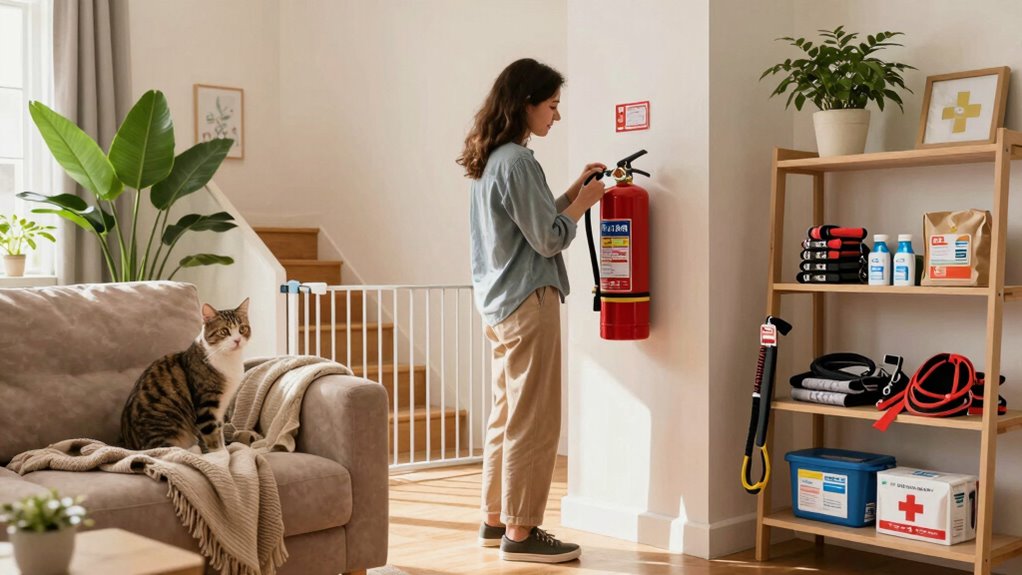
Keeping your home safe is crucial for your pet’s well-being, especially since curious animals often explore every corner. Regularly performing a home safety check helps you identify potential hazards and guarantees your pet stays protected year-round. One of the most important steps in this process is reviewing pet proofing essentials. Check that harmful substances like cleaning supplies, medications, and plants are stored securely out of your pet’s reach. Small objects such as rubber bands, string, or toys with parts that can be swallowed should be removed or stored properly. Make sure that electrical cords are tucked away or covered to prevent chewing, which could lead to electrical shocks or burns.
Prioritize safe storage of harmful substances and secure electrical cords to protect your curious pet.
Additionally, inspect your home for any drafts, loose windows, or gaps that could allow your pet to escape or injure themselves. Examine fences and gates, ensuring they are secure and in good condition. Replace or repair any damaged areas before your pet’s environment becomes compromised. During this seasonal safety check, you should also review your emergency preparedness plan. Keep a pet-specific first aid kit accessible, stocked with essentials like bandages, antiseptic wipes, and your vet’s contact information. Consider creating a list of emergency contacts, including local shelters and poison control centers specializing in pet emergencies. Make sure your pet’s collar has up-to-date identification tags, and consider microchipping if you haven’t already—this can be a lifesaver if your pet gets lost.
It’s also crucial to check the safety of your pet’s usual play areas and bedding. Look for items that might have become unsafe with seasonal changes, like cords from holiday decorations or sharp objects hidden under furniture. If you have outdoor spaces, examine them for toxic plants, standing water, or areas where your pet could get trapped or injured. Remember, seasonal changes often introduce new risks, such as antifreeze in colder months or pests during warmer seasons, so stay vigilant. Incorporating home safety checks into your seasonal routine can help prevent accidents before they happen and keep your pet secure. Regular hazard identification is essential, especially when new objects or plants are introduced seasonally. Conducting seasonal inspections can further ensure that your home remains a safe environment as the seasons change. Staying informed about seasonal hazards can also help you adapt your safety measures effectively.
Performing this safety check regularly isn’t just about fixing problems; it’s about cultivating an environment where your pet can thrive without constant worry. Establishing a home safety routine can make these inspections more manageable and consistent. Incorporate safety routines into your seasonal schedule, and stay proactive in updating your pet proofing essentials and emergency preparedness plans. By doing so, you create a safe, secure home that adapts to your pet’s needs throughout the year, giving you peace of mind knowing that their safety remains a top priority.
Products Worth Considering

Shark Pet Cordless Stick Vacuum, Up to 40-Minute Runtime, Ocean Blue, IX141

PetSafe Electronic Pet Door with Collar Key Sensor, Large

PetSafe Guardian GPS 2.0 Dog Fence and Tracking Collar
As an affiliate, we earn on qualifying purchases.
Frequently Asked Questions
How Often Should I Update My Pet’s Emergency Contact Information?
You should update your pet’s emergency contact information at least every six months, especially before travel or emergency preparedness drills. Regular updates guarantee that pet sitters, veterinarians, and emergency responders have the most current details. When planning pet travel, double-check contact info to avoid delays. Keeping this info current helps you respond quickly during emergencies, ensuring your pet’s safety and peace of mind for any unexpected situations.
Are There Specific Safety Checks for Outdoor vs. Indoor Pets?
Did you know outdoor hazards can threaten your pet’s safety more than indoor dangers? For outdoor pets, check fences for gaps, remove toxic plants, and watch for pests like ticks and fleas. For indoor safety, guarantee secure windows, keep hazardous substances out of reach, and eliminate choking hazards. Regular safety checks tailored to your pet’s environment help prevent accidents and keep your furry friend safe, whether inside or outdoors.
What Common Household Toxins Should I Watch Out for Annually?
You should annually check for household toxins like poisonous plants and toxic foods, which pose risks to your pets. Keep plants such as lilies, azaleas, and sago palms out of reach, and store foods like chocolate, grapes, and onions securely. Regularly inspect your home for these hazards, ensuring your furry friends stay safe from accidental ingestion. Staying vigilant helps prevent emergencies and keeps your pets healthy and happy.
How Can I Ensure My Pet’s Safety During Seasonal Changes?
To keep your pet safe during seasonal changes, prioritize weather preparedness and regular seasonal grooming. Adjust their shelter to protect against temperature extremes and verify they stay dry and comfortable. Keep an eye on their coat, trimming when needed, and watch for signs of discomfort or illness. By staying proactive, you create a secure environment, allowing your pet to enjoy each season’s unique beauty without worry or harm.
Should I Include Safety Checks for New Household Items or Recent Renovations?
Yes, you should include safety checks for new household items and recent renovations. When bringing in new furniture or appliances, inspect cords, small parts, and potential hazards. With recent renovations, check for loose nails, sharp edges, or exposed wires. Confirm that new paint or chemicals are pet-safe, and create designated safe zones. Regularly review these areas to prevent accidents, keeping your pets secure as your home evolves.
Conclusion
By regularly performing these seasonal home safety checks, you’re actively protecting your furry friend from hidden hazards. Think of your home as a safe haven where your pet’s well-being is a top priority. Are you ready to take that extra step today and guarantee your home is pet-proofed for every season? After all, isn’t their safety worth the effort? Stay vigilant, stay loving, and keep your pet safe year-round.