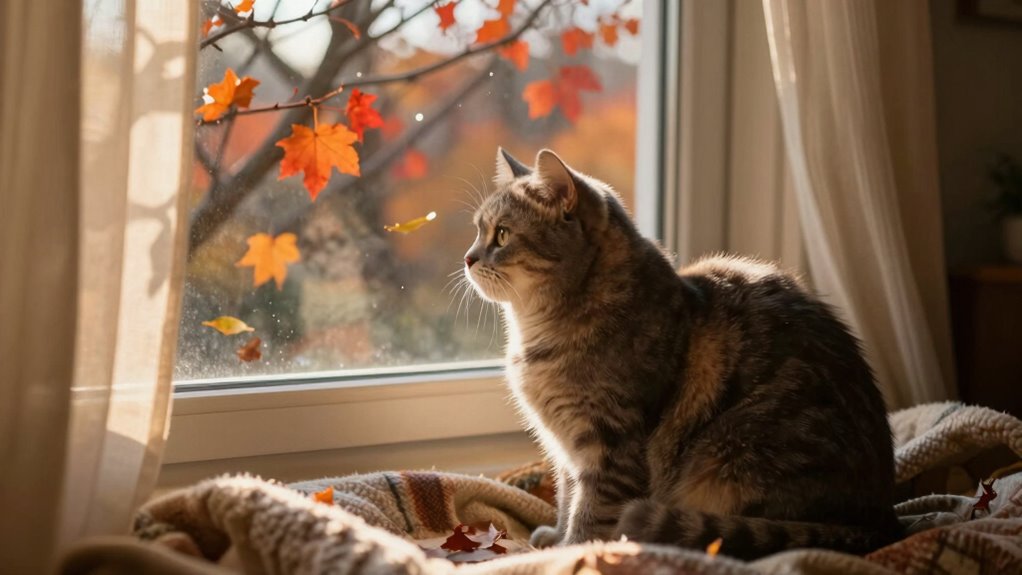

During seasonal shifts, you’ll notice your pet may become more lethargic, less interested in activities, or have changes in mood due to reduced sunlight and colder temperatures. Shorter days can disrupt their natural rhythms, making indoor environments more important for comfort and stimulation. Incorporating indoor games, adjusting their diet, and opening curtains for natural light can help. Keep exploring to discover more ways to keep your pet happy and healthy year-round.

Get pet supplies delivered free — and shop member deals
- Fast, free delivery on millions of items
- Access to Prime Big Deal Days deals on October 6–7
- Prime Video, Amazon Music and more included
Key Takeaways
- Shorter days and reduced sunlight can cause pets to become more lethargic and less active.
- Colder weather may lead to decreased outdoor activity, impacting energy levels and mood.
- Indoor environments become primary, requiring stimulation to prevent boredom and loneliness.
- Reduced sunlight affects circadian rhythms, influencing sleep patterns and overall mood.
- Seasonal temperature changes may affect appetite, energy, and comfort, necessitating environmental adjustments.
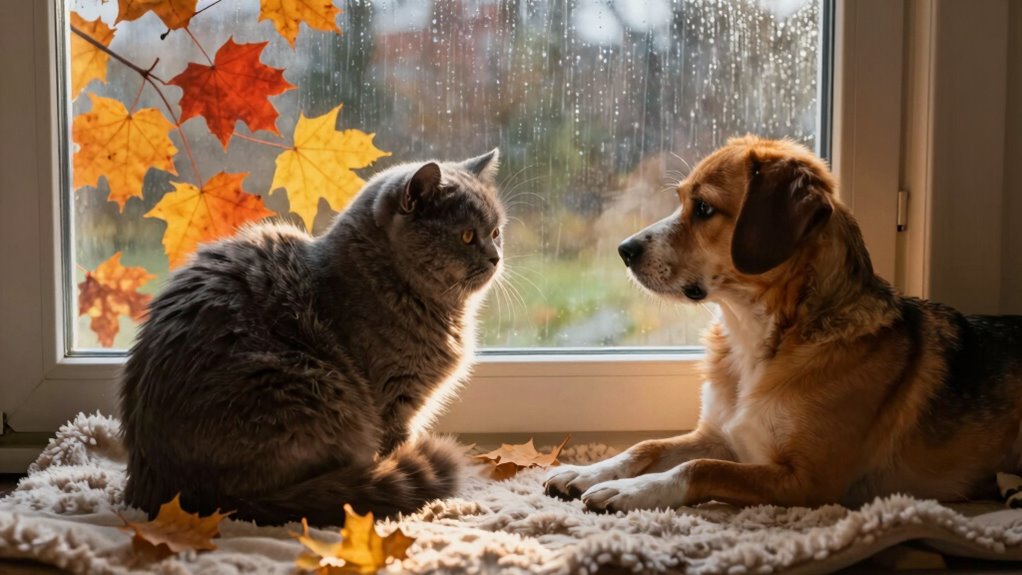
Have you ever noticed your pet acting differently than usual? Changes in their mood or energy levels can be subtle but noticeable once you start paying attention. Seasonal shifts often play a big role in these variations, as shorter days, colder weather, and less sunlight influence their behavior. During these times, you might see your pet more lethargic or less interested in their usual activities. It’s important to adapt your routines to support their well-being, especially since indoor environments become their primary space during colder months.
Seasonal changes can make your pet more lethargic; adapt routines to support their comfort and well-being.
One effective way to help your pet adjust is by incorporating indoor activities that keep them mentally and physically stimulated. Puzzle toys, hide-and-seek games, and gentle indoor fetch can help combat boredom and prevent weight gain from reduced outdoor exercise. Even simple training sessions or new tricks can spark their curiosity and boost their mood. Making these activities part of your daily routine can lift their spirits and maintain their energy levels, despite the limited outdoor play. Additionally, creating a stimulating environment indoors can help keep their minds active and prevent feelings of loneliness or boredom.
Alongside activity adjustments, pay attention to your pet’s diet. Dietary adjustments may be necessary to ensure they’re getting enough nutrients to stay energized. During colder months, some pets burn more calories to stay warm, so you might need to slightly increase their food intake or switch to a diet that supports their activity level. Conversely, if your pet tends to become less active, be mindful of portion sizes to avoid weight gain. Consult your veterinarian for tailored advice, especially if you notice significant changes in their appetite or energy. Proper indoor heating can also help maintain a comfortable environment, supporting their overall health during these seasons.
Sunlight exposure also influences your pet’s mood, so try to maximize natural light indoors whenever you can. Open curtains or blinds during the day to give your pet access to sunlight, which can help regulate their circadian rhythm and elevate their mood. If natural light is limited, consider adding full-spectrum lighting to simulate sunlight. These small adjustments can make a noticeable difference in how your pet feels and behaves. Additionally, maintaining good indoor air quality can help support their respiratory health and overall well-being during these seasons. Creating a consistent indoor environment with appropriate temperature and humidity levels can further promote their comfort and health.
As an affiliate, we earn on qualifying purchases.
Frequently Asked Questions
How Can I Tell if My Pet Is Experiencing Seasonal Depression?
You can tell if your pet is experiencing seasonal depression by noticing pet behavioral shifts, such as lethargy, loss of interest in play, or changes in appetite, that persist beyond typical weather changes. Seasonal affective disorder can cause these symptoms, especially during darker months. Keep an eye on their energy levels and mood, and consult your vet if you notice prolonged signs, as they can recommend ways to help your pet feel better.
Are Certain Breeds More Affected by Seasonal Mood Changes?
Certain breeds are more affected by seasonal mood changes due to breed resilience and seasonal sensitivity. For example, breeds with low resilience, like Siberian Huskies or Labrador Retrievers, might experience more noticeable shifts in energy and mood during seasonal changes. Conversely, breeds with higher resilience, like Border Collies, tend to adapt more easily. Recognizing your pet’s breed-specific seasonal sensitivity helps you provide tailored support for their well-being during different times of the year.
What Signs Indicate My Pet’s Energy Levels Are Abnormal for the Season?
If your pet’s energy feels like a flickering light rather than a steady glow, it’s time to pay attention. Signs include lethargy, loss of interest in play, or irregular eating habits. To help, consider diet adjustments and tweak exercise routines to match seasonal needs. Keep an eye on their behavior, and if it persists, consult your vet. Your pet’s energy should feel like a warm, steady fire, not a dying ember.
How Can I Help My Pet Adjust to Seasonal Changes?
To help your pet adjust to seasonal changes, incorporate holiday celebrations to make them feel secure and loved. Maintain a consistent routine, including seasonal grooming, to keep their coat healthy and comfortable. Provide cozy spaces for relaxation, and guarantee they get plenty of exercise outside during milder weather. Keep their environment calm during festive times, and monitor their mood and energy, adjusting activities as needed to support their well-being.
Do Seasonal Changes Impact Pets Differently Based on Their Age?
Like a vintage film reel, your pet’s age influences how seasonal changes impact them. Younger pets often thrive with increased activity, while older pets might experience age-related behavioral shifts, making them more sensitive to temperature drops or daylight changes. Seasonal activity patterns can vary; puppies and kittens are usually more energetic in spring, whereas seniors may prefer cozy, quiet days. Being attentive helps you cater to their unique needs across seasons.
Conclusion
As the seasons shift, so do your pet’s moods and energy levels—sometimes unexpectedly. Staying attuned to these changes can reveal surprises you never saw coming. Will your pet thrive or struggle through the next season? The key lies in understanding and adapting to their subtle cues. Keep watching closely, because what you discover might just change how you care forever. The next seasonal change could hold the answer—are you ready to face it?
Fall Picks
fall essentials
As an affiliate, we earn on qualifying purchases.